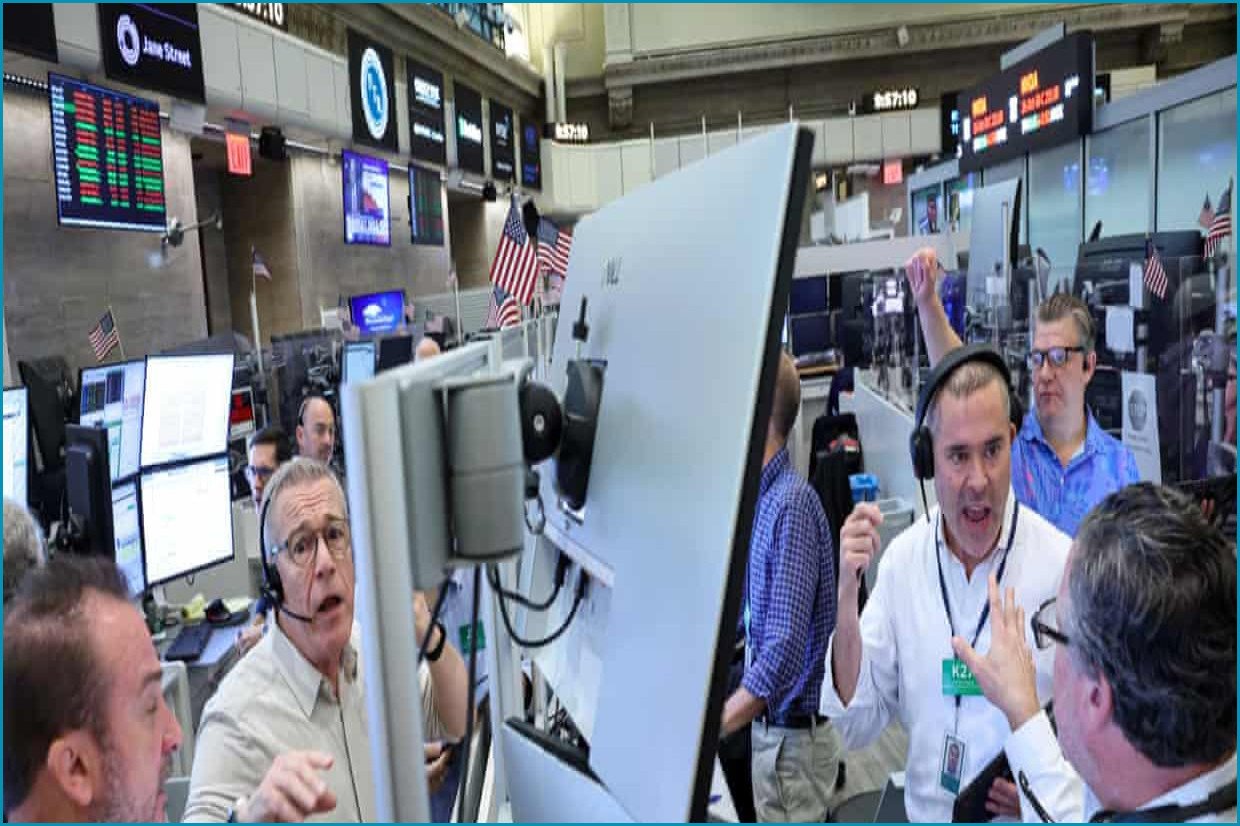
A significant sell-off of technology stocks, which began earlier this month, accelerated on Friday following a series of disappointing earnings reports from major industry players. The market downturn has erased approximately $2 trillion in value over the past month, with the tech-heavy Nasdaq exchange alone losing nearly $1 trillion in value in just one week. The Nasdaq 100 is currently on track to see more than $2 trillion in market value wiped out during October, a decline that would exceed the entire market value of SpaceX.
The S&P 500, which tracks the 500 most valuable companies in the US, fell by more than 1% on Friday, losing hundreds of billions of dollars in market value. This drop puts the index on track to erase its gains for October, despite the fact that it reached an all-time high earlier in the same month. The Nasdaq composite suffered a steeper decline of more than 3%, while the Dow Jones Industrial Average experienced a more modest drop. The broader market remained mixed, with the S&P 500 roughly evenly split between gainers and losers, even as global consumers continue to face high inflation and fuel prices.
Investor scrutiny has intensified regarding whether the billions of dollars being poured into artificial intelligence can generate returns quickly enough. Hyperscalers such as Meta Platforms, Alphabet, and Amazon have continued to raise their spending forecasts as they compete to expand AI infrastructure. Alphabet’s stock dropped more than 12% on Thursday—marking its worst day on record—after the company informed investors that it burned through more cash during the summer than in the spring due to massive AI investments, resulting in a $500 billion loss in market capitalization. Amazon shares fell 1.8% after the company reported weaker-than-expected summer profits and disclosed that its spending for the year had exceeded initial anticipations.
Nvidia, a company previously valued at approximately $5 trillion and often viewed as the poster child for the AI frenzy, saw its shares drop 3.1%, serving as the heaviest force pulling the S&P 500 downward. Beyond these specific losses, there is growing concern that high interest rates may slow the build-out of data centers, putting further pressure on computer chip companies and other firms that have benefited from the AI boom.
Such losses overshadowed an otherwise mixed day for the rest of Wall Street, with the S&P 500 roughly evenly split between gainers and losers.
Expectations are high broadly for US companies’ ability to make bigger profits, even though people around the world are feeling discouraged about high inflation and high fuel prices. Such expectations are what drove the S&P 500 to its record earlier this month.