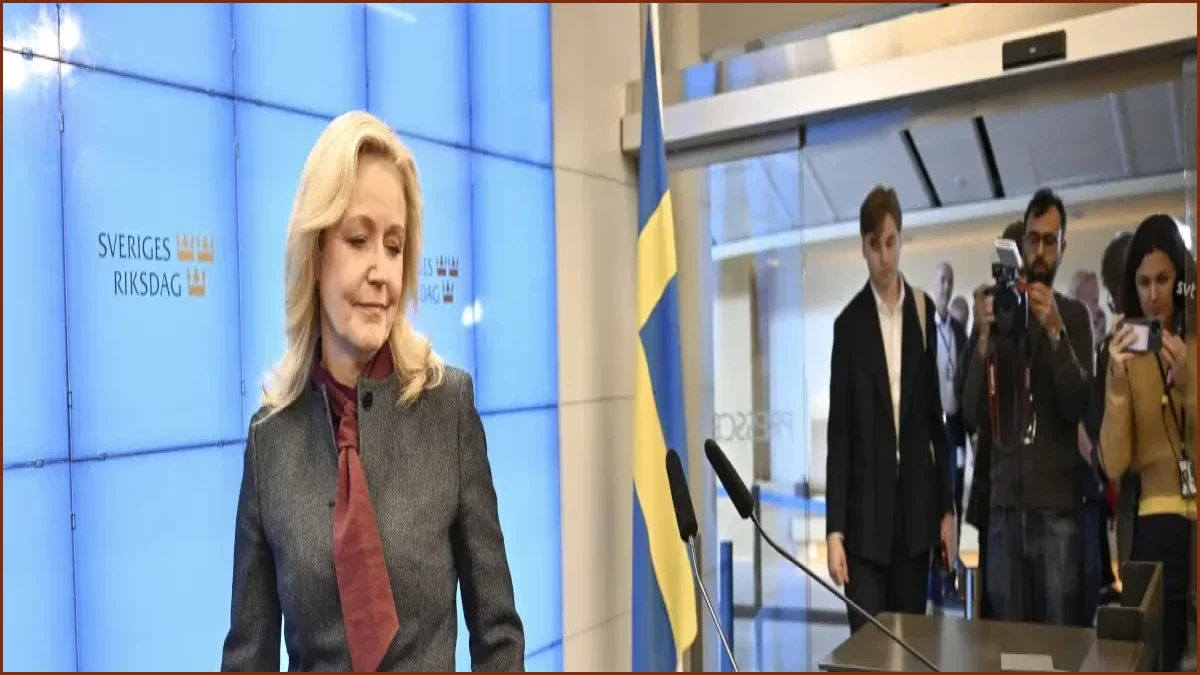
Elisabeth Thand Ringqvist, leader of Sweden's Centre Party, has officially ended her efforts to establish a centrist coalition government. On Monday, she returned the exploratory mandate granted to her last week by parliamentary speaker Andreas Norlén, concluding that while there may be a majority for centrist policies, there is no viable majority for a centrist government.
During a press conference held to report on her findings, Thand Ringqvist noted that she had spent the past week engaging in discussions with party leaders across the political spectrum. Her primary objective was to explore the possibility of a coalition involving the Christian Democrats, the Liberals, the Green Party, and her own party, all centered on supporting Social Democrat leader Magdalena Andersson for the role of prime minister.
These negotiations encountered significant obstacles, as both Liberal leader Simona Mohamsson and Christian Democrat leader Ebba Busch maintained their commitment to supporting Ulf Kristersson, the leader of the centre-right Moderates, for the prime minister position. Thand Ringqvist emphasized that the "red lines" maintained by various parties remain a central issue, including her own party's firm refusal to permit the Left Party into government or to engage in cooperation with the far-right Sweden Democrats. She stated that all parties holding such red lines must determine how they intend to navigate them.
Despite this setback, Thand Ringqvist indicated that the Centre Party remains open to supporting a single-party government led by the Social Democrats, provided it advances centrist policies. She suggested that a centrist government might still become a possibility during the final parliamentary vote, when parties are forced to choose between such an arrangement and the prospect of a new election. The decision now rests with the speaker, who retains three attempts to put forward a prime ministerial candidate before a new election must be triggered.