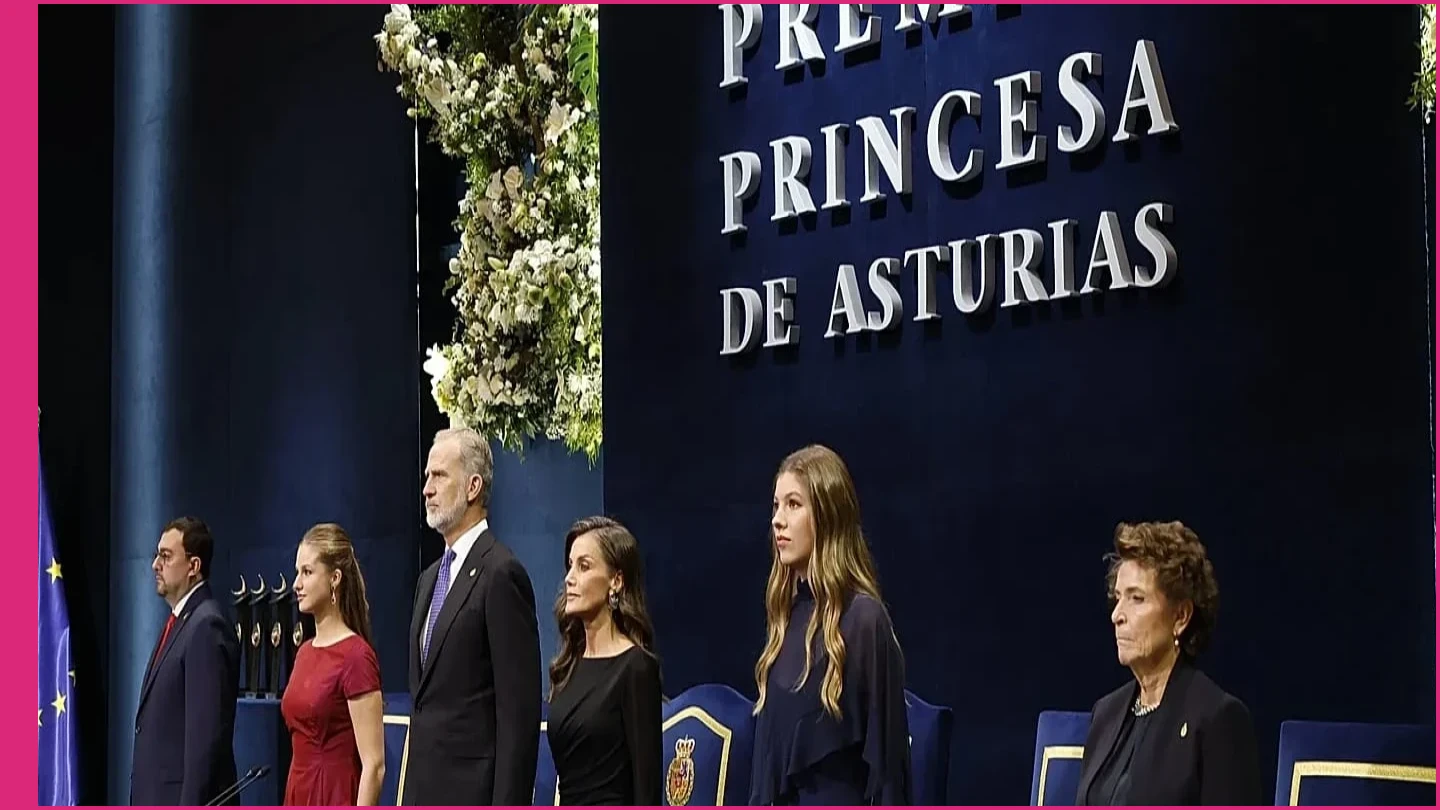
The 46th Princess of Asturias Awards, held at the Campoamor Theatre in Oviedo, became a platform for reflection on the state of humanity as the world navigates an uncertain second quarter of the century. Poet Patti Smith set the tone for the ceremony by performing her spoken-word piece and song, "Wing." Her performance, which championed personal freedom and human interdependence, resonated deeply with the audience, marking a highlight of the event. Smith, who was warmly received by the public in Oviedo, joined other laureates in emphasizing the necessity of collective action alongside the defense of individual identity. She sang, "And they saw nothing / No future at all / Yet I was free," capturing the spirit of the evening while poking fun at the notion that humans can survive without one another.
The president of the Princess of Asturias Foundation opened the proceedings by quoting actor Meryl Streep, a previous winner. The ceremony was described as "the echo of the voices of many of our heroes of the 20th century and of this young century of ours." Astronaut and Concord laureate Christina Koch shared a personal reflection on her connection to Spain, noting that she had "wept openly in the middle of the street" during her first visit. Her speech served as an appeal for unity, describing humanity as "a species capable of coming together" and fundamentally linked by the "search for affection."
Political and social themes were also addressed throughout the evening. British historian Timothy Garton Ash, who grew up in a household supportive of Brexit, received spontaneous applause for asserting that Britain remains an inseparable part of the "Old Continent." Garton Ash also utilized the platform to defend academic and journalistic freedoms, explicitly referencing the International Criminal Court, which has faced significant criticism and sanctions from the United States government.
The role of technology and artificial intelligence was a recurring topic. The princess remarked on the work of Literature laureate Julian Barnes, stating, "No AI will ever be able to replicate the emotion stirred by your work." Barnes himself drew a comparison to the Spanish painter Velázquez, noting that in art, "everything has already been said; most writers and artists have at some point in their lives had insights as instructive as his." King Felipe VI addressed the subject more directly, suggesting that while AI may appear more efficient than human intelligence, the achievements of the laureates prove that "only through effort and perseverance can talent turn its potential into tangible, lasting realities."
King Felipe VI also commented on the upcoming Spanish general elections, reminding citizens that democracy is a process that requires "daily commitment." He emphasized that the responsibility of defining the country's political direction belongs to the citizens and urged a focus on the common good to ensure coexistence. Toward the end of the ceremony, the heiress to the throne invoked a line associated with the Communication and Humanities laureate, Studio Ghibli, as represented by president Kenichi Yoda. Quoting Paul Valéry, the protagonist of one of their films proclaims: "The wind rises, we must try to live!" This message of resilience underscored the shared outlook of the laureates regarding the challenges ahead.