El Salvador President Nayib Bukele announced Wednesday that a military operation has been launched in Haiti to locate and rescue four Salvadoran aviation technicians abducted by armed gangs. The announcement came alongside a stern warning that any harm brought to the soldiers would trigger a significantly more forceful response against criminal networks in the Caribbean nation.
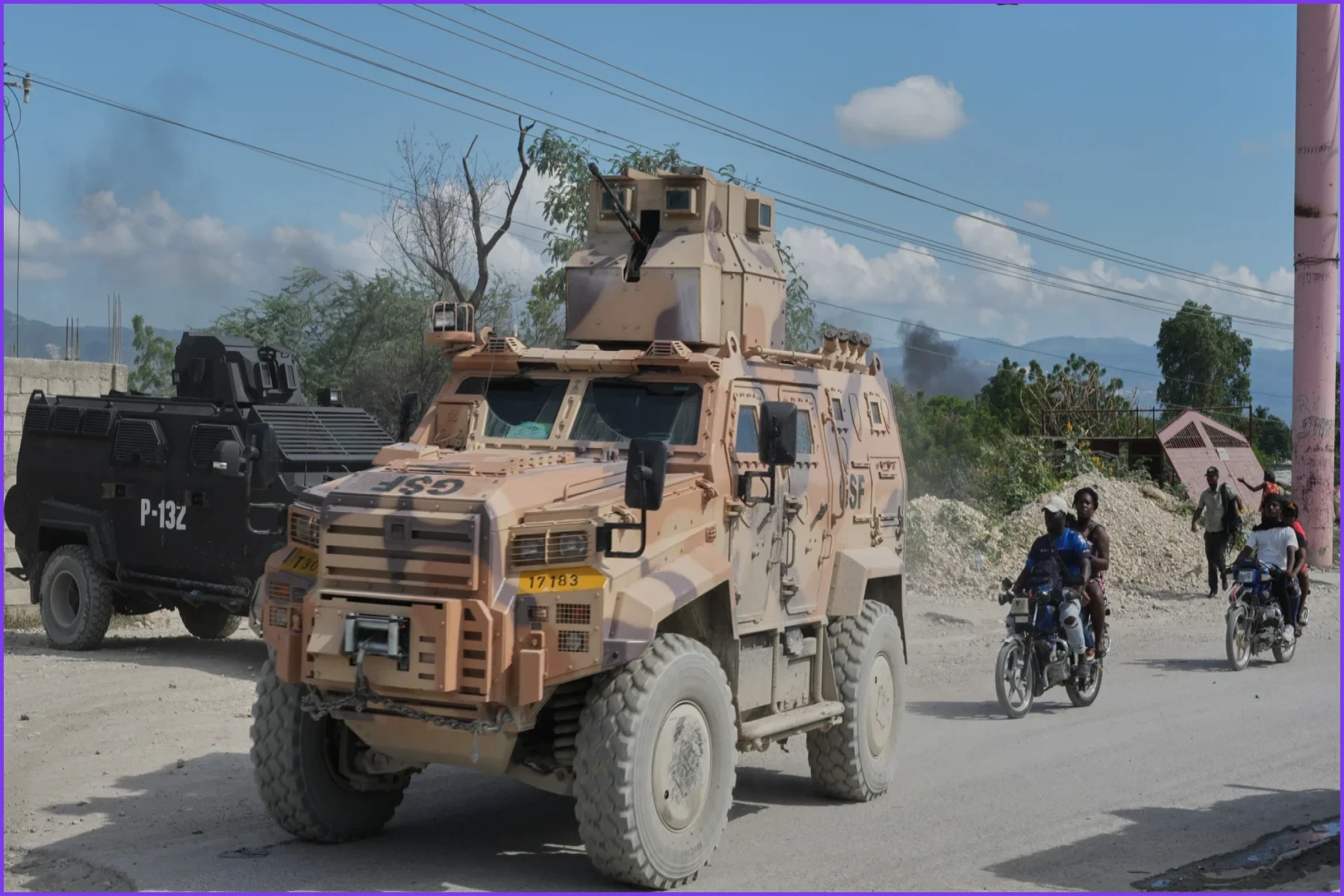
Addressing Haitian gang leaders via the social media platform X, Bukele demanded the immediate return of the captive personnel. He stated that if the men are returned alive and unharmed, conditions would return to how they were prior to the abduction. However, he warned that the initial ambush was minor compared to the actions his government would take if the hostages are not released, cautioning gang members not to dismiss his statements as empty threats. Bukele accompanied his public warning with video footage showing armored security vehicles navigating heavy smoke with shattered windshields.
The kidnapping followed a violent ambush three days earlier in the Santo neighborhood of Croix-des-Bouquets, located near Port-au-Prince. Gang gunmen opened fire on an armored vehicle carrying the personnel, causing the vehicle to catch fire. The four Salvadoran soldiers went missing shortly after fleeing the burning transport. The incident represents the first major direct attack against international security forces since a U.N.-backed multinational gang suppression mission commenced operations in Haiti.
In response to the escalation, Haiti's government issued an official statement late Wednesday characterizing the recovery of the abducted aviation personnel as an absolute priority. Officials held high-level coordination meetings at the prime minister's office to evaluate active field interventions and determine measures to reinforce operations alongside the multinational Gang Repression Force, committing all necessary state resources to secure the soldiers' release.
Bukele clarified that the official Salvadoran contingent in Haiti consists of pilots and technical support staff assigned specifically to perform medical evacuations rather than engage in direct warfare. Nevertheless, El Salvador's legislative assembly passed a law earlier in October extending the country's participation in the mission for an additional year. That legislation broadened the scope of deployment, permitting civilian and military personnel to be dispatched according to operational demands beyond original medical transport duties.
El Salvador forms part of an international coalition that includes personnel from Chad, Jamaica, and Guatemala, contributing to a total force of over 2,000 security troops currently deployed in Haiti. Originally authorized by the U.N. in 2025 to send up to 5,550 security officers and over 50 civilian personnel to dismantle armed gangs, the multinational force recently received a mandate extension from the U.N. Security Council through March 2027.
Active combat operations between security forces and local gangs persisted in the community where Sunday's attack occurred, prompting international forces to advise local residents to remain indoors. The ambush took place in an area heavily controlled by criminal organizations, including Chèn Méchan, Kraze Barye—led by Vitelhomme Innocent—and 400 Mawozo, led by Lanmo Sanjou. Both Innocent and Sanjou have previously been targeted with sanctions by the U.N. and the United States.
No criminal group has officially claimed responsibility for the abduction. The attack highlights the formidable influence of armed gangs, which currently control an estimated 70% of Port-au-Prince, as Haiti prepares for its first general elections in over a decade. According to United Nations figures, pervasive gang violence has displaced nearly 1.5 million residents in recent years, with more than 5,700 people killed or injured and over 230 kidnapped between January and mid-September.