Australian federal lawmaker Helen Haines has undergone double leg amputations and remains in critical condition following an alleged car ramming outside her electorate office in Wangaratta, her husband revealed Wednesday. The 65-year-old independent politician was airlifted to a Melbourne hospital for emergency medical treatment following Monday's incident, which authorities are investigating as an apparent act of political violence.
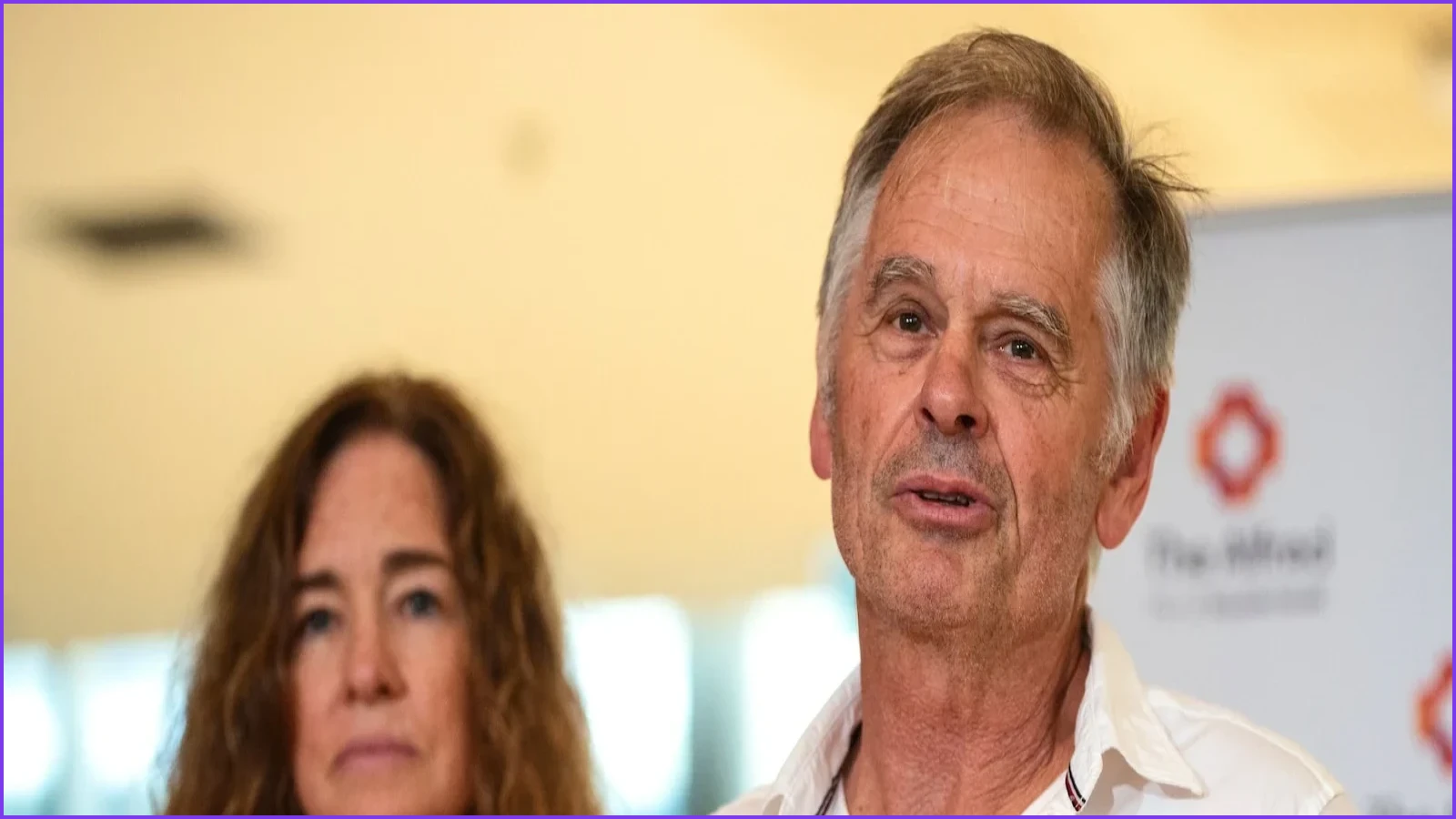
Her husband, Phil Haines, provided the family's first public update on her health following the attack. He explained that surgeons amputated her left leg on Monday and were forced to amputate her right leg on Wednesday after failing to save it. Speaking to reporters in Melbourne, he confirmed that despite her critical state, she is alive and stable, emphasizing that both her heart and mind remain in good shape. He added that the couple will mark their 40th wedding anniversary in November.
Witnesses reported that a driver rammed Haines with a Toyota Land Cruiser SUV outside her electorate office in her hometown of Wangaratta. The vehicle pinned her against her own car before the driver reversed and rammed her a second time.
Earlier on Wednesday, 43-year-old Brendan Nugent of nearby Tarrawingee appeared in the Wangaratta Magistrates' Court in connection with the attack. Nugent was charged with intentionally causing serious injury, dangerous driving causing serious injury, and causing harm to a federal official. He did not apply for bail or enter a plea. Magistrate Allison Vaughan ordered him remanded in custody until his next scheduled court appearance in February. Police stated that a motive has not yet been established.
Defense attorney Chirag Patel told the court that Nugent may suffer from potential mental health issues, though he has never received a formal diagnosis. Patel also noted that Nugent has a neurological condition known as idiopathic transverse myelitis. The rare condition damages the spinal cord’s protective myelin sheath and disrupts nerve signals between the brain and body, leading to rapid muscle weakness, sensory loss, pain, and bladder and bowel dysfunction, according to the Cleveland Clinic medical center.
Additionally, the lawyer stated Nugent had a concussion, though he did not explain how it was sustained.
The well-regarded lawmaker's plight has shocked Australians, as political violence is uncommon in the country and politicians are highly accessible to the public. Most lawmakers are not accompanied by security details and go about their work and personal lives on their own. In the wake of the incident, senior opposition lawmaker James Paterson urged an immediate review of parliamentarians' personal security.
Speaking to the Australian Broadcasting Corp., Paterson noted that while high public accessibility is a positive aspect of Australian democracy, lawmakers cannot face life-threatening hazards that could permanently alter democratic norms.
Prime Minister Anthony Albanese urged parliamentarians to maintain open contact with the public despite rising animosity in the community. Speaking to News24, Albanese stated that authorities want to maximize safety while ensuring lawmakers continue engaging with voters. Federal parliamentarians held online safety briefings with security agencies on Wednesday, an ongoing practice that Albanese described as an opportunity for anxious officials to raise concerns.
Australian Federal Police Commissioner Kissy Barrett noted that stationing police protection for all 226 federal parliamentarians would demand an extraordinary allocation of resources. Full-time police protection is currently reserved for higher-risk individuals, such as prime ministers and immigration ministers. Paterson suggested concentrating security upgrades on local electorate offices, where lawmakers are most easily identified and face heightened risks during arrivals and departures.
According to police data, authorities received 1,067 reports of threatening, harassing, nuisance, or offensive communications against high officeholders and staff in the last fiscal year—a 12 percent increase from the previous year—leading to roughly one suspect charged every week.
Elsewhere in the world, authorities have warned of growing threats to lawmakers. The United States has seen a rise in political violence over the past decade, including the 2022 hammer attack on the husband of then-House Speaker Nancy Pelosi, a 2024 assassination attempt on Donald Trump during his presidential campaign, an April attempt at the White House Correspondents' Association Dinner, and the 2025 assassinations of a Democratic Minnesota state lawmaker and her husband, as well as conservative commentator Charlie Kirk.
In Britain, safety measures were previously tightened following the 2016 murder of Labour MP Jo Cox by a far-right extremist and the 2021 fatal stabbing of Conservative MP David Amess by an attacker inspired by the Islamic State group.