Top United Nations officials are urging Western nations to re-engage with Afghanistan, warning that ignoring the country’s deepening crises could lead to widespread instability with far-reaching international consequences. Barham Salih, the UN High Commissioner for Refugees, and Alexander De Croo, head of the UN Development Program, emphasized this message during a joint visit to Afghanistan, speaking to The Associated Press on Tuesday.
“The lesson of the recent past is that ignoring Afghanistan is not a good thing to do,” Salih stated. He stressed the importance of engagement “to support and promote the right type of policies to making sure that Afghanistan remains safe and secure.” Without such involvement, he cautioned, the world risks instability that could manifest as increased drug trafficking, extremism, criminal activity, or large-scale refugee movements.
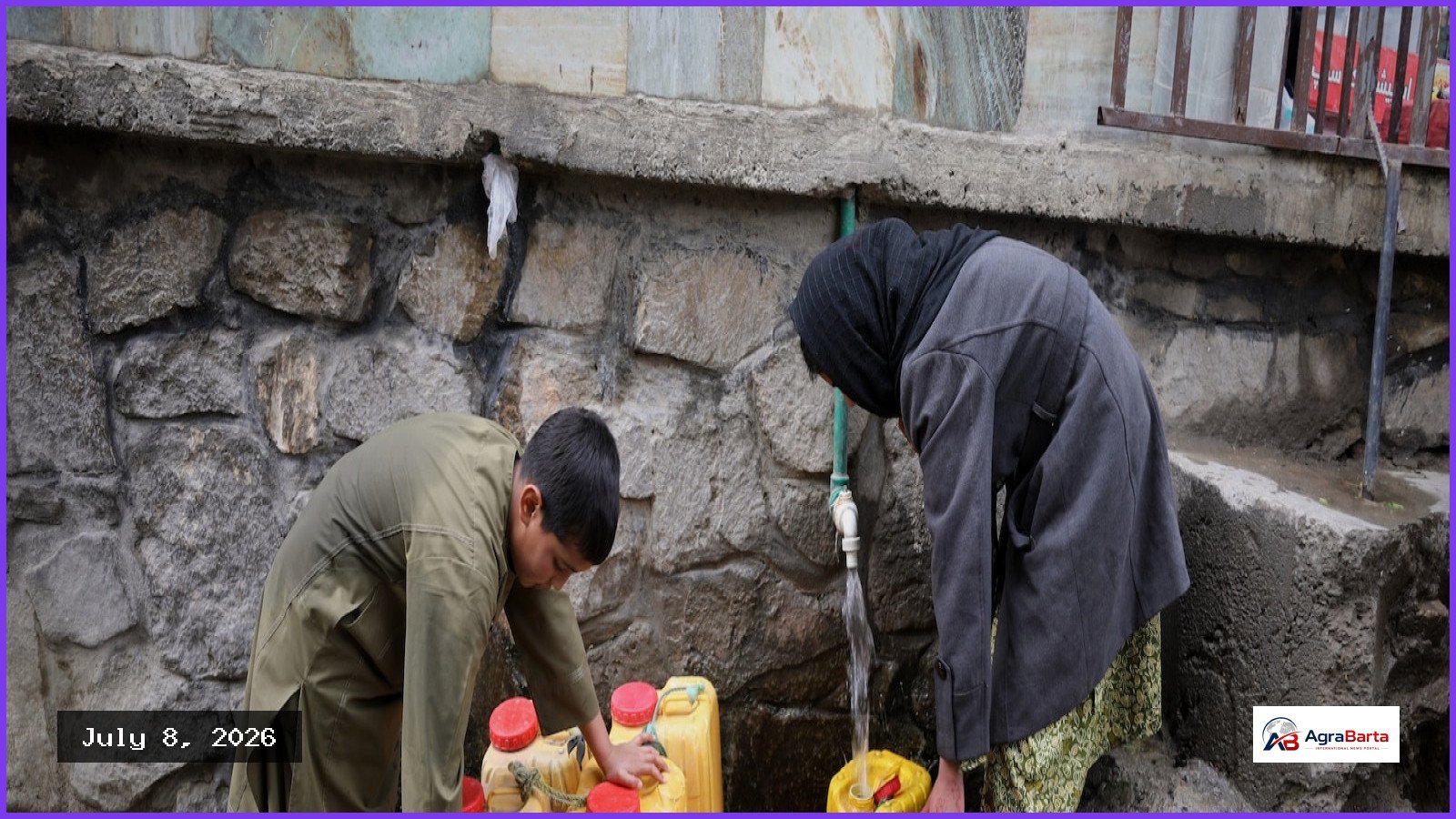
Afghanistan, a country already grappling with four decades of conflict, is now facing a confluence of severe challenges. De Croo highlighted that “In Afghanistan, there is never a crisis just on its own. It’s always crisis on top of crisis,” citing natural disasters, climate change, and an unprecedented influx of returning refugees as major stressors. Since 2023, nearly 6 million people have returned to Afghanistan, predominantly from neighboring Pakistan and Iran following crackdowns on migrants in those countries. An additional 2 million are anticipated to return this year, further straining local communities already struggling with scant resources, rampant poverty, and widespread malnutrition among the most vulnerable.
These challenges are exacerbated by significant cuts in international aid and the policies of the Taliban government, which has sidelined half of Afghanistan’s population by denying women and girls education beyond primary school and banning them from most jobs. The country remains largely isolated internationally, with no Western nation formally recognizing the Taliban government since it seized power in August 2021 after the chaotic withdrawal of U.S.-led troops. Russia was the first country to officially recognize the government in 2025. Despite this isolation, a delegation from the Taliban government met with European Union staff in Brussels last month for discussions on diplomatic services and the return of Afghans from European countries, signaling a potential slight easing of diplomatic tensions.
Despite the formidable obstacles, the UN officials noted some unexpected progress in Afghanistan. De Croo observed, “I wouldn’t close my eyes to the fact that there is progress, and maybe progress that no one would have expected five years ago,” pointing to improvements in security, anti-corruption efforts, and a remarkable 95% reduction in drug production in a country historically known as a major producer of opium and heroin.
However, De Croo warned against complacency. “If now the international community turns its back to Afghanistan, the consequences will not only be in Afghanistan. The consequences will be much, much broader.” He underscored the interconnectedness of global stability, stating, “The message to Western countries is: if you want to have a stable and peaceful society, you are not only achieving that with domestic policy. If you want to live in peace and stability, your neighborhood also needs to be at peace and stability.”
The draconian restrictions imposed on women and girls by the Afghan government remain a primary point of contention with the international community. Both De Croo and Salih confirmed they addressed this issue in their meetings with Afghan officials during their visit, expressing belief that engagement is crucial for progress. Salih articulated this hope, saying, “We hope that constructive engagement will show the way forward in that regard. It’s important that there is progress, there is tangible reforms that will allow for an inclusive system in this country.”
The impact of international aid cuts has been “very tangible,” according to De Croo. He cited the closure of 422 medical centers in Afghanistan within a year due to a lack of funding, affecting over 3 million people who lost access to basic medical services. Earlier this year, the World Food Program reported that funding shortfalls forced them to turn away three out of four acutely malnourished children seeking help.
While the Afghan government launched a campaign to eradicate poppy cultivation after taking power, the dramatic decrease in drug production was also partly due to programs providing farmers with alternative crops. De Croo cautioned that funding for these alternative crop initiatives has been severely curtailed, raising concerns that “If we cannot continue working together with farmers in giving them an alternative for producing drugs,” then drug cultivation could resurge.
Salih concluded by reiterating the critical need for global attention and engagement. “It is vital to remind the world that the price of inaction far outweighs action. You cannot ignore Afghanistan, and what happens in Afghanistan does not necessarily stay in Afghanistan.”
Another roughly 2 million people are expected to return this year, the U.N.
“Closed because the funding just disappeared.