Ukrainian military personnel engaged in combat have reported a sudden, targeted restriction on their access to Starlink satellite internet terminals. These terminals, managed by Elon Musk’s SpaceX, are a foundational component of Ukraine’s ongoing military operations. According to an adviser on military technology to President Volodymyr Zelenskyy, the connectivity issues emerged on Tuesday evening, resulting in the failure of several combat missions for units traveling at high speeds.
Serhiy Beskrestnov, a specialist in military technology, noted that terminals moving at speeds exceeding 100mph—specifically those using versions of Starlink designed for military and national security agencies—lost connectivity. While there have been no reports that static terminals are affected, meaning essential battlefield communications for stationary soldiers remain functional, the restrictions appear designed to disrupt mid-range strike campaigns. Ukraine relies heavily on the system to navigate drones toward targets behind the front lines in Russian-occupied territories.
Political activist Serhii Sternenko, who maintains close ties to the military, was among the first to report the outage. He suggested the measures were likely implemented by SpaceX at the request of the Trump administration. The White House has been exerting significant pressure on Kyiv to immediately cease long-range strikes against Russia’s oil industry, with Donald Trump citing the impact of these strikes on global diesel costs, despite many analysts attributing higher energy prices to the closure of the Strait of Hormuz.
The connectivity disruption occurred against a backdrop of intensified Russian ballistic missile attacks on Ukraine. For the second consecutive night, Russia launched strikes without prior intelligence warnings from the United States, a departure from years of established intelligence sharing. Col Yurii Ihnat, a spokesperson for the Ukrainian air force, confirmed that while no warning was provided for the initial Tuesday evening barrage, alerts were received from other international partners regarding three subsequent waves of missiles.
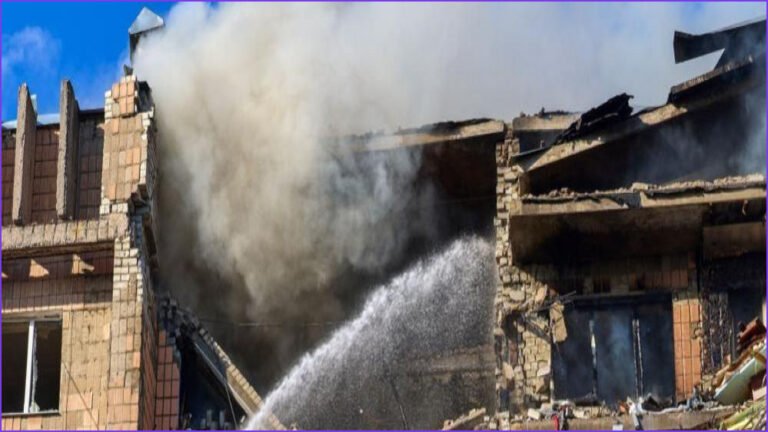
Late on Tuesday, Russia executed a large-scale strike against Ukrainian energy infrastructure, deploying 39 ballistic missiles and 120 attack drones against targets in Kyiv and Kharkiv. The assault caused significant damage to power plants and substations, leaving at least 600,000 people without electricity. President Zelenskyy characterized the attack as a deliberate, demonstrative show of force that highlighted Russia’s disregard for the United States, suggesting that Moscow no longer views American statements as a deterrent.