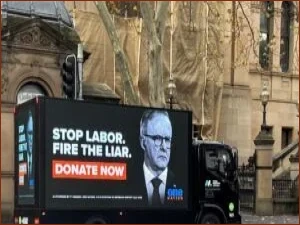
Australia is preparing to overhaul its political finance system with incoming laws designed to cap electioneering spending and political donations for the first time. The legislation, which passed in early 2025 with support from the Coalition, addresses long-standing concerns regarding the influence of major donors and wealthy individuals in the democratic process. While the reforms represent a significant shift from the current laissez-faire model, which has been criticized for relying on outdated disclosure rules from the 1980s, the new framework has faced scrutiny for its complexity, generous limits, and a two-year delay in implementation.
A recent example of the current political climate includes a truck part of a political fundraising campaign organized by the far-right populist One Nation party, which was used for criticizing the incumbent Labor Albanese government. The current system has allowed entities to operate with minimal regulation, as disclosure requirements only apply to gifts exceeding AU$17,300 per annum. Consequently, high-profile figures such as mining magnate Gina Rinehart and her close associates have reportedly gifted over AU$3 million to the One Nation Party in the last financial year, in cash and even an entire aircraft. These contributions are not required to be publicly declared until February 2027. Similarly, Clive Palmer previously splurged over AU$260 million on electioneering at the last three national polls. Yet even before the billionaires, Australia had a money-in-electoral-politics problem.
Under the new laws, which comprise approximately 250 pages of regulations, party and lobby group electioneering at the national level will be capped. A headline donation limit of AU$50,000 per political entity has been established; however, critics, including the Greens, argue that the effective cap is closer to AU$1.6 million per annum when accounting for donations to various party divisions, candidates, and sympathetic lobby groups. The spending cap for national parties is set at AU$90 million, with a sub-limit of AU$800,000 per targeted marginal seat. The "Teal" independents have expressed concerns that the rules unfairly favor established parties, potentially shielding them from competition.
Lobby groups will face an AU$11.25 million electioneering cap, though interest groups may still conduct unlimited campaigns focused on policy interests rather than specific parties or candidates. To compensate for the loss of mega-donations, the regime will increase public funding to AU$5 per vote, or AU$10 per elector given both House and Senate votes. Additionally, parties and independent MPs will receive a second flow of subsidies in the form of administrative assistance based on the number of Commonwealth MPs they have.
The two-year delay before these restraints take effect has drawn cynicism, with critics suggesting that major parties are using the window to secure funding ahead of a late 2027 or early 2028 election. While the government cites the need for the electoral commission to develop new disclosure portals and educate stakeholders, the timing has led to speculation about political motives. Ultimately, there is no perfect regime of regulating money in electoral politics. Integrity values, the ideals of political equality and liberty, and the pragmatic need for fair party resourcing, have to be accommodated. Being part of a cat-and-mouse game, the new laws will inevitably be revisited by the end of the decade. Originally published under Creative Commons by 360info.