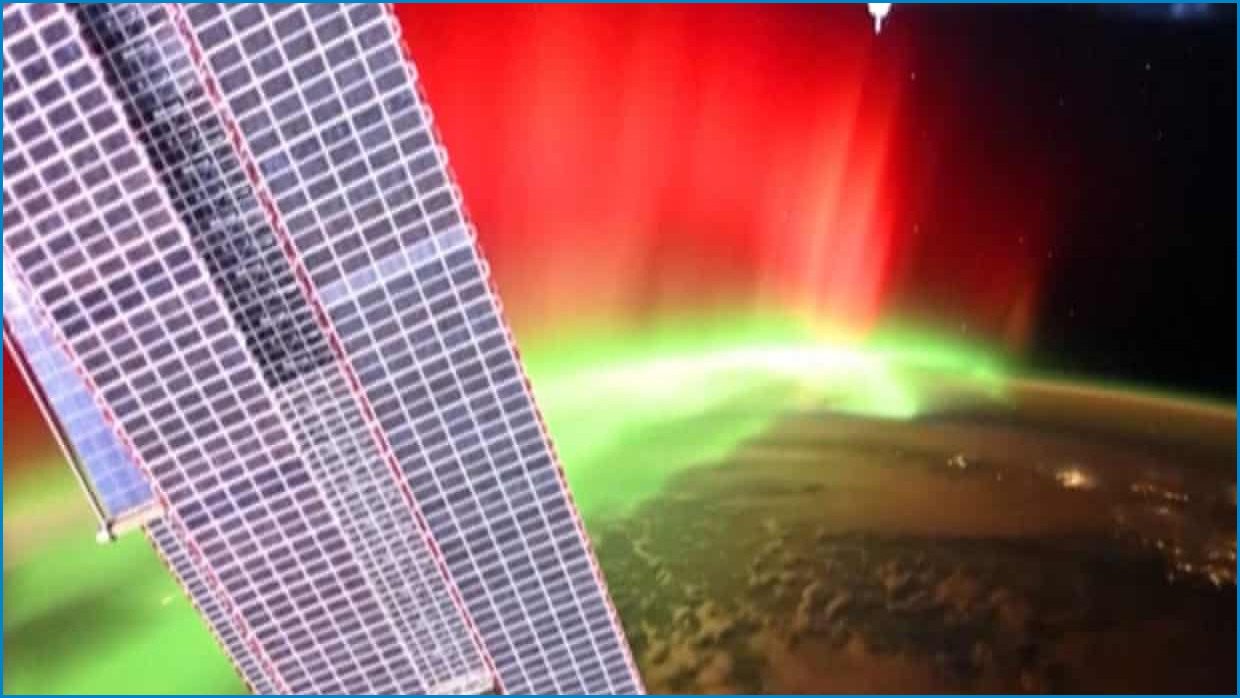
The aurora borealis, commonly known as the Northern Lights, illuminated skies across the United Kingdom on Friday and Saturday evenings, captivating observers as far south as Devon, Hampshire, and Kent. This dazzling natural phenomenon, typically associated with regions closer to the Arctic Circle and northern Scotland, offered a rare spectacle to a wider audience.
The Met Office has indicated that sightings of the aurora could persist until Tuesday, provided there are clear skies. This continued visibility is anticipated across Scotland and other areas along similar geomagnetic longitudes.
The aurora borealis is a natural light display in Earth’s sky, resulting from solar activity and geomagnetic storms interacting with the upper atmosphere. The sun continuously emits charged particles, known as solar wind, which travel at approximately 1 million miles per hour. When these particles encounter Earth’s magnetic field, particularly when their polarity is opposite to Earth’s, they are funneled towards the magnetic poles.
As these energetic particles collide with gases in the upper atmosphere, they release energy in the form of light, creating the vibrant displays. Oxygen typically produces green and, at higher altitudes, rare red auroras, while nitrogen contributes to blue and purple hues.
Experts had previously predicted that 2026 would be a peak year for aurora-spotting, as the sun has been in a heightened state of activity as part of its natural 11-year cycle, contributing to the increased likelihood of such widespread sightings.