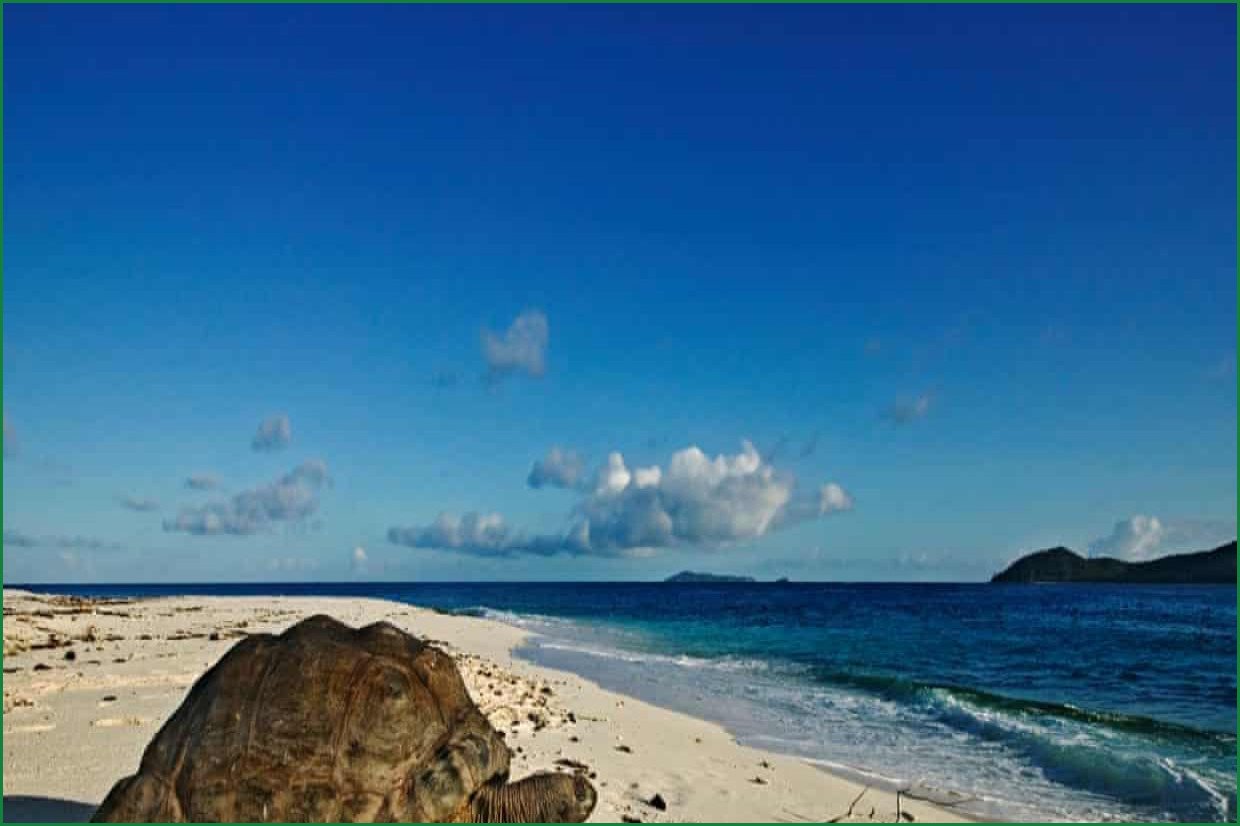
A landmark survey of the world’s largest free-roaming giant tortoise population has confirmed that the once-endangered species is thriving on the Aldabra Atoll in the Seychelles. The research, led by the Seychelles Islands Foundation (SIF) and the University of Exeter, estimates there are approximately 180,000 tortoises living on the island. This figure represents the highest number ever recorded for the species, a population count that significantly exceeds the total human population of the Seychelles.
Data for the study was compiled by analyzing five years of tortoise counts conducted between 2018 and 2022. This update serves as the first major revision since a widely cited estimate of 100,000 tortoises was established in the late 1990s. Aldabra Atoll remains one of only two locations globally where giant tortoises exist in the wild, with a much smaller population found in the Galápagos.
Dr. Frauke Fleischer-Dogley, CEO of SIF, described the findings as proof of the impact of long-term conservation commitments. The population has seen a dramatic recovery; in the 19th century, exploitation of the animals had reduced the number of Aldabra tortoises to fewer than 1,000. Subsequent protection efforts, including the establishment of a strict nature reserve in 1981 and a Unesco site designation in 1982, facilitated this success.
The study, published in the scientific journal Ecology and Evolution, provides a best estimate of nearly 183,000 adult and sub-adult tortoises. Dr. Nancy Bunbury, a co-author of the study, noted the difficulty of counting tortoises due to the atoll's dense vegetation. By modeling both observed and unobserved data, the researchers have created a reliable baseline for tracking the species for future decades.
Despite the positive growth, experts emphasize that vigilance is still required. Dr. Dave Hudson of the University of Exeter noted that the new figures provide a baseline rather than an endpoint. Future threats include climate change, which may cause longer and more frequent droughts—reducing available food and shade—as well as rising sea levels that threaten low-lying areas of the atoll. Furthermore, the study identifies invasive mammals, specifically feral cats and black rats that prey on eggs and hatchlings, as significant ongoing threats. Researchers suggest that the eradication of these invasive species could remove the final barriers to further population growth and help the tortoises withstand evolving environmental pressures.
Researchers are now saying it is one of the greatest conservation success stories of the Indian Ocean, with the new study confirming it.
“Hopefully we have provided the conservation managers the evidence they need to track future change and act early as the tortoises face increasing pressures from climate change, drought and invasive species.”