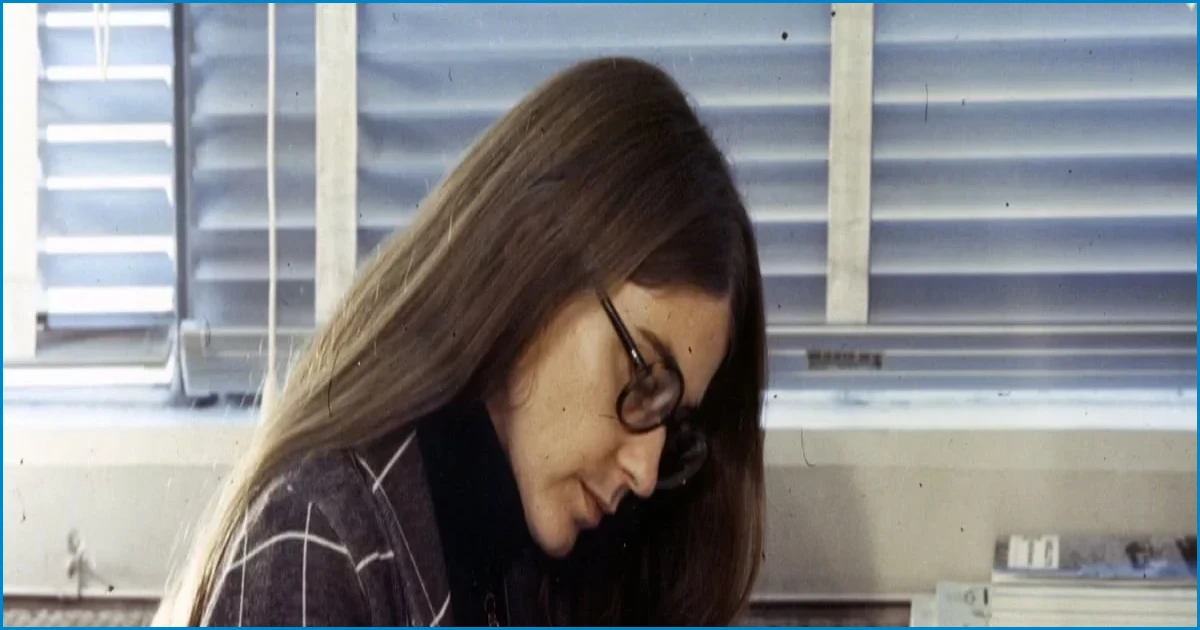
Margaret Hamilton, the influential computer scientist whose work was vital to the success of the first moon landing, has died at the age of 90, the Massachusetts Institute of Technology (MIT) announced on Wednesday. Hamilton, who passed away on 30 September, was a trailblazer in a field that had yet to formally recognize the roles of software engineers and computer scientists.
Her journey into programming began under the guidance of a prominent MIT meteorologist. She continued to refine her skills at an MIT laboratory, where she developed software designed to detect enemy aircraft. When the institute secured a contract from NASA to develop the onboard flight software for the Apollo missions, Hamilton seized the opportunity. In a 2019 interview, she recalled being the first programmer to join the team and the first woman they hired, noting her attraction to the challenge of working on a project that had never been attempted before.
Her contribution proved critical in 1969. Minutes before the Apollo 11 spacecraft was scheduled to land on the lunar surface, an alarm signaled an emergency from the onboard computer. While the mission faced the potential of being aborted, the software functioned exactly as Hamilton and her team had designed it, allowing the spacecraft to proceed. In 2016, then-President Barack Obama honored her with the Presidential Medal of Freedom, stating that while the astronauts did not have much time, they were fortunate to have had Margaret Hamilton.
Reflecting on her career in a 2009 interview with MIT News, Hamilton remarked that they were the luckiest people in the world, adding, "There was no choice but to be pioneers; no time to be beginners." According to MIT, she is survived by her daughter, a son-in-law, two grandsons, and four great-grandchildren.