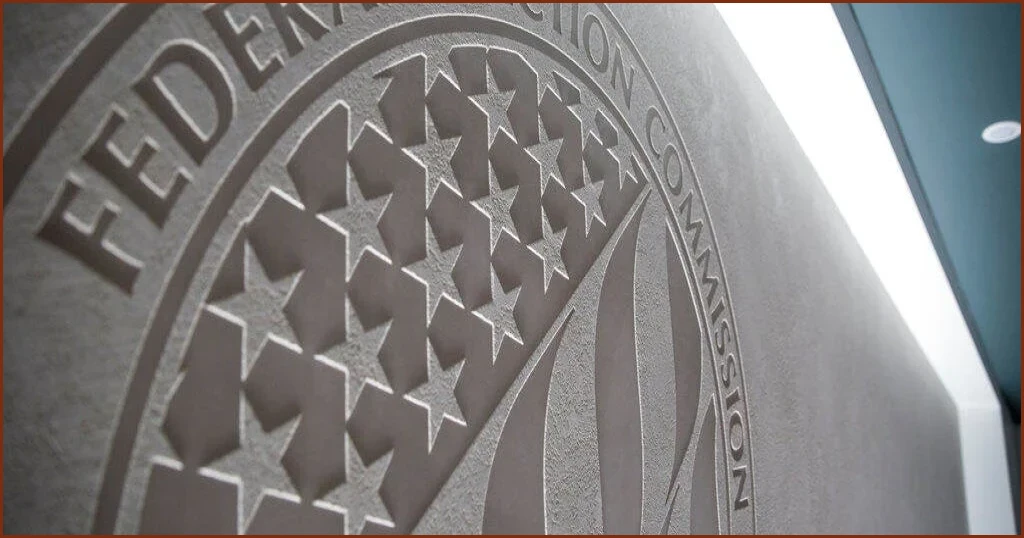
The Federal Election Commission (FEC), the nation's primary regulator for campaign finance, remains unable to perform its core functions as the 2026 midterm elections approach. With only two of its six commissioner seats currently occupied, the agency lacks the four-member quorum required by federal law to open investigations, levy civil penalties, issue formal legal guidance, or establish new rules. This regulatory standstill has persisted since May 2025, leaving the agency unable to address a growing backlog of enforcement cases, which has surged from 154 to 307 over the past year. In the 12 months prior to the loss of the quorum, the agency had successfully closed 180 cases and imposed approximately $1 million in civil penalties.
The impact of this paralysis has been felt across the political spectrum as lawmakers seek clarity on emerging issues. In July, Rep. Mike Lawler, a New York Republican, and Rep. Josh Gottheimer, a New Jersey Democrat, contacted the FEC to request help in preventing artificial intelligence chatbots from disseminating false information regarding the midterm elections. Their request, which also went to the Justice and Homeland Security departments, urged coordination on "AI-driven threats to election integrity" and pressed for safeguards from AI companies. Their concerns were underscored by a September survey from the American Association of Political Consultants Foundation, which found that a quarter of likely voters use AI tools daily and at least 38% have obtained information about candidates or voting from AI search summaries. FEC Commissioner Shana Broussard, a Democrat, responded later that month that the agency could not proceed with the request. She signed the letter as an individual commissioner, noting that without a quorum, she could not speak for the agency.
Other representatives have faced similar roadblocks throughout the year. Rep. Anna Paulina Luna, a Florida Republican, asked the FEC in April whether she could use campaign funds to pay for childcare while attending committee hearings, as the Capitol's daycare center only permits full-time care. An FEC official replied the next day that the commission could not issue advisory opinions until a quorum is restored. Luna stated in an interview that she reached out to the White House to emphasize the importance of the FEC regaining a quorum, noting, "Until the FEC meets, we're going to be operating in a gray area, which is why we need them to get a quorum to get a yes or no. Obviously, we don't want to get in trouble."
The regulatory void has also affected other inquiries. Rep. Mike Levin, a California Democrat, requested an investigation into allegations that Hungary's government funneled money to the Conservative Political Action Conference, only to be told by Broussard that complaints could not proceed. In June, Broussard and Democratic Commissioner Dara Lindenbaum provided the same response to Rep. Lauren Boebert, a Colorado Republican. Furthermore, Rep. Mike Thompson, a California Democrat, sought guidance on whether trading on prediction markets like Kalshi by candidates and PACs should be reported under campaign finance law. Broussard replied that the FEC was unable to commence rulemakings or issue advisory opinions. Thompson stated that such markets can be easily manipulated by wealthy special interests and that the FEC should be addressing the issue.
The current impasse stems from a series of departures and stalled nominations. The commission began to unravel as President Trump returned to the White House. Sean Cooksey, a Republican commissioner, resigned in January 2025 to join the White House as a top lawyer for Vice President JD Vance. Weeks later, Mr. Trump removed Democratic FEC Chairwoman Ellen Weintraub, who had served on the commission since 2002 and claimed the firing was illegal. By the end of April 2025, Republican Commissioner Allen Dickerson resigned, and in October of last year, Republican Trey Trainor also stepped down. This left only two commissioners, both Democrats, marking the first time since the agency's 1974 creation that it has been without members from one of the two major parties. Although President Trump nominated two Republicans to the commission in February, the Senate has not held a hearing on either nominee eight months later.
Critics warn that the lack of enforcement is creating a culture of impunity. Adav Noti, executive director of the Campaign Legal Center, argued that the perception that "anything goes" has encouraged boundary-pushing. His organization recently filed a complaint alleging that President Trump exercises illegal control over the pro-Trump super PAC MAGA Inc., citing the president's own remarks in September that the PAC's war chest is "my money that I control." While a MAGA Inc. spokesperson denied any impropriety and stated it complies with the law, Noti emphasized that the lack of an enforcement mechanism leaves a "blanket impunity for lawbreaking." Conservative groups have expressed similar frustration; Paul Kamenar, a lawyer at the National Legal and Policy Center, noted it is "very disconcerting" that the FEC remains incapable of action, including on a complaint they filed against Rep. Alexandria Ocasio-Cortez regarding the use of campaign funds for a psychiatrist.
The regulatory void coincides with the most expensive election cycle in history, with ad spending projected to reach $11.6 billion, an increase of $400 million from 2024. Much of this spending remains difficult to trace, as hundreds of millions of dollars are routed through political groups that do not disclose their donors. With no functioning commission to interpret the law, campaigns and political committees are effectively left to self-regulate, according to Craig Holman of Public Citizen. "We've got no one that can judge the merits of what's going on, enforce the law and provide guidance to candidates and political committees that seriously want it," Holman said. "So everyone knows you can do whatever you want this time around."
Sen. Elissa Slotkin, a Michigan Democrat, was sent a similar answer.
A spokesperson for Slotkin said the inquiry was a question about how campaign funds could interact with Senate-sanctioned liability insurance, and that no lawsuit was anticipated.