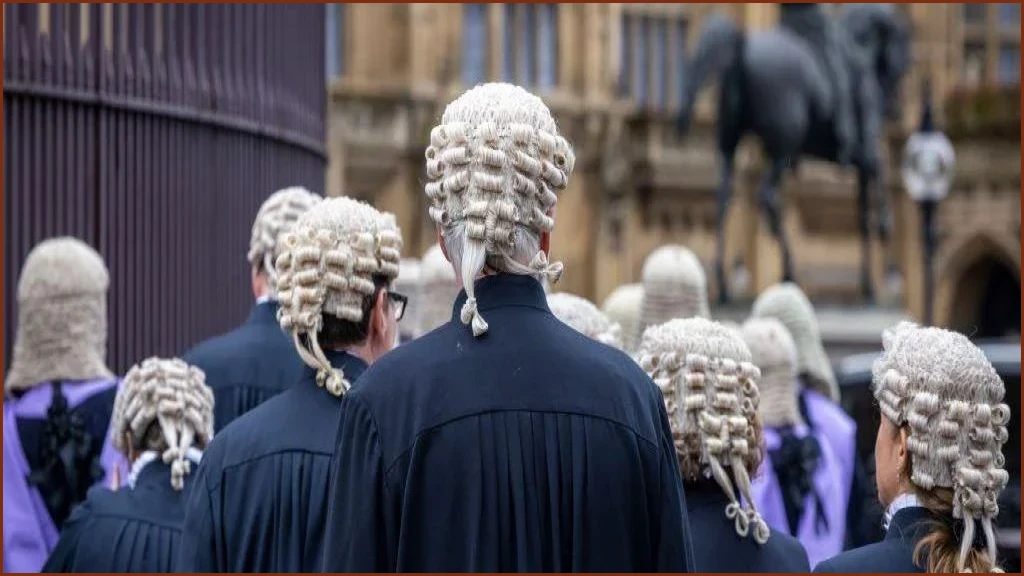
Prime Minister Andy Burnham has officially scrapped controversial government plans to restrict the use of jury trials in England and Wales. The abandoned proposal, initially introduced by the government of Sir Keir Starmer, would have allowed judges to make the sole decision on cases that would lead to a sentence of less than three years.
The Ministry of Justice (MoJ) had previously suggested that only complex fraud and financial offences would be handled by judges sitting alone, while proposing that thousands of medium-level crimes should remain with volunteer magistrates who sit without a jury.
Justice Secretary Alex Norris confirmed the change in direction, stating he had decided to change course after hearing the "strength of feeling" regarding the original proposals. Former Justice Secretary David Lammy had first announced these plans in December, following a recommendation in a major review of the court system in England and Wales.
The series of radical reforms, which included scaling back jury trials, were presented as the best way of addressing record backlogs that were exacerbating the prison population crisis.
The current court backlog stands at nearly 81,000 cases, having grown significantly due to pre-pandemic funding cuts and court closures during national lockdowns. Official projections estimated the backlog could reach 100,000 before the next general election and, in a worst-case scenario, climb to double that number by 2035.
However, there are indications the backlog is now stabilizing after the government committed unlimited funding to pay for more judges to sit in previously unused courts.
Under the original plans, Lammy had intended to reserve jury trials for the most serious "indictable" offences—cases always sent to the Crown Court, such as murder and rape. Less serious offences, where the sentence would be no more than three years, would have been decided by a judge alone in the Crown Court.
Even less serious offences would have remained in magistrates' courts, effectively abolishing the right of defendants to request a trial by jury when they felt it was their best chance of being cleared.
These proposals triggered an outcry across the criminal justice world, with opponents arguing that eroding the 800-year-old right to trial by jury would not solve the underlying backlog.
Norris stated that he remains committed to bringing down the backlog and delivering swifter justice. "I have heard the strength of feeling on the proposals for increasing the number of judge-alone trials in the Crown Court and have made the decision to change course," he said. "This allows us to start that work far earlier, ensuring that under this government we do not have victims waiting endlessly for justice.
Justice delayed is justice denied, and I am committed to maximising efficiencies in our system alongside record investment. I remain committed to structural reform which is crucial if we are to bring down the backlog."
Andrew Thomas KC, chairman of the Criminal Bar Association, said the profession was "delighted" by the decision. "Justice needs juries," he said. "Nothing inspires more public trust than 12 ordinary citizens from all walks of life deciding the facts of a case together." Thomas noted that the bar is pleased the government is proceeding with other important changes in the bill to protect victims and witnesses, such as new powers to prevent unfair questioning about a complainant's behaviour.
However, he warned that plans to keep more middle-ranking cases before magistrates by abolishing defendants' rights to elect a jury trial could backfire due to a shortage of magistrates.
"The proposal to strip defendants of their right to elect a crown court trial, combined with doubling magistrates' sentencing powers to two years, would shift 25,000 cases a year—including 5,500 jury trials—out of the crown court," Thomas explained. "These are not minor offences. It includes serious and sensitive cases including assaults, sexual assaults, child abuse and grievous bodily harm.
Our volunteer magistrates do an excellent job but they are completely unequipped to try complex, multi-day trials. It would be a car crash if they tried to do it, especially at this time."
Barrister Karl Turner, a Labour MP who was previously suspended from the parliamentary party after criticizing the government's jury trial reform plans, thanked Burnham for his support during his campaign. Meanwhile, Shadow Justice Secretary Nick Timothy stated: "This is a major victory for everyone who fought to defend trial by jury, and Conservatives led that fight from day one. Labour have been forced to abandon its central attack on jury trials in the Crown Court."