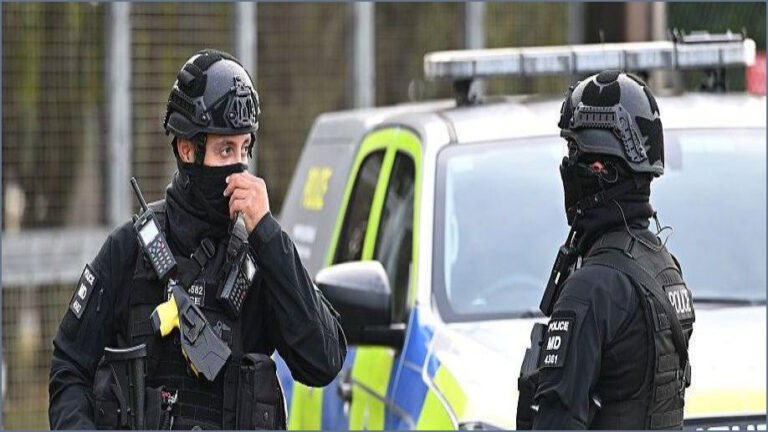
On August 14, Jammu and Kashmir Chief Minister Omar Abdullah issued a warning to New Delhi regarding a potential Gen Z protest in the restive Himalayan region. He highlighted the endless administrative hurdles imposed by the lieutenant governor against his local administration, pointing specifically to the stalling of a reservation report designed to address grievances within the open-merit category. Weeks later, on September 2, Abdullah's cabinet ministers took to the streets of Srinagar. Carrying placards that explicitly named the political incursions of Prime Minister Narendra Modi's regime in Kashmir, they marched toward the headquarters of the Bharatiya Janata Party (BJP). The demonstration was swiftly shut down by police officers operating under the lieutenant governor's command, who scuffled with the ministers and put them into vans like common criminals.
While television crews and online content creators recorded the incident, it failed to spark primetime outrage across India's mainstream television networks. In contemporary India, protests are rarely broadcast on television unless they spiral out of control, such as the farmers' march to Delhi in 2020-2021 or the summer Gen Z demonstrations protesting medical entrance test paper leaks. Even then, media coverage often serves as a government salvage operation, frequently framing demonstrators as foreign-funded actors aiming to undermine national security. This systematic dismantling of the right to protest raises a fundamental question about democratic survival, echoing American Founding Father Benjamin Franklin's famous 1789 response when asked if the Constitutional Convention had created a republic or a monarchy: "A republic, if you can keep it." Franklin, however, had lived through a transition to democracy that assumed the right to protest against repression was non-negotiable. Modern political scientists Steven Levitsky and Daniel Ziblatt in their 2018 book "How Democracies Die" have since illustrated how demagogues can systematically hollow out democratic rights while maintaining a democratic facade.
This democratic paradox is highly visible in Kashmir, where the central government has restricted federal rights. After stripping Jammu and Kashmir of its partial autonomy and downgrading it to a union territory in August 2019, the central government has delayed the restoration of statehood while erasing political dissent. Much of the Indian public approves of this force, aligning with the BJP's civilizational project to prioritize Hindu interests, reclaim "Hindu pride," rename public spaces, alter school history textbooks, and decrease Muslim representation. In Kashmir, where Muslim political candidates cannot be legally excluded from elections, power has instead been concentrated in the hands of a New Delhi-appointed Hindu Lieutenant Governor, Manoj Sinha. Abdullah noted this bureaucratic shift in a recent podcast, stating that officers who once found multiple ways to execute his orders now find ten reasons why those orders should not be carried out.
Sinha is a veteran BJP figure from Uttar Pradesh, the center of the Ram Janmabhoomi movement that culminated in the inauguration of a grand temple in January 2024, which serves as a major political victory for Modi alongside the removal of Kashmir's autonomy. Meanwhile, India's secular opposition coalition has grown hesitant to engage with Kashmir's grievances. This marks a shift from January 2023, when opposition leader Rahul Gandhi concluded his Bharat Jodo Yatra in Srinagar, referencing the Buddhist concept of shunyata and the Sufi concept of fanaa to foster solidarity. However, after the BJP swept both parliamentary seats in Hindu-majority Jammu during the April-May 2024 national elections and subsequently won the provincial elections, the Congress party and its allies concluded that prioritizing Muslim minority issues would lead to electoral defeat. This has resulted in opposition silence on Kashmir, the incarceration of activist Umar Khalid, and the controversial demolition policies of Uttar Pradesh Chief Minister Yogi Adityanath. Following his 2019 re-election, Modi mocked this shift, stating that no political party dared to mislead the country under the mask of secularism.
Waheed Para, a senior leader of the Jammu and Kashmir Peoples Democratic Party (PDP), has argued that local leaders should not depend entirely on national parties to champion their cause, pointing to Ladakh's successful negotiations with New Delhi driven by regional solidarity. Para noted that while PDP President Mehbooba Mufti wrote to Abdullah to urge collective action, the mandate rests with the chief minister. Although Modi's government assured the Supreme Court in December 2023 that statehood would be restored after local elections, that promise remains unfulfilled, and the judiciary has offered no censure. This institutional abandonment underscores the need for internal political unity in Kashmir, yet the local political landscape remains divided by public arguments and online disputes on platforms like X.
Much of the local criticism is directed at Chief Minister Abdullah and his party, the National Conference, which promised 100,000 jobs and the restoration of federal guarantees but has failed to deliver under its diminished authority. Since taking office two years ago, Abdullah has had to navigate both a hostile lieutenant governor and a vast Hindu nationalist network operating through 57,000 cells and 1.5 million volunteers across India. Abdullah initially tried to repair relations with New Delhi to secure federal concessions and funding, but the BJP remains committed to its goal of installing a Hindu chief minister in Kashmir, which requires marginalizing local Muslim leadership. While online critics condemn Abdullah on issues ranging from controversial waqf legislation to local liquor shops and international conflicts, very few of these political figures protest physically. Only Abdullah, who forced his way into a martyrs' memorial in July 2025, and Mufti, who led street protests in New Delhi in February 2023, have actively faced police intervention.
While Lieutenant Governor Sinha describes Kashmir as being on the threshold of a new future with significant infrastructure spending and a digital startup economy, critics point to a severe crackdown on local expression, including Sinha's ban on 25 books last year. To counter this, some argue that Kashmir's leaders must learn to organize effectively, drawing inspiration from India's recent Gen Z student protests led by the "Cockroaches"—a moniker adopted by students in response to a comment by the chief justice. Unlike the Congress party's demand for ideological consistency, the student movement built a broad coalition around their shared grievance over exam paper leaks, uniting middle-class students who supported Hindutva with leftist activists chanting Faiz Ahmad Faiz's anti-fascist anthem "hum dekhenge." This pragmatic coalition successfully pressured the BJP from within its own support base.
For the National Conference, the path forward may require building a similar coalition in Jammu to demand the restoration of statehood. Although a journalist close to the administration claimed that Abdullah has given up on Jammu, local political analysts suggest the region has not abandoned the goal of statehood but has simply rejected the inconsistent messaging of the Congress party. Abdullah retains a moderate reputation among average Hindu households in Jammu, which could allow the National Conference to build economic and social solidarity networks. A successful regional coalition would need to unite local business owners concerned about external competition, students, unemployed youth, and disgruntled local political figures. To achieve normal governance, Jammu and Kashmir's political factions must establish local unity; otherwise, they risk permanent political marginalization.
There are no dearth of people who are enamored with the new “dissidents.” But there are also those – small businessmen, entrepreneurs, academics, rural voters disengaged from the internet’s firestorm of opinions – who point out that emphasizing the need for dissidence is not itself dissidence. Upbraiding a disempowered local government for its lack of dissidence is not empowering. No one has yet articulated a sustainable political roadmap to actually achieve J&K’s goals, starting with restored statehood.
Others see lived experiences obliterated with a crackdown on collective memory – Sinha banned 25 books last year. Sinha’s bureaucrats hear foot-tapping by an influx of tourists and movie crews; others hear collective gasping underneath that ebullient surface.