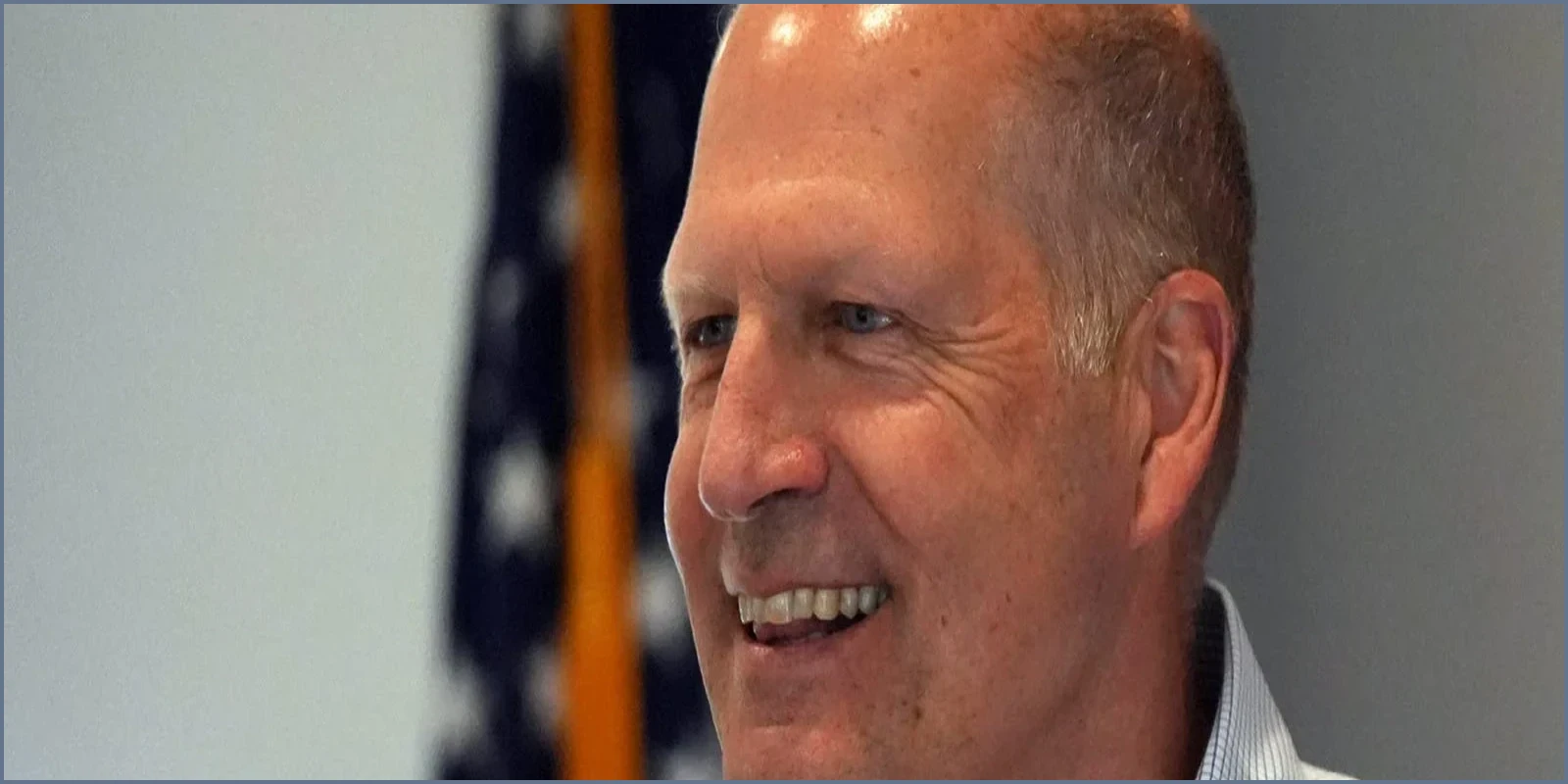
Republican National Committee Chairman Joe Gruters traveled to New Hampshire on September 13 with a major commitment: the national party will invest whatever it takes to win the highly competitive U.S. Senate race between former Republican Senator John E. Sununu and Democratic Representative Chris Pappas. Speaking at the state GOP's unity breakfast, Gruters emphasized the strategic importance of the contest, stating that the party views this as one of its top pickup opportunities nationwide and is fully prepared to make the necessary financial commitments to rally its supporters.
New Hampshire is a historically purple state, but it has not elected a Republican to the U.S. Senate in nearly a decade, and it has not supported a Republican presidential candidate since 2000. Despite these historical trends, national Republicans are pouring millions of dollars into the state this year. Recent polling indicates a very tight margin, leading some national forecasters and political pundits to align with the RNC's belief that the GOP has a genuine opportunity to flip the seat. The seat is currently held by retiring Democratic Senator Jeanne Shaheen, and Republicans are hoping to capitalize on the deep local popularity of the Sununu family name.
The stakes are incredibly high for both parties. Control of the U.S. Senate is currently held by Republicans with a narrow 53-47 majority. For Democrats, retaining this seat is vital to their aspirations of winning back the chamber, while a Republican victory would provide the GOP with a crucial cushion during a challenging election cycle where Democrats are expected to make gains elsewhere.
Reflecting the tightening nature of the race, the Cook Political Report recently adjusted its rating for the contest from "Lean Democratic" to "Toss-up." Polling data continues to show a highly competitive matchup. A University of New Hampshire poll released on September 24 placed Pappas ahead by eight percentage points, but UNH Survey Center Director Andrew Smith cautioned that the race remains a "statistical tie" when factoring in undecided voters and candidates who are not yet widely known.
RNC spokesperson Kristen Cianci expressed strong confidence in Sununu's prospects, stating that Republicans are fully capable of flipping the seat. Cianci pointed to the neck-and-neck polling and the recent rating change to "Toss-up" as evidence of momentum. She criticized the Democratic nominee as a weak candidate with a poor record who is struggling early in the campaign, while praising Sununu's vision, energy, and experience.
The Republican momentum in New Hampshire stands in contrast to trends observed in other key states, such as Maine, Georgia, and North Carolina, where Senate races have recently shifted in favor of Democrats. Andrew Smith attributed New Hampshire's unique trajectory to the strength of the candidates and the specific political landscape of the state. He noted that while New Hampshire typically leans Democratic and the national environment should favor Democrats, the Sununu family has a strong track record of electoral success in the state. Sununu, as a former senator, possesses high name recognition, whereas Pappas is less familiar to voters living outside of his congressional district.
Sununu is no stranger to this particular Senate seat. He previously won it in 2002 by defeating then-Governor Shaheen, serving a single term before Shaheen defeated him in a rematch in 2008. In a statement, Sununu campaign spokesman Mike Schrimpf argued that Sununu would serve as an "independent voice" in Washington, contrasting him with Pappas, whom he accused of voting along party lines and increasing costs for residents. Schrimpf emphasized that Sununu has been laser-focused on addressing affordability issues since launching his campaign.
Financially, Pappas holds an initial advantage, reporting $4.25 million in cash on hand compared to Sununu's $3 million. However, national Republican organizations are working to close the gap. The Senate Leadership Fund announced a massive $17 million investment to support Sununu back in April, marking the largest commitment by the group in New Hampshire in ten years. Additionally, Republican organizations have reserved $25 million in advertising space across the state, according to data from the ad-tracking firm AdImpact.
Despite the influx of funding, Sununu faces significant national headwinds, most notably from the leader of his own party. Historically, the president's party struggles during midterm elections, particularly when the president's approval ratings are low. National tracking from the New York Times showed President Donald Trump's national approval rating at 37% as of September 23. In New Hampshire, a UNH poll from the same day showed Trump's approval rating at an all-time low of 32%.
Sununu has historically maintained a complex relationship with Trump. In 2024, Sununu authored an opinion piece in the Union Leader calling Trump a "loser." Although Trump has since endorsed Sununu's Senate bid, it remains uncertain whether Sununu can successfully distance himself from the president's low approval numbers. Pappas has consistently sought to link Sununu to Trump, criticizing him in a September 23 interview for claiming he had never met the president while simultaneously supporting policies ranging from military actions to tariffs, healthcare cuts, and gas price increases.
Recent polling also suggests that Democrats hold advantages on key issues. An August 20 poll from the Saint Anselm College Survey Center indicated that 52% of likely New Hampshire voters favored a Democrat for Congress compared to 41% for a Republican. Furthermore, voters trusted Democrats over Republicans on economic issues by a margin of 46% to 39%. Nationally, an Economist/YouGov poll released on September 22 showed Democrats with a 14-point lead on a generic congressional ballot.
The state's primary election on September 8 also demonstrated significant Democratic engagement. While the New Hampshire secretary of state's office had projected that 103,024 Democrats and 145,751 Republicans would turn out, the actual participation was nearly reversed, with 155,634 Democrats and 113,605 Republicans casting ballots. Neil Levesque, founder of the Saint Anselm College Survey Center, described this turnout as a sign of "incredible Democratic energy." Pappas has also established himself as a resilient campaigner, having won reelection four times in the historically competitive First District, which encompasses the southeastern portion of the state.
In response, Republican groups have outspent Democrats on television advertising. One prominent ad sponsored by the Senate Leadership Fund targeted Pappas over his relationship with his now-husband, who worked as an Amazon lobbyist, alleging a failure to properly disclose the relationship. The Pappas campaign defended its actions by pointing to House Ethics Committee guidance from 2020, which stated that members of Congress are not required to disclose the identities of individuals they are dating.
Levesque, whose own polling showed Pappas leading by seven points, expressed skepticism about claims that the race is a dead heat. While he credited Sununu with running highly effective, localized advertisements and demonstrating strong campaigning skills, he noted that the national Republican brand presents a challenging hurdle for any GOP candidate in the state.
New Hampshire has a long history of exceptionally close election outcomes. In the 2024 presidential election, Vice President Kamala Harris won the state against Trump by less than three percentage points. In 2016, Democratic Senator Maggie Hassan won her seat by defeating incumbent Kelly Ayotte by a margin of just over 1,000 votes. Observers expect this Senate race to follow a similarly close trajectory.
Both campaigns acknowledge the tight nature of the contest. Pappas noted that polling has consistently remained within the margin of error over the past year, adding that he ultimately trusts New Hampshire voters to make the final decision. Meanwhile, national figures from both parties continue to visit the state. On September 18, Florida Republican Senator Rick Scott attended a fundraising dinner, telling reporters that New Hampshire represents the party's best opportunity to flip a Senate seat. UNH's Andrew Smith agreed that while New Hampshire may indeed be the GOP's strongest prospect, the fact that a traditionally leaning Democratic state is their best hope suggests a very difficult midterm landscape overall for the Republican Party.