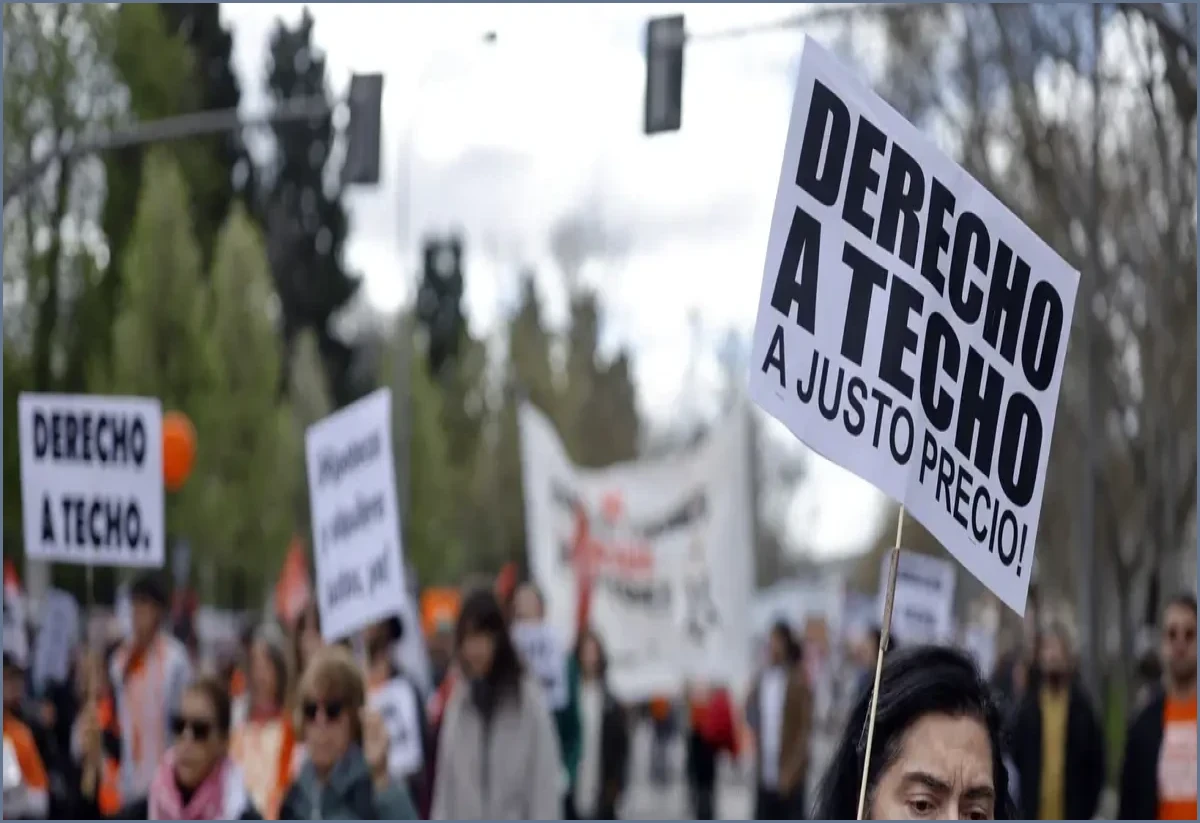
The forced removal of an 87-year-old woman from her long-term Madrid residence has ignited a fierce national debate, bringing Spain's chronic housing crisis to the forefront of political discourse. Maricarmen, who had lived in her apartment in an upmarket central district for 70 years, was escorted from the property on a stretcher this past Wednesday. The scene, which was broadcast live on television, showed the elderly woman flanked by police and protesters, marking a traumatic end to her seven decades in the home.
The eviction followed her inability to meet a 275-percent rent increase imposed by the real estate firm that purchased the building. Her case has rapidly become a poignant symbol of a market that many citizens and observers now describe as fundamentally broken. Protests erupted in Madrid, Barcelona, and other cities on Wednesday night as thousands gathered to voice their outrage over a housing market that has become increasingly inaccessible to both young people and the elderly.
The left-leaning newspaper El País captured the national sentiment in an editorial, stating that while the law was technically upheld, the result is a failure that resembles the “law of the jungle” in a fractured market. Data from the real estate portal Idealista and official government figures indicate that the average cost of renting or purchasing a square metre in Spain has surged by approximately 50 percent over the last decade. Madrid, in particular, has faced extreme pressure, having been ranked as a global leader for luxury properties by the firm Barnes for two consecutive years.
Many residents in Spain, which ranks as the world's second-most visited country, point to the proliferation of short-term tourist rentals like Airbnb as a primary driver of rising costs and diminished housing supply. This issue has triggered widespread protests in major tourism hubs, including Barcelona. Furthermore, structural issues such as a severe lack of public housing exacerbate the situation. According to OECD figures, only 1.2 percent of Spain's total housing stock is publicly owned, a percentage significantly lower than that of European counterparts such as Britain, France, or the Netherlands. The Spanish consumer group OCU has described the current market as extremely difficult, noting that finding a rental in Madrid or Barcelona for under €700 a month is a major challenge.
The incident has intensified political maneuvering ahead of next year's general election. Socialist Prime Minister Pedro Sánchez condemned the eviction as a “social tragedy,” placing blame on the conservative-led Madrid city and regional authorities. However, the political fallout remains uncertain due to Spain’s decentralized power structure, where regional authorities hold primary responsibility for housing policy. Guillermo Fernández Vázquez, a professor at Madrid's Carlos III University, noted that the eviction exposes the powerlessness of the central government, stating that it highlights the failure of existing housing policies.
While Prime Minister Sánchez has urged parliament to pass legislation banning such evictions, his coalition government faces internal friction. The far-left junior partner, Sumar, has formally demanded a rent freeze and the expropriation of the property from which Maricarmen was removed. Lawyer Beatriz Duro, representing the pensioner, criticized the current legal framework, noting that existing protections via royal decrees are insufficient "sticking plasters" that fail to provide a true legal umbrella for vulnerable citizens. Meanwhile, the conservative People's Party (PP) is expected to seek a swift conclusion to the matter, particularly amid a separate controversy involving a luxury Madrid penthouse allegedly acquired by regional leader Isabel Díaz Ayuso using public funds, an allegation she denies.
READ ALSO: 11 new housing laws in Spain that were meant to pass in September
He said the eviction had "again laid bare the failure of all the housing policies of the government" and its "powerlessness", Vázquez told AFP.