President Vladimir Putin declared on Wednesday that the results of Russia’s first parliamentary election held during wartime serve as a clear indicator of public support for his policies. With more than 97% of the ballots counted from the three-day voting period that concluded on Sunday, officials confirmed that the Kremlin’s primary political vehicle, United Russia, is on track to secure over three-fourths of the seats in the State Duma. This outcome marks a record-high level of legislative dominance for the party, occurring in an environment where meaningful opposition was effectively excluded from the ballot.
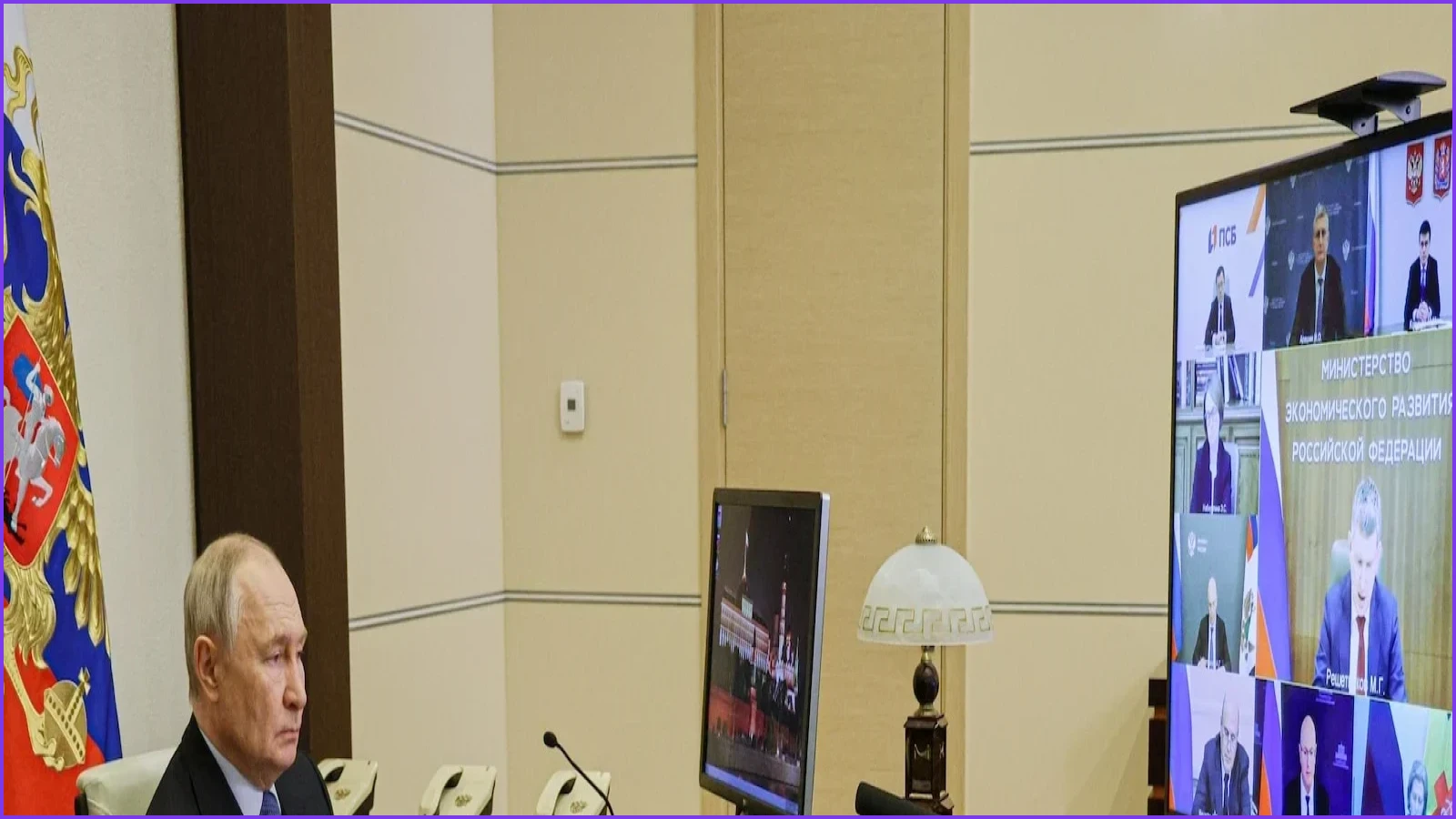
Official data indicated a voter turnout exceeding 59% of the 111 million eligible citizens, representing the highest participation rate for a parliamentary election in over a decade. Authorities extended the voting process across three days to encourage higher attendance, incorporating online voting in select regions and including territories in Ukraine that were illegally annexed by Moscow. “Such a record number of people who come to cast ballots shows that the people of Russia support our efforts aimed at strengthening the country,” Putin remarked during a meeting with government officials, marking his first public comments on the election results.
The electoral process proceeded despite persistent Ukrainian drone strikes. The Russian Defense Ministry reported the downing of 1,110 drones overnight on Sunday. Moscow Mayor Sergei Sobyanin described a significant assault on the capital, noting that 450 drones were intercepted while targeting the city. This attack caused damage to an oil refinery and a residential building, resulting in three deaths and 38 injuries in the wider Moscow region. Addressing these incidents, Putin stated that the enemy’s attempts to disrupt the election failed, asserting that the lines at polling stations proved the Russian public could not be intimidated.
This election was the first to take place since the 2022 full-scale invasion of Ukraine and included voting in four regions seized and illegally annexed by Moscow. In the Russian-held section of the Donetsk region, voters were observed placing ballots in boxes under the supervision of armed soldiers. Similar voting occurred in Crimea, which was annexed in 2014. These actions have been denounced as illegal by Kyiv. Putin also addressed soldiers fighting in Ukraine, telling them the vote was a gesture of trust in their heroism and devotion to the country. He reiterated his confidence that all objectives of what the Kremlin terms the “special military operation” would be achieved.
The Kremlin leveraged a significant state media campaign and strict control to solidify its political influence, despite economic challenges and the ongoing drone strikes. Preliminary figures suggest United Russia will hold between 347 and 355 of the 450 Duma seats. The remaining seats are largely expected to be filled by parties that typically align with the Kremlin on major policy matters. The liberal Yabloko party, which had publicly criticized the war, was removed from the ballot by the Supreme Court last month and failed to secure any seats with its remaining candidates in single-seat races.
It received just under 58% of the vote for the 225 seats apportioned by parties and also won 208 single-seat races that fill the other half of the chamber.
Several smaller parties representing the “systemic opposition” that vote in sync with the Kremlin on all key issues are set to fill most of the remaining seats.