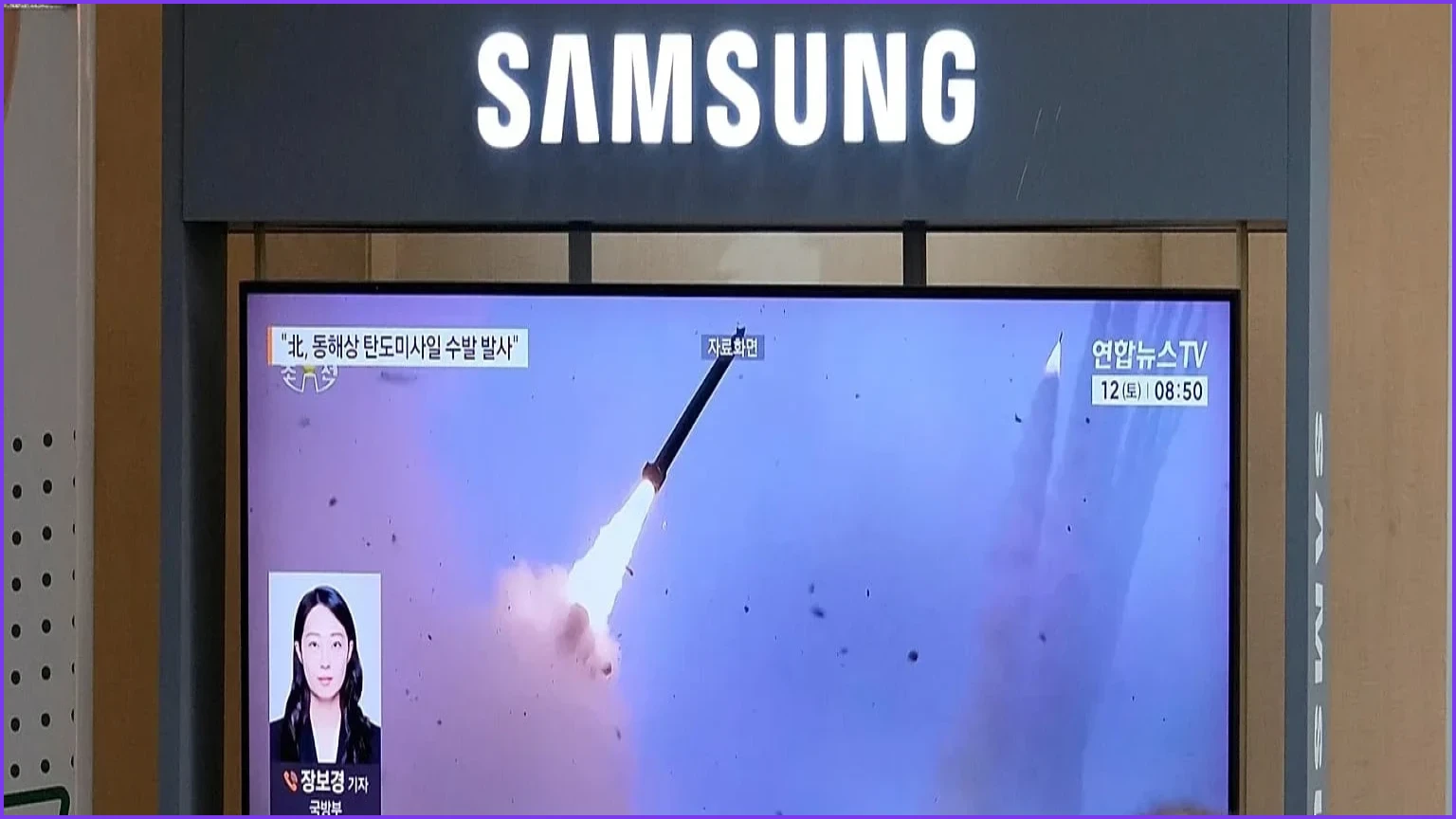
North Korea conducted a launch of a suspected ballistic missile on Sunday, according to the office of the Japanese Prime Minister. Simultaneously, South Korea's military reported that Pyongyang had fired an unidentified projectile into the East Sea. This latest military action follows North Korea's formal rejection earlier this week of a resolution by the International Atomic Energy Agency (IAEA) regarding its nuclear program.
A spokesperson for the North Korean Foreign Ministry stated that the IAEA resolution had no effect on the country's position as a nuclear weapons state. In August, Donald Trump told reporters that North Korean leader Kim Jong-un possessed 57 very powerful nuclear weapons. While touting his relationship with the North Korean leader, Trump remarked that the existence of Pyongyang's nuclear arsenal should never have been allowed to happen, though he defended his rapport with Kim as a positive factor. Trump previously announced his intention to meet with Kim later this year, which would mark their first encounter since his initial term in the White House.
South Korean President Lee Jae Myung expressed his support for maintaining dialogue, stating on Friday that he was urging Trump to keep communication channels open. He added that Seoul was working to facilitate potential talks between the United States and North Korea, noting that while the likelihood is uncertain, every possible effort must be made to turn that possibility into reality. However, prospects for an immediate summit face challenges. Kim Yo Jong, the sister of the North Korean leader, recently criticized military drills in the Western Pacific, describing them as a US-led war rehearsal. These remarks followed the conclusion of Exercise Freedom Edge 26 on September 11, a trilateral drill involving the United States, South Korea, and Japan that the US Pacific Command stated improved regional readiness. Kim Yo Jong emphasized in a statement via the KCNA state news agency that North Korea's commitment to defending its sovereignty through the intensification of nuclear war deterrence remains unchanged.