The rapid escalation of the conflict between Saudi Arabia and Yemen's Houthi rebels is threatening to drag Pakistan directly into a wider Middle East war, putting immense pressure on Islamabad to honor a recently expanded mutual defense agreement.
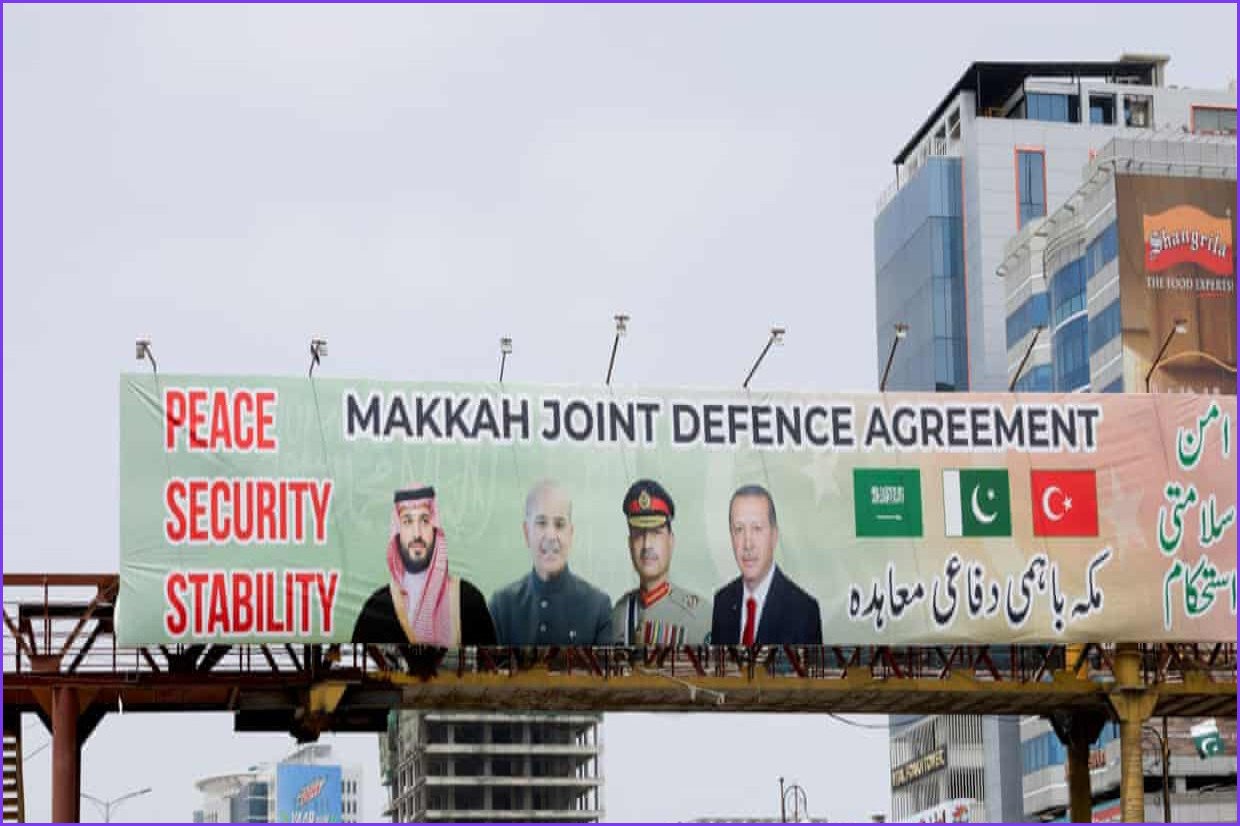
Under the Mecca joint defence agreement—originally signed as a bilateral pact last September by Pakistan’s army chief, Gen Asim Munir, and Saudi Crown Prince Mohammed bin Salman, and expanded in August to include Turkey—an armed attack on any of the three nations is treated as an attack on all. When the deal was first orchestrated, Pakistani leadership strategic planners assumed that regional tensions between the U.S. and Iran would subside, keeping the risk of a Gulf-wide conflict low. However, the geopolitical landscape shifted dramatically in February when U.S. and Israeli forces began bombing Iran, prompting retaliatory Iranian missile strikes across the Gulf, including on Saudi Arabia.
This regional firestorm shattered the fragile truce between Saudi Arabia and the Iran-backed Houthi rebels in Yemen. Earlier this month, Houthi forces achieved unprecedented territorial gains in Yemen and launched drone and missile strikes directly into Saudi territory, prompting Riyadh to respond with heavy airstrikes. With full-scale war looming, Saudi Arabia could activate the Mecca pact, leaving Pakistan with little choice but to deploy its military forces. Thousands of Pakistani troops are already stationed in Saudi Arabia for training purposes.
Ayesha Siddiqa, a defence analyst and senior fellow at King’s College London, observed: "I don’t think Asim Munir properly calculated the threats the region was facing – and that Pakistan might need to put its troops on the line quite so soon."
Pakistan is almost entirely dependent on Saudi Arabia both economically and geopolitically, having recently received a vital $8 billion (£6 billion) in financial assistance and investments from Riyadh. While Pakistani government ministers and top military commanders issued bullish public statements last week promising "unconditional" commitment and pledging to go to "any extent" to defend Saudi Arabia, officials are privately terrified. The country is already economically devastated, battling a de facto war with the Taliban in Afghanistan, and struggling with an uncontrollable surge in militancy along its borders.
Activating the pact would carry severe domestic and regional repercussions for Islamabad. It would be widely seen as taking a direct side against Iran, with whom Gen Munir had previously maintained decent relations to facilitate ceasefire talks. Now, relations are strained, with Pakistan infuriated by Iran's actions and Tehran harboring deep distrust toward Islamabad. Domestically, Pakistan is home to the world's second-largest Shia Muslim population, who would likely launch massive protests against any military action targeting the Houthis. Furthermore, Iran's friendly relations with the Afghan Taliban could exacerbate Pakistan's border security crisis, while also inflaming the long-running insurgency in Pakistan's unstable Balochistan province.
The decision-making process behind the pact has also drawn sharp domestic criticism. Raja Nasir Abbas, the opposition leader in Pakistan's senate, revealed that only a select few at the top of the military—who act as the country's de facto rulers—were aware of the pact's terms, bypassing parliament entirely.
"It will be a disaster for the country if Pakistan jumps into war," said Abbas. "We are already facing two lethal insurgencies; our economy is in a shambles and inflation has rocketed. If we take Saudi Arabia’s side in this conflict, the country will face chaos, instability and religious division."
Despite the rising tensions, analysts and officials note that no clear "red line" has been defined for activating the pact. Pakistan is hoping Riyadh remains hesitant to enter a direct war with Iran, and Turkey has made its reluctance to join the fighting clear. Muhammad Amir Rana, director of the Pak Institute for Peace Studies, remarked that "Pakistan will do its best not to get involved in any incursion on Yemeni soil."
Privately, a senior Pakistani official suggested that Saudi Crown Prince Mohammed bin Salman is unlikely to initiate a full-scale ground war against the Houthis without U.S. approval. "If the kingdom plans to send its ground forces, Pakistan would support that," he said. "But I don’t think Saudi Arabia would start a full-fledged war against the Houthis without American approval and Trump has snubbed them. Right now, the US does not want to open up another front; they prefer talking to Houthis." However, he added, "You can’t predict the future though."