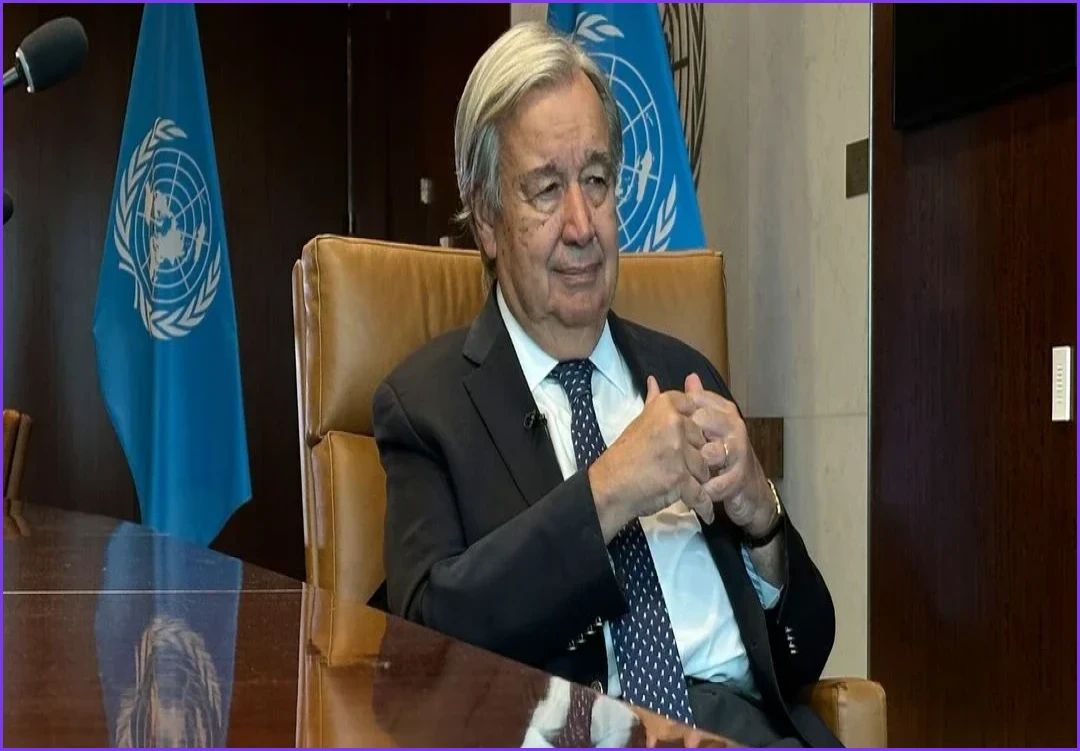
United Nations Secretary-General Antonio Guterres has voiced his "deep regret" regarding the United States' decision to deny a visa to Palestinian President Mahmoud Abbas for the second consecutive year. This refusal prevents President Abbas from attending the upcoming UN General Assembly, which is scheduled to begin next Tuesday.
UN spokesperson Stephane Dujarric issued a statement on Friday expressing concern over the implications of this decision. Dujarric stated that the Secretary-General is worried about the impact on the ability of the State of Palestine to participate fully in the work of the United Nations, emphasizing that full participation from all delegations is essential for the organization's proper functioning. Guterres has urged the United States, in its capacity as the host country, to fulfill its obligations and ensure that visas are issued to all delegations.
The US State Department confirmed on Thursday that it was denying visas to President Abbas and other Palestinian officials. While members of the Palestinian mission to the UN will remain able to attend the assembly, the denial forces a repeat of last year's situation, when the Trump administration similarly blocked the Palestinian delegation, requiring Abbas to address the assembly via video link. On Thursday, the General Assembly voted 152-3 to permit Abbas to appear virtually once again.
Washington justified its decision by citing actions taken by the Palestinian Authority and the Palestine Liberation Organization, claiming these failed to meet commitments under US law. The State Department pointed to Palestinian efforts to "internationalise the Israeli-Palestinian conflict" through bodies like the International Criminal Court and the International Court of Justice, as well as attempts to seek state recognition outside of formal negotiations. Additionally, the US has objected to the Palestinian Authority’s previous system of welfare payments to families of imprisoned or killed Palestinians; however, the Authority has since reformed this system to base payments on financial need rather than prisoner status or political affiliation. Currently, the US position remains in opposition to the 142 UN member states that officially recognized a Palestinian state last year.