A recent breakdown in negotiations between the United States military and the Federated States of Micronesia (FSM) has cast a spotlight on the effectiveness of U.S. policy in the Pacific Islands. On June 29, 2026, Admiral Samuel Paparo, the commander of U.S. Pacific Command (PACOM), sent a letter to FSM President Wesley Simina.
In the letter, Paparo revealed that due to a breakdown in negotiations, PACOM intends to look elsewhere, assessing alternative locations across the region to meet the needs of Pacific defense.
While this move could be a negotiation tactic, the escalation highlights growing friction in a region where the U.S. is competing directly with Chinese influence.
The dispute centers around Yap State, where the U.S. Department of Defense (DoD) had previously announced approximately $2 billion in infrastructure investments on the main island of Yap. However, while American defense planners focused heavily on the main island, Chinese entities were quietly establishing a footprint on the outer islands of the same state.
This division of focus was highlighted during a journey undertaken by analyst Cleo Paskal in May 2025.
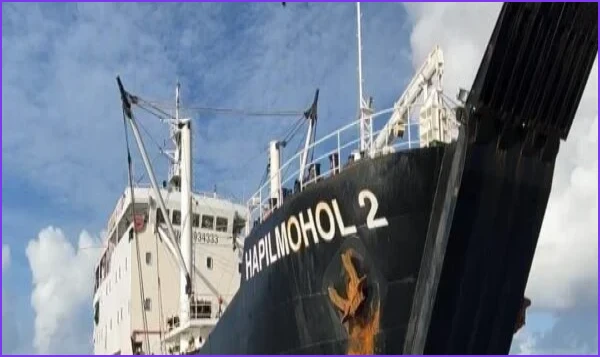
Paskal traveled from Yap to the remote Woleai atoll aboard a China-donated cargo ship, which serves as the only regular transport along the Yap island chain. The arduous journey involved sleeping on the deck alongside several hundred Micronesians and five Chinese construction workers, sharing communal bathrooms, and eating packed rations.
The trip left Paskal with lice, parasites, and a leg wound that required U.S. military-grade salve to heal, but it also revealed a critical blind spot in U.S. regional intelligence.
While U.S. officials assured their superiors that regional engagement was on track, Chinese state-owned companies were preparing to rebuild an old Imperial Japanese runway on Woleai, situated just over 640 kilometers from Guam. During Paskal's visit, FSM President Wesley Simina arrived on Woleai, officially to attend a high school graduation.
However, Simina and his entourage, including his wife riding in the bed of a pickup truck, also attended a groundbreaking ceremony for the runway reconstruction on May 26, 2025.
The groundbreaking featured Chinese heavy machinery and a stage flanked by a Chinese flag, situated right next to overgrown machinery left behind from the era of Imperial Japanese control. The event apparently caught key figures in the U.S. government completely by surprise, exposing a failure among Washington's regional advisors.
Shortly after, Paskal participated in an interview on the School of War podcast via Starlink, warning that the U.S. was not listening to the right people and would face obstacles with its $2 billion Yap investment unless its approach changed.
The subsequent breakdown in negotiations and Admiral Paparo's threat to relocate defense investments indicate that despite a concerted effort by the Trump administration to enhance cooperation with Pacific Island nations, Washington is struggling to secure its desired strategic outcomes.
The situation suggests that U.S. policymakers might have benefited from a different approach to regional diplomacy—perhaps even taking a cue from the late country music icon Dolly Parton's common-sense wisdom.
There is currently an active debate about U.S. policy in the Pacific Islands. Some are saying the U.S. is AWOL in the region. Others have said this is one of the most active times for U.S. engagement, including the Heritage Foundation, which just published a detailed “policy inventory” of announced U.S. activities in the region.
You have reached the limit of 2 free articles this month.