A comprehensive report released by the Israeli human rights organization B’Tselem has accused the Israeli state of engaging in a systematic effort to eliminate the conditions required for Palestinian collective life in the occupied West Bank. The report, which marks the group’s most significant analysis since its founding in 1989, argues that the current Israeli government is intensifying attacks on fundamental aspects of Palestinian existence, including access to employment, healthcare, education, and social movement.
B’Tselem identifies five primary domains through which this assault is conducted: violence and intimidation, movement restrictions, economic strangulation, the destruction of political and social structures, and ethnic cleansing combined with territorial takeover. The report contends that these actions are not isolated incidents but are driven by a coherent organizing logic aimed at rendering the West Bank unlivable for Palestinians.
According to the authors, various state institutions—led by Finance Minister Bezalel Smotrich, who holds extensive authority over civilian matters in the territory—are working to create a reality defined by constant fear. The organization highlights that since October 2023, 1,107 Palestinians have been killed by Israel in the West Bank, and 64 entire communities have been forcibly displaced. The report further asserts that settler violence has evolved beyond private acts, functioning instead as a systematic tool of state control, often supported by military forces and state-supplied infrastructure.
Economic conditions have deteriorated significantly, with the unemployment rate in the West Bank climbing from 13.1% in 2022 to 31.3% in 2024. B’Tselem describes this as a policy of “full economic strangulation,” which includes the mass revocation of work permits and the destruction of agricultural and civilian infrastructure. By 2025, nearly half of all young Palestinians in the territory were reportedly neither employed nor enrolled in education or training. The UN estimated that 700,000 Palestinians required food assistance in 2024, representing a 17% increase over the previous year.
The report points to a 2017 document authored by Smotrich, known as the “Decisive Plan,” as the primary blueprint for these policies. The plan outlines three options for Palestinians: living under Jewish supremacy without national claims, leaving the territory, or facing military suppression. B’Tselem argues that this ideology has been translated into official government policy, budgets, and state practices with unprecedented speed.
Kareem Jubran, head of field research at B’Tselem, stated that the gathered evidence suggests a singular goal: the elimination of Palestinians as a collective. Yuli Novak, the organization’s executive director, noted that while the project predates the current government, it has entered a new, escalated phase since late 2022 and specifically following the events of 7 October 2023. The report’s publication follows recent international criticism, including comments from British Foreign Secretary Ed Miliband, who recently accused settler groups supported by Benjamin Netanyahu’s government of committing ethnic cleansing.
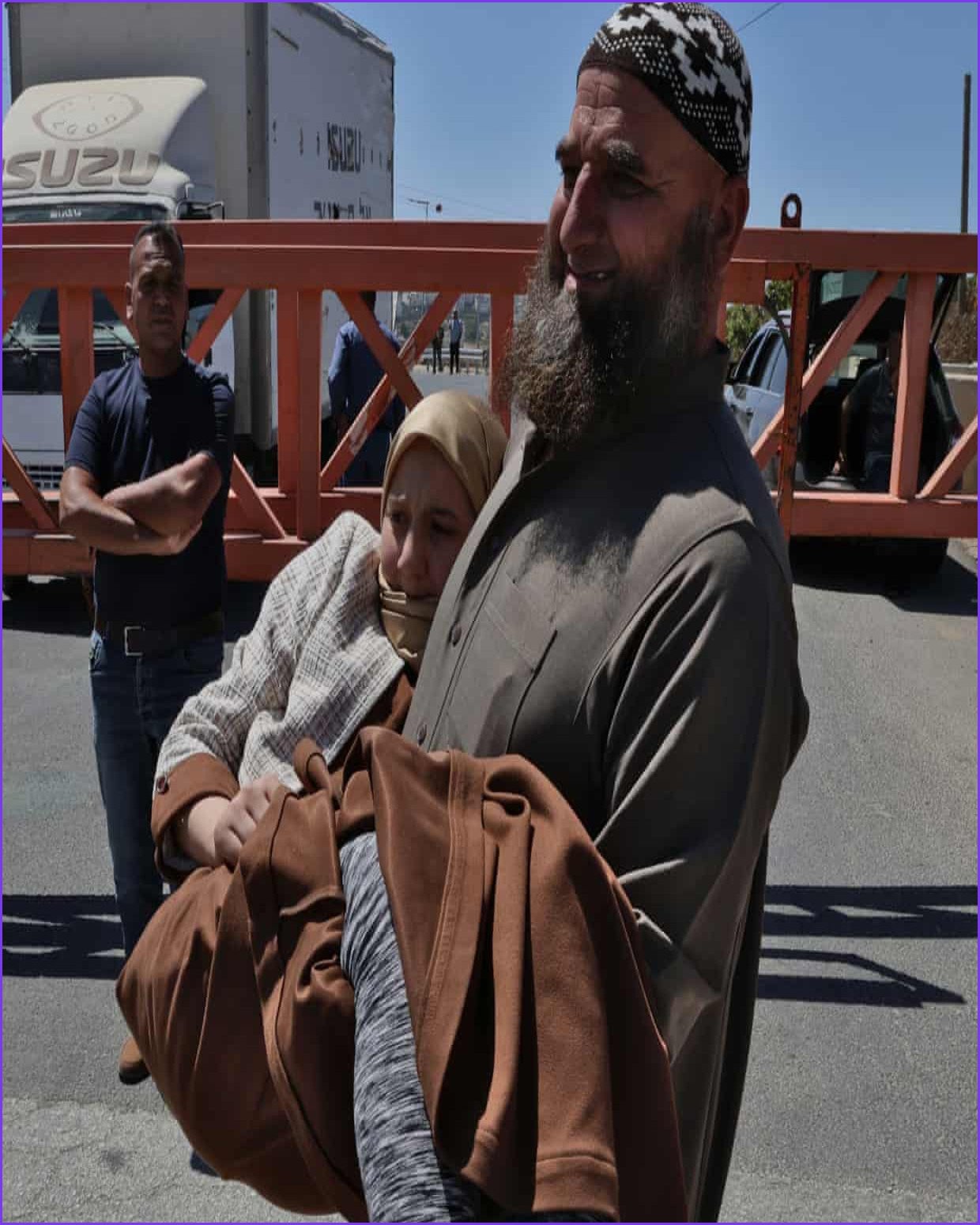
The daily impact of these policies is visible in the physical fragmentation of the territory. Residents, such as 49-year-old Haytham Adnan Murad from the village of Sair, frequently encounter sudden road closures and military roadblocks that prevent travel to hospitals or schools. Murad, who recently had to carry his daughter around a roadblock after a gate was shut, described the situation as a loss of dignity that characterizes daily life. The report has been shared with the relevant authorities, and the Israeli military unit Cogat, responsible for civilian policy in the West Bank, has been approached for comment.