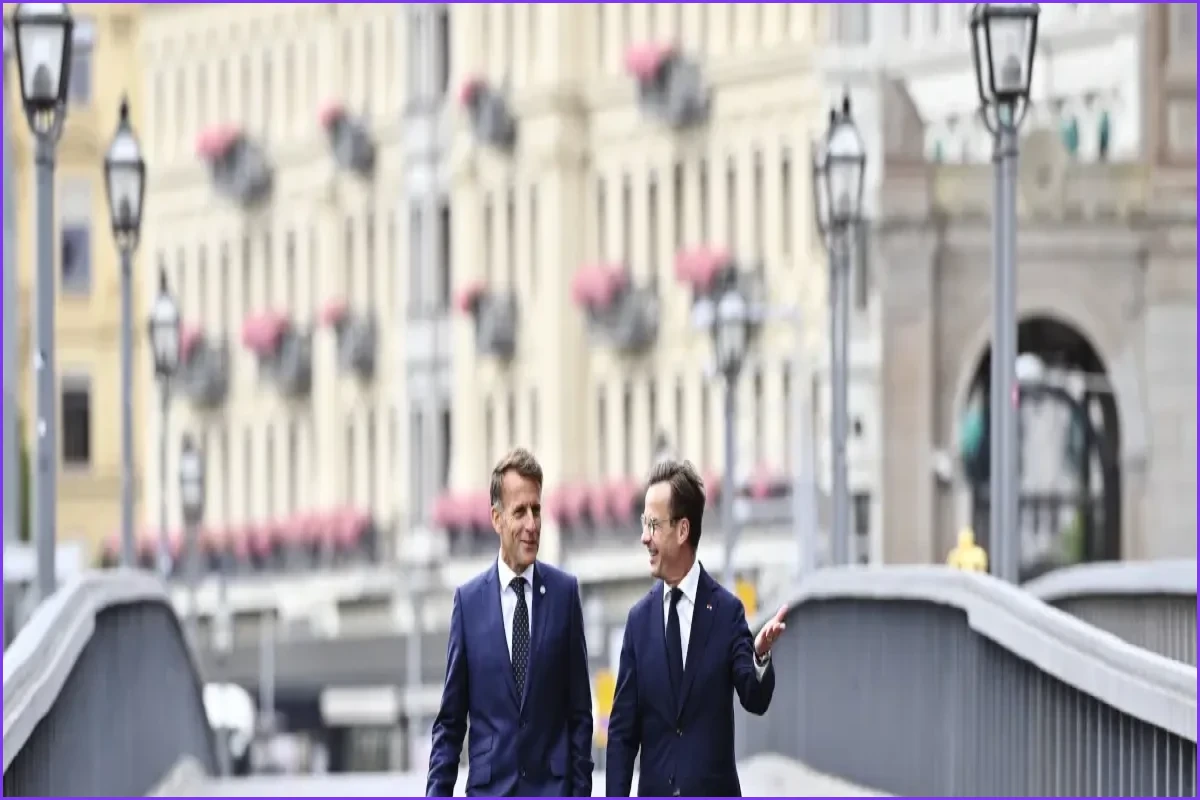
French President Emmanuel Macron and Swedish Prime Minister Ulf Kristersson have formalized Sweden's purchase of four French frigates, signing a €4.3 billion contract in Stockholm. The agreement comes as both nations seek to deepen military cooperation in response to growing security concerns in Europe.
The contract was signed aboard the French frigate Amiral Ronarc'h, which was moored in Stockholm. Macron described the agreement as a "major strategic partnership, one that is reciprocal, respectful and ambitious." He added that the deal demonstrates the strength of the European pillar of defence and the growing importance of Franco-Swedish cooperation within it.
Sweden has been rapidly working to strengthen its national defences since Russia's 2022 invasion of Ukraine, which led to the Nordic country joining NATO in 2024. Amid concerns among European NATO allies regarding the long-term commitment of the United States under President Donald Trump, both leaders emphasized the necessity of greater European autonomy. Kristersson noted that European nations must take greater responsibility for their own security to strengthen NATO's European pillar as the conflict in Ukraine enters its fifth year.
The four defence and intervention frigates, which Sweden announced it would purchase from French shipbuilder Naval Group in May, are scheduled to begin delivery in 2030. Macron confirmed that the vessels will be equipped with Aster 30 air-defence interceptor missiles and potentially naval cruise missiles for long-range strikes.
Beyond the naval acquisition, Sweden will support a Paris-led nuclear deterrence scheme. In March, Macron introduced a programme under which France, the European Union's sole nuclear-armed nation, would utilize its atomic stockpile to protect allies, including Sweden. The two countries held their initial meeting on nuclear cooperation in Paris in April, with the Elysée stating that work is continuing and intensifying.
To further integrate their defence sectors, French Defence Minister Catherine Vautrin and Swedish Defence Minister Pål Jonson signed a framework agreement to strengthen bilateral cooperation. Both nations, which possess robust domestic defence industries, aim to build a more resilient, independent, and competitive European defence ecosystem to counter dominant U.S. influence within NATO.
The Elysée also indicated that future collaboration could extend to joint fighter aircraft programmes. This follows the collapse of the Franco-German Future Combat Air System (FCAS) project. The French presidency noted that France's advanced aircraft engine manufacturing capabilities represent one of several potential avenues for future joint development.