South Korea has significantly increased the criminal penalties for citizens who travel to blacklisted countries without government permission. On Friday, the maximum penalty for unauthorized travel to banned nations officially tripled, rising from one year in prison or a 10 million won ($7,200) fine to up to three years in prison or a 30 million won ($21,700) fine, depending on the court's discretion. While the government maintains that the restrictions are necessary to protect its citizens, the move has drawn intense criticism from journalists, aid workers, and human rights activists who argue the system severely hinders their work.
Among those affected is freelance photographer Jang Jinyoung, who was recently convicted and fined 5 million won ($3,600) by a court northwest of Seoul. Shortly after Russia's full-scale invasion of Ukraine in February 2022, Jang crossed the border from Poland into Lviv and traveled to Kyiv, where he spent two weeks documenting the conflict. South Korea's foreign ministry had designated Ukraine off-limits just days prior, making unauthorized entry a criminal offense. Jang knew he was breaking the law but chose to proceed because no other South Korean journalist had yet reported from inside the war-torn country.
"Everything back home was being relayed through foreign outlets. I wanted to see it more directly for myself," Jang said. Upon his return, he was placed under criminal investigation. After refusing to accept a summary fine, he was convicted this month. He is now appealing his conviction and plans to challenge the travel ban at the constitutional court, advocating for the permit system to be replaced with a simple notification process. "Permission is control, and control over what gets covered reaches into editorial territory. The ban is the biggest barrier there is for anyone trying to report what is really happening in a conflict," he added.
South Korea is one of the few developed democracies that criminalizes travel to blacklisted nations. The foreign ministry reported that it grants between 5,000 and 6,000 exceptions annually, including approximately 50 for journalists. However, these permits are granted on a discretionary, case-by-case basis. In Jang’s case, the application process for Ukraine had not even opened when he departed.
The current travel ban system was established in 2007 following a high-profile incident in which 23 members of a South Korean church traveled to Afghanistan despite government warnings and were captured by the Taliban. Two of the hostages were shot dead, and the remaining 21 were released only after Seoul negotiated directly with the captors. Within weeks of the incident, the government criminalized unauthorized travel to Afghanistan, Iraq, and Somalia. Today, the ban covers 10 countries in their entirety, including Ukraine, Iran, Iraq, Sudan, and Haiti, alongside partial bans on a dozen other regions, such as Myanmar and Gaza.
The decision to increase penalties follows revelations in 2025 that hundreds of South Koreans had been lured to Cambodia by fraudulent job advertisements and subsequently held captive in compounds run by cyber-fraud syndicates. The travel restrictions on those specific areas in Cambodia were downgraded in July after the foreign ministry recorded a 94 percent decline in reports of South Koreans being held against their will.
However, enforcement of the travel ban has increasingly entangled individuals traveling for reasons unrelated to cyber-scam compounds. Data released to the office of opposition lawmaker Kim Gunn reveals that the foreign ministry reported 22 people to the police during the first seven months of this year. This figure is more than double the total for the entirety of 2025 and marks the highest number of cases since 2020. Over the past decade, the ministry has reported 120 individuals to law enforcement. All but one of the cases reported this year involved travel to Europe, where the ban covers all of Ukraine as well as portions of Russia and Belarus along the Ukrainian border.
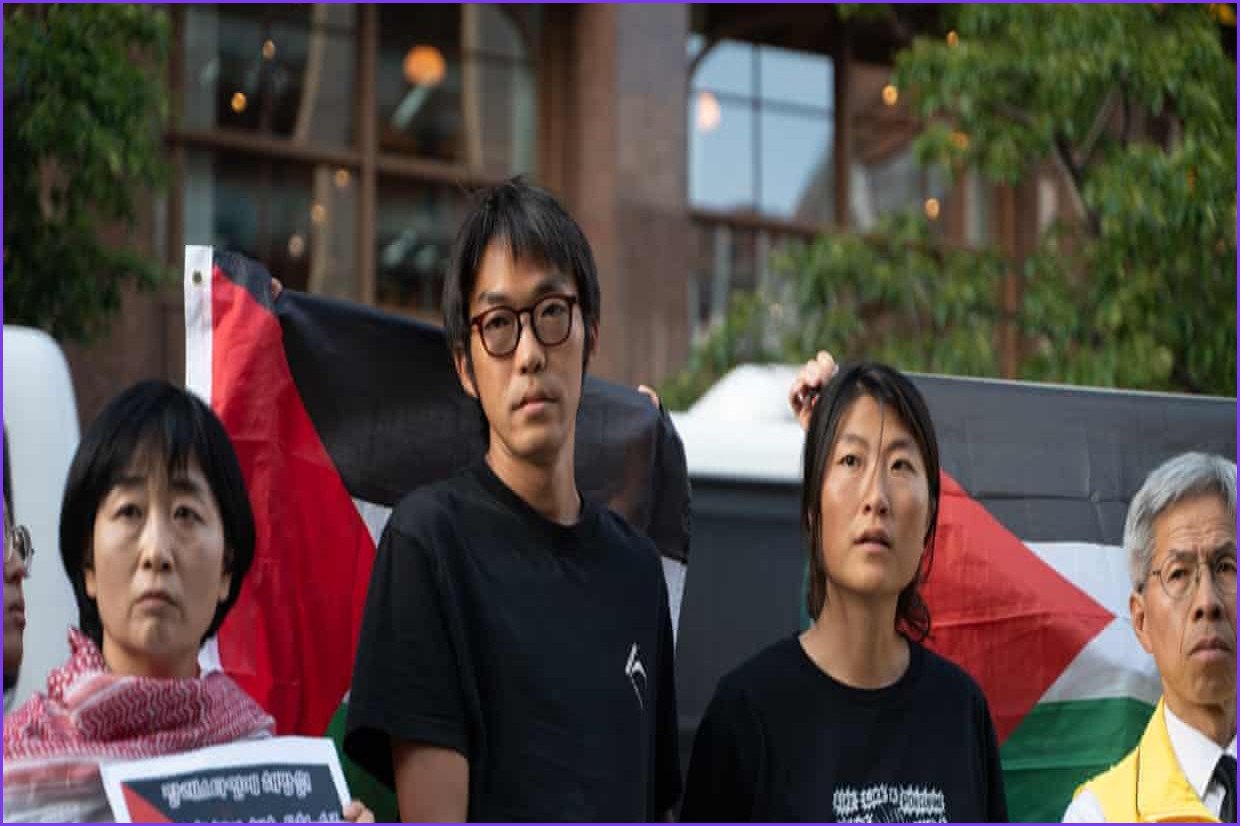
Earlier this month, police launched a criminal investigation into six South Korean activists who had traveled to Kyiv to lobby against the forced repatriation of two North Korean prisoners of war. The law also empowers the foreign ministry to invalidate passports even in the absence of a criminal case. This administrative measure was used in March against peace activist Kim Ahyun, also known as Haecho, as she prepared to join a humanitarian aid flotilla bound for Gaza. On Thursday, the Seoul administrative court rejected her legal challenge to the decision, meaning she cannot travel abroad at all unless the ruling is overturned.
In a statement, the foreign ministry defended the restrictions, asserting that the passport limits have played a vital role in protecting South Korean lives over the last two decades. The ministry denied that the policy constitutes censorship, describing it as "the minimum measure necessary to secure the lives and physical safety of citizens in dangerous areas."
Jong-Chul Kim, a public interest lawyer assisting Haecho, criticized the system as disproportionate. He argued that it punishes individuals after they travel and strips them of their passports before they can even leave. "The travel ban system, which has a strongly paternalistic character, not only infringes on individuals’ freedom to make their own choices regarding movement, but also seriously reduces the space for international civil society activities," he said.
Aid agencies based in South Korea face similar hurdles. Humanitarian organizations have long lobbied for overseas relief work to be recognized as a distinct category under the law, arguing that they cannot secure travel permission under the current framework. A bill addressing this issue has been pending in parliament since 2024. Jun Mo Lee, who directs the South Korean office of the Irish aid agency Concern Worldwide, emphasized that with robust security protocols, risk assessments, and guidelines, humanitarian workers could safely operate in many restricted areas. "What we need is not less protection, but a more practical and proportionate system that balances safety with humanitarian access," Lee said.