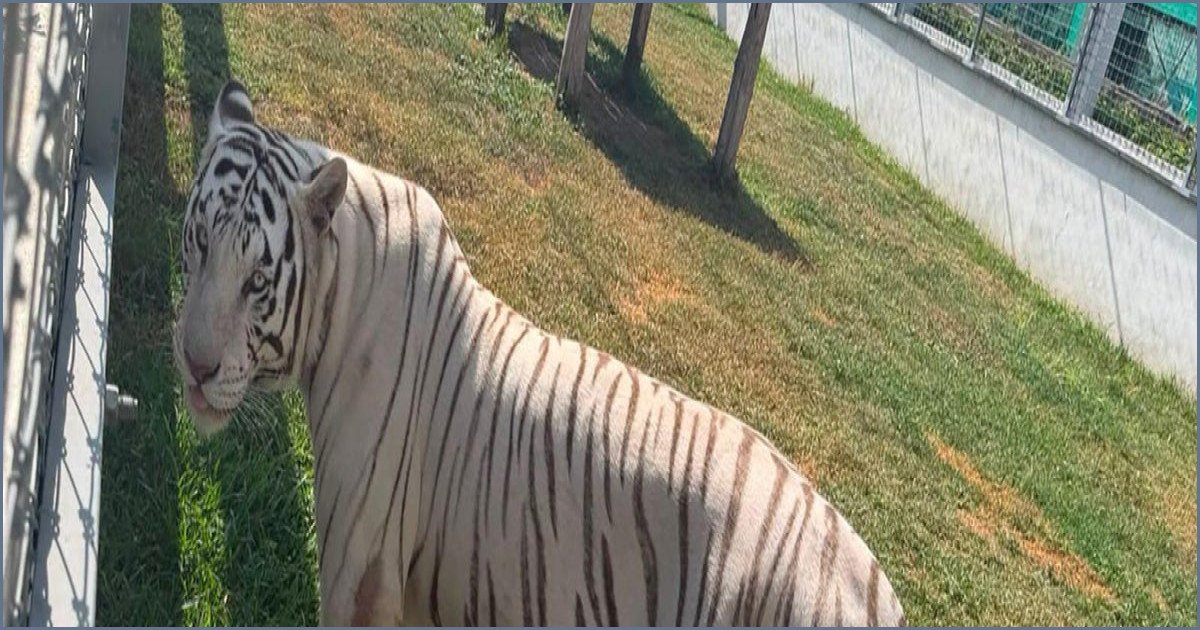
Mexican authorities announced on Thursday that they have rescued 135 exotic and endangered animals during a major operation targeting a fuel smuggling ring in the northeastern state of Tamaulipas, located along the U.S. border. The animals were discovered at a ranch during a military raid.
Among the species recovered were Bengal tigers, mandrills, hyenas, lions, spider monkeys, jaguars, buffalo, an American bison, a green macaw, and a camel. Officials noted that 35 of the rescued animals, including the sulcata tortoises and the green macaw, are classified as endangered species.
While Mexican authorities frequently encounter exotic animals on properties owned by wealthy drug traffickers—who sometimes use large cats as symbols of power or to dispose of enemies—this specific discovery occurred during an operation focused on fuel theft. According to a 2023 U.S. indictment, some victims of a Sinaloa cartel faction were allegedly fed to tigers, whether dead or alive.
The illicit trade of siphoning gasoline and diesel from the United States into Mexico for tax-free resale has become a primary revenue stream for organized crime, second only to drug trafficking according to the U.S. Treasury. Cartel members are accused of bribing insiders at Pemex, tapping pipelines, hijacking tanker trucks, and intimidating employees to steal fuel and crude oil. The stolen products are often smuggled north as "waste oil" to evade environmental and tax scrutiny before being sold at discounted prices in the U.S. and global markets.
Efforts to combat this "huachicol" trade have intensified. In 2025, authorities seized 10 billion liters of black market fuel in Tamaulipas, a crackdown that implicated high-ranking navy officers and officials. Recently, the attorney general's office charged Fernando Farias, a high-ranking officer expelled from Argentina, with fuel smuggling, and former Tamaulipas governor Ernesto Ruffo was arrested on related theft charges. The U.S. Treasury has also imposed sanctions on several companies and individuals linked to cartel fuel theft rings, including a group led by an individual nicknamed "The Sledgehammer" and members of the Jalisco New Generation cartel, which has been accused of operating its own service stations.
Once inside the United States, the oil is then funneled to unscrupulous importers along the southwest border, sold at deep discounts on U.S. and global markets with proceeds quietly funneled back to the cartels.