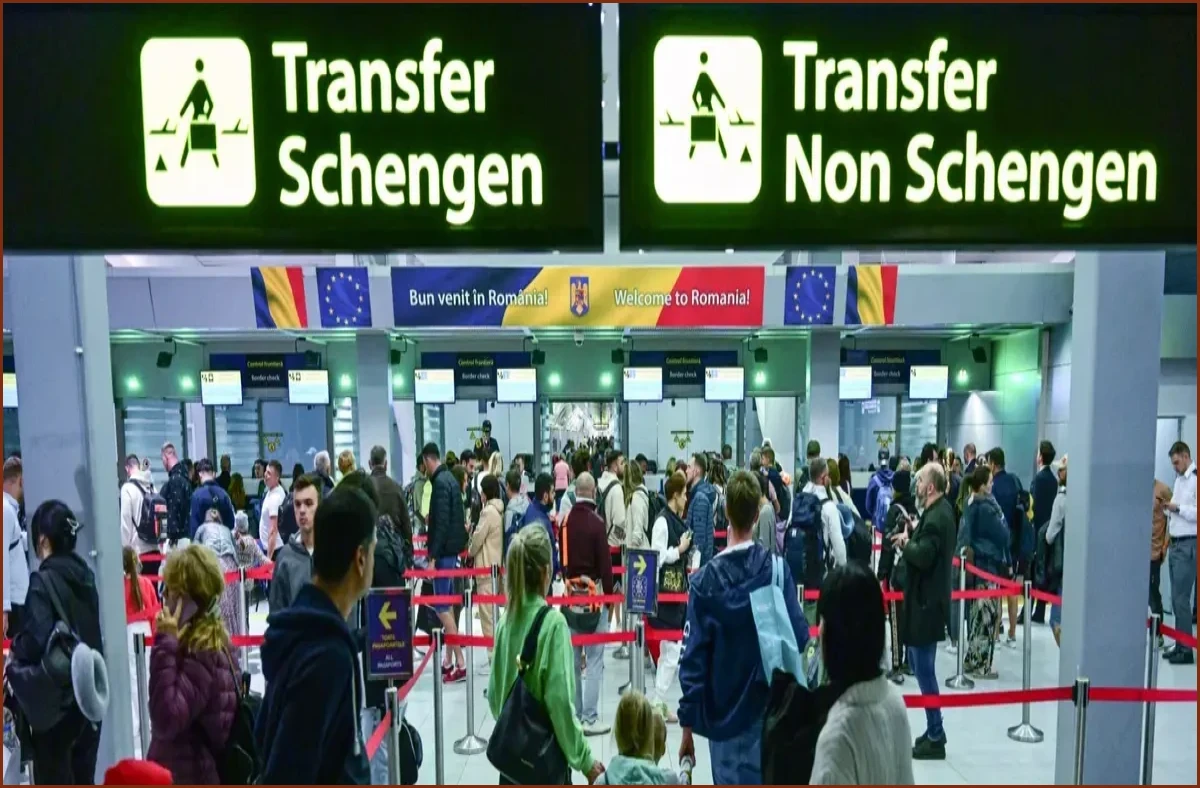
The recent reintroduction of police checks at internal borders across Europe has renewed public focus on the mechanics of the borderless Schengen area and its relationship with the European Union's core principle of free movement. Italy’s decision to reinstate border controls with Spain, followed by Madrid’s reciprocal measures against Rome after thousands of migrants arrived in the Spanish exclave of Ceuta, has reignited intense debate over how the 29-nation free-travel zone operates.
Many commentators and media outlets have warned that these recurring internal border checks threaten the fundamental EU concept of free movement. However, while Schengen and the free movement of people are closely linked, they are governed by distinct legal frameworks and historical treaties.
The Schengen Agreement was originally signed in 1985 by France, West Germany, Belgium, the Netherlands, and Luxembourg as an initiative to phase out internal border controls. This was expanded by the 1990 Schengen Convention, which took effect in 1995. In 1997, the Treaty of Amsterdam formally integrated the Schengen framework into the legal structure of the European Union.
Today, the Schengen zone encompasses 25 of the 27 EU member states, with Cyprus and Ireland remaining outside the zone. It also includes four non-EU members belonging to the European Free Trade Association (EFTA): Iceland, Liechtenstein, Norway, and Switzerland. Ireland opted out of the Schengen Convention to preserve its Common Travel Area arrangements with the United Kingdom, avoiding the necessity of a hard border with Northern Ireland.
According to the European Commission, approximately 3.5 million people, including daily cross-border commuters, cross Schengen's internal borders every day, while 32 million businesses benefit from reduced transport costs and faster logistics. Beyond eliminating internal checkpoints, the Schengen Convention established a unified short-term visa for non-EU visitors and implemented stronger external border management. As part of this external security strategy, Schengen nations launched the Entry/Exit System (EES) in October 2025, an automated IT system that registers non-EU travelers each time they enter or leave the territory.
Under established Schengen rules, member states are permitted to temporarily restore internal border checks. However, this measure is only allowed in response to a “serious threat to public policy or internal security” and must be strictly limited to the period necessary to address the threat.
In contrast, the free movement of people represents one of the "four freedoms" of the European single market, alongside the free movement of goods, services, and capital. These rules apply across all EU member states as well as the EFTA nations of Iceland, Liechtenstein, Norway, and Switzerland.
The concept was first introduced in the 1957 Treaty of Rome, which founded the European Economic Community, though it initially focused on workers and service providers. The 1992 Treaty of Maastricht expanded this by establishing EU citizenship, granting citizens the right to live, work, and study in any EU member state. These rights were consolidated in the 1994 free movement directive, which streamlined the regulations and guaranteed non-discrimination based on nationality.
According to a European Parliament explainer, "The directive is designed to encourage EU citizens to exercise their right to move and reside freely within the Member States, to cut back administrative formalities to the bare essentials, and to limit the scope for refusing entry or terminating the right of residence."
This broader principle of free movement also includes complex social security coordination regulations, allowing individuals to combine state pension contributions across different nations, access social benefits, and receive healthcare abroad using the European Health Insurance Card (EHIC). Over the years, the Court of Justice of the EU has consistently intervened to remove practical barriers to these rights, including recent rulings confirming free movement rights for same-sex spouses. Ultimately, while free movement covers a vast legal framework regarding living and working across borders, Schengen serves as its most visible and practical physical component.