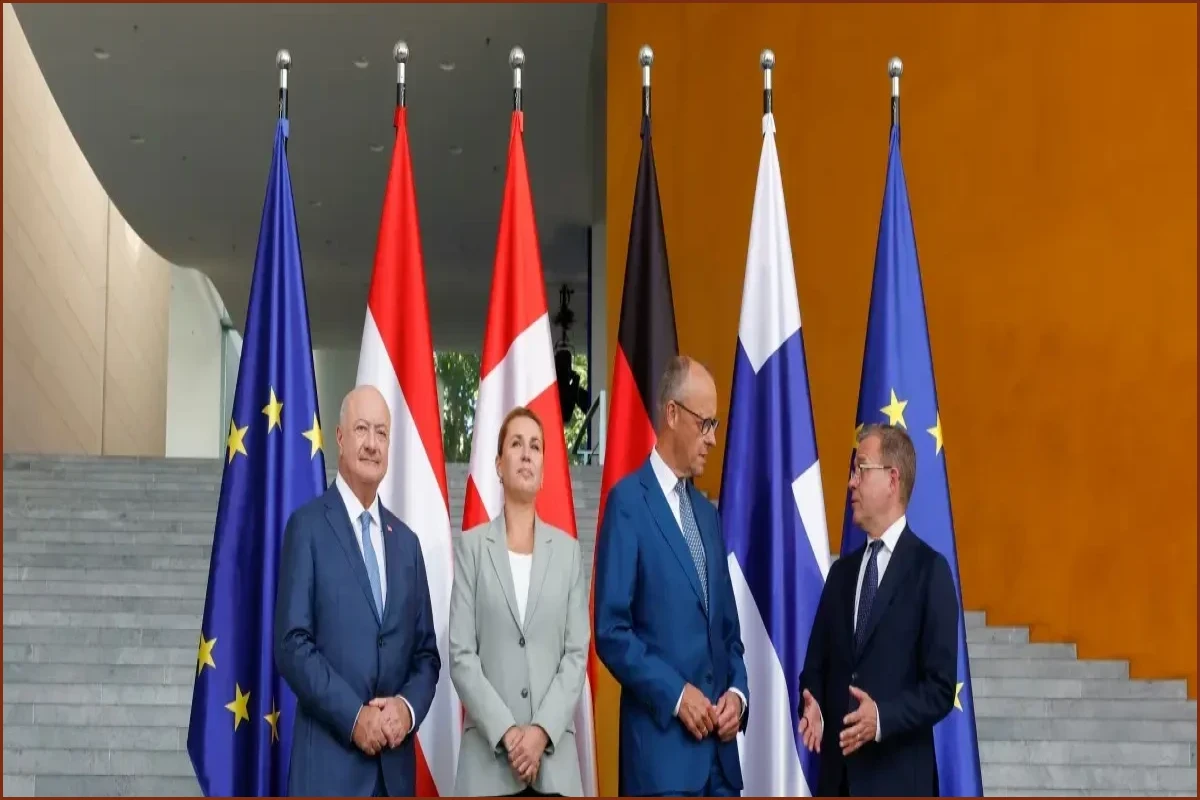
German Chancellor Friedrich Merz hosted the leaders of Denmark, Austria, and Finland in Berlin on Thursday to coordinate a joint campaign aiming to slash the European Union's next multi-year budget. The meeting of the bloc's self-described "frugal" members comes as the 27-nation EU prepares for highly contentious negotiations over its spending plans for the seven-year period spanning 2028 to 2034.
Merz has strongly criticized the European Commission's proposed budget of nearly two trillion euros, labeling the current draft "unaffordable" and demanding reductions totaling hundreds of billions of euros. To establish a unified front, the German Chancellor held talks with Austrian Chancellor Christian Stocker, Danish Prime Minister Mette Frederiksen, and Finnish Prime Minister Petteri Orpo. These nations, alongside other fiscally conservative members like the Netherlands and Sweden, traditionally advocate for strict spending limits. This stance routinely places them in opposition to countries such as Italy, Spain, and Poland, which favor a more expansive EU budget.
The push for budget cuts coincides with a diplomatic push by European Council President Antonio Costa, who launched a tour of EU capitals this week to broker a compromise ahead of an informal December deadline. The bloc is aiming to finalize the budget well before 2027. Officials fear that upcoming elections in key member states—particularly France, where the far-right is currently experiencing a surge in support—could severely disrupt and complicate any potential agreement.
Thursday's talks in Berlin build on demands Merz raised late last month during a visit to Dublin, where he spoke alongside Micheal Martin, the prime minister of Ireland, which currently holds the rotating EU presidency. At the time, Merz argued that the EU executive must scale back its initial funding expectations. "We need a budget proposal with cuts in all areas adding up to several hundred billion euros," Merz stated, emphasizing that "we cannot afford exorbitant increases in spending" while individual member states are forced to consolidate their own national budgets. Additionally, the German leader criticized plans to create 2,500 new positions within EU institutions as "unacceptable" and called for a "thoroughgoing reduction in bureaucracy."
Their meeting comes as the 27-member European Union braces for tough negotiations to agree a joint budget for the seven-year stretch 2028-34.
READ ALSO: As Iceland votes on the EU, which countries could be next to join?