American cattle ranchers and Republican lawmakers are expressing deep anger following an abrupt decision by the White House to ease tariffs on 300,000 metric tons—equivalent to more than 660 million pounds—of foreign beef imports. The 90-day policy shift, intended by President Donald Trump to lower high retail prices for staple foods like hamburgers, has instead been met with intense backlash from domestic livestock producers who view the move as a major setback during an already challenging season.
On August 26, President Trump officially signed a detailed proclamation outlining the plan, which permits the imported beef to be sold at 25% below market value. The document includes a provision allowing the president to halt the initiative if beef prices do not decrease rapidly. However, the proclamation leaves significant questions unanswered, failing to specify which countries will supply the beef or where it will be distributed. Neither the U.S. Department of Agriculture nor the Office of the U.S. Trade Representative has provided further details on the implementation of the plan.
Even within the administration, communication has appeared fractured. Agriculture Secretary Brooke Rollins admitted in an interview with Spectrum News that she had not been included in certain discussions regarding the implementation of the tariff reduction. Nonetheless, Rollins defended the president, describing the measure to reporters at the White House as a "temporary" solution to address a massive supply chain gap while the administration continues its broader efforts to reduce federal regulations and resolve long-term industry challenges.
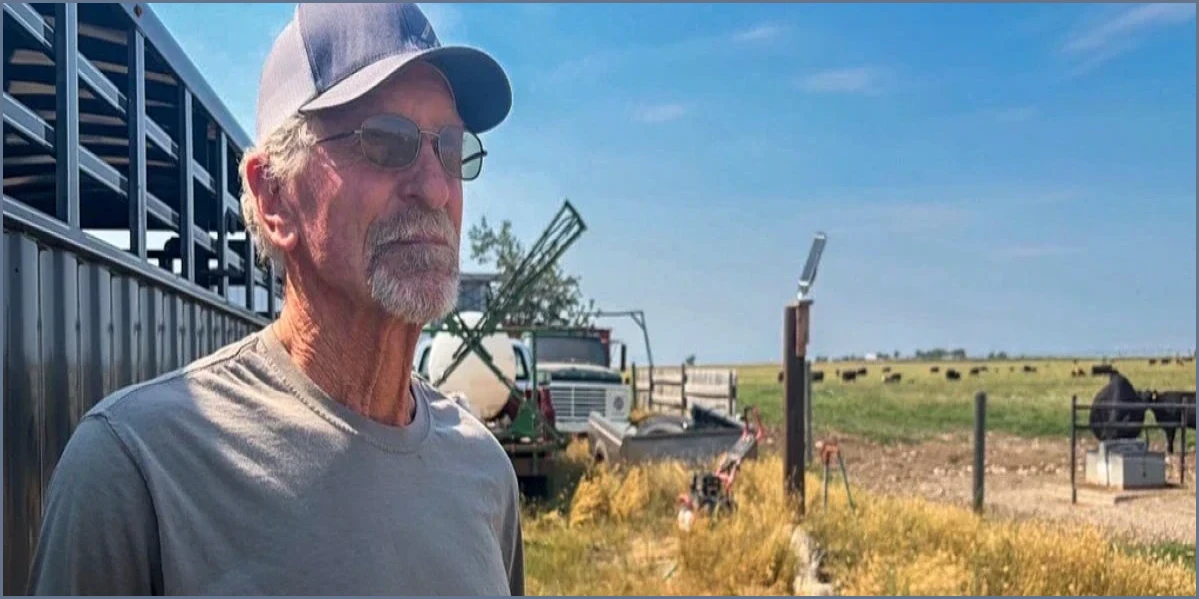
For local producers, the policy is already causing financial anxiety. Tim Brunner, the president of the Montana Cattlemen's Association, recently witnessed decent cows selling for several hundred dollars less at an auction barn than they had just weeks prior. Operating a ranch in the small town of Power, Montana, which has a population of roughly 200 people, Brunner directly attributes the price drop to the administration's policy. "It’s absolutely idiotic," Brunner said, expressing deep concern that ranchers will be forced to sell off their herds at depressed prices due to the sudden influx of cheap foreign beef.
The timing of the 90-day import window is particularly damaging for domestic producers. The end of summer typically marks the beginning of the "fall run" in September, a period when the market becomes oversaturated as ranchers sell off cattle, naturally driving prices down. This seasonal downturn usually peaks in October and November, precisely when the administration's 90-day timeline for importing the foreign beef is scheduled to expire.
Gus Mundt, a fourth-generation Montana rancher and father to a three-year-old daughter, had recently utilized improved market conditions to invest in a new tractor. Now, he faces the prospect of selling his heifers at much lower rates. "It just sucks," Mundt said. "Now I’ve got to think about having to save again."
The tariff adjustment is part of what local agricultural leaders describe as a broader, multi-front economic squeeze. Ranchers are also navigating an escalating trade dispute with neighboring Canada and rising operating costs. The ongoing war in Iran has significantly driven up the prices of essential inputs like fuel and fertilizer. "It’s a triple whammy," said Richard Liebert, a rancher and former president of the Montana Cattlemen's Association. "This is like the perfect storm of crap."
High retail beef prices have remained a persistent political challenge since the beginning of President Trump's second term, though the underlying issues have been developing for years. Driven by prolonged industry challenges, the total U.S. beef and dairy cattle herd declined to a 75-year low this year. Meanwhile, domestic consumer demand has remained robust, keeping prices elevated for grocery items like steak and ground beef, which has fueled public frustration and created a political vulnerability for the White House.
The administration's response to these high prices has triggered a rare public rift with congressional Republicans, particularly in agricultural states. Within hours of the policy's announcement, several prominent GOP lawmakers declared their opposition. Montana Senator Tim Sheehy, who is a cattle rancher himself, revealed that he had personally tried to dissuade the president from enacting the measure. Sheehy warned that the tariff relief would harm livestock producers, noting that "most of whom are MAGA Republicans." While Sheehy acknowledged that the president's intentions to lower consumer costs were well-meaning, he argued that "the reality is this action will make it more difficult for American ranchers to rebuild our herd and bring prices down."
Other Republican lawmakers have echoed these concerns. Arkansas Senator Tom Cotton characterized the administration's tariff decision as "ill-advised." Meanwhile, South Dakota Senator Mike Rounds argued that the controversy highlights the urgent need for mandatory country-of-origin labeling on beef products. While acknowledging that labeling is not a "silver bullet," Rounds stated it is a common-sense measure that would allow consumers to choose American products and support domestic producers. "Our producers will compete all day long," Rounds said, "but only if there is a level playing field."
Amid all those dynamics, the overall U.S. beef and dairy cattle herd hit a 75-year low this year. Americans' demand has largely remained strong, meanwhile, leading to higher prices for things like hamburger meat and steak at the grocery store and restaurants.
Contributing: Jennifer Borresen, Bart Jansen