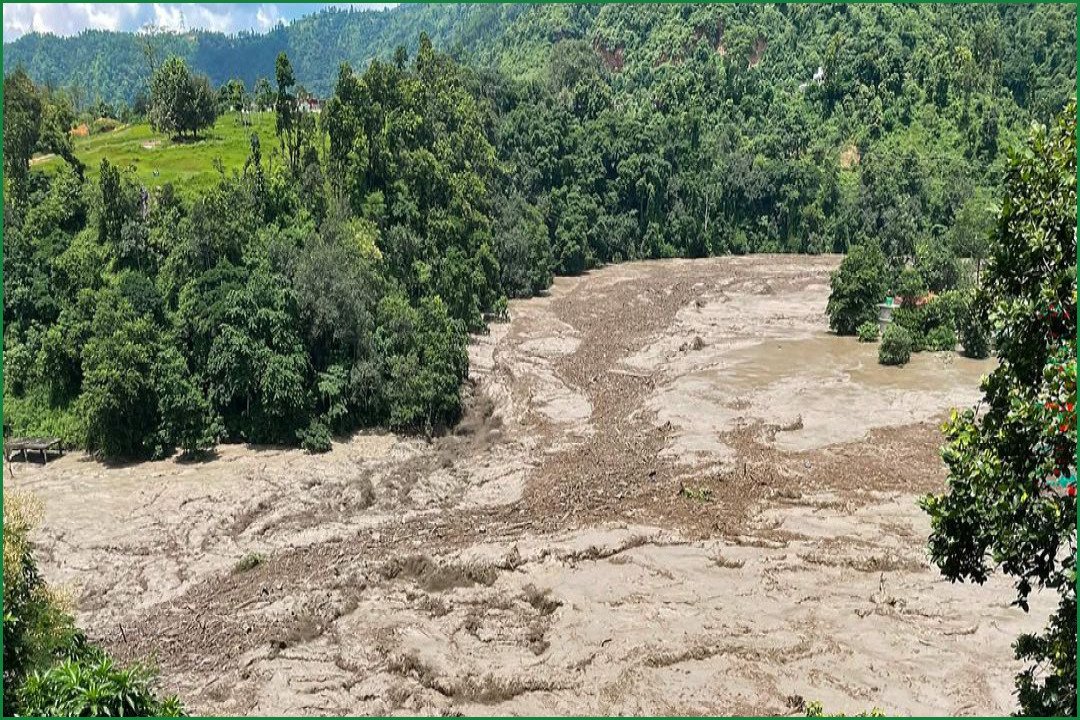
A massive flood has caused significant damage to roads and power infrastructure in Nepal's northern Rasuwa district, a Himalayan region bordering China. Authorities are currently assessing the full scale of the destruction, which has prompted an urgent emergency response.
The Nepal Electricity Authority reported that approximately 430 megawatts of generation capacity, encompassing both hydropower and solar facilities, have been damaged. This disaster has impacted the Authority's production, transmission, and distribution facilities, leading to widespread disruption of electricity supply. Additionally, several highways in the affected area have been closed, according to authorities. Videos shared by Nepal Police and others on social media depicted powerful torrents of muddy water surging through the mountain valleys.
Nepal Police spokesperson Abi Narayan Kafle stated on Wednesday, "We do not exactly know the extent of damage, but the flood is big, and it could have damaged many settlements." In response, police have alerted residents living near the riverside to relocate and have deployed all available resources.
Prime Minister Balendra Shah convened an emergency meeting of the National Disaster Risk Reduction and Management Authority to evaluate the situation. Shah announced in a social media post that "Work has started to take necessary steps in coordination with the medical team, scouts, and Red Cross." Both the Red Cross and the Nepal Army have been mobilized for rescue efforts. The Nepal Army confirmed it has deployed helicopters and disaster response personnel to the affected region, adding in a statement that "The work of collecting details of the damage is underway."
The region regularly experiences deadly floods and landslides during the monsoon season, which typically runs from June to September. Scientists indicate that the climate crisis is contributing to an increase in the frequency and intensity of extreme weather events across South Asia.