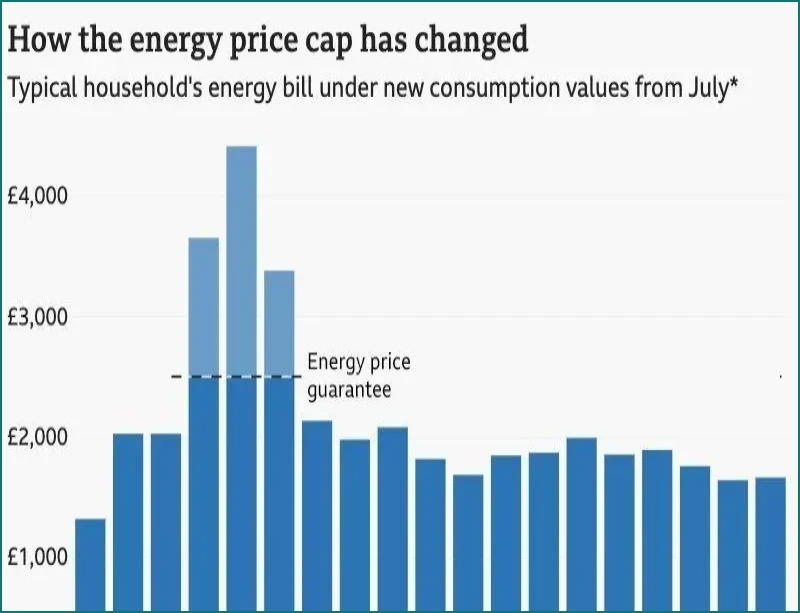
Millions of households across England, Scotland, and Wales are expected to face higher energy bills this winter, with costs set to reach their highest level in three years. The industry regulator, Ofgem, is scheduled to announce a new price cap on Wednesday, which will take effect from October through the end of December.
Analysts anticipate that the regulator will announce a 4% increase compared to the current price cap. This adjustment is largely driven by volatility in international wholesale gas prices, which suppliers must pay to provide energy to homes.
According to the suppliers' trade body, Energy UK, the average price of gas has been 61% higher over the past three months compared to the same period in late 2025.
This fluctuation has prompted millions of consumers to move onto fixed energy tariffs to mitigate the uncertainty surrounding the market, partly linked to the impact of the US-Israeli war with Iran.
The price cap functions by setting a maximum price per unit of gas and electricity rather than a total bill, meaning a household's final cost is determined by their actual consumption. In July, Ofgem revised its definition of a "typical" annual energy usage to reflect changes in consumer behavior and improved efficiency.
The current estimate stands at 9,500 kWh of gas and 2,500 kWh of electricity per year. The consultancy Cornwall Insight forecasts that a household using this typical amount and paying via direct debit will see their annual cost rise to £1,729 from October, up from £1,663 for the July to September period.
The ongoing strain on household finances is compounded by the fact that bills remain roughly 70% higher than pre-crisis norms, following the 2022 Russian invasion of Ukraine. As a result, energy debt has surged significantly.
Energy UK estimates that total debt has reached £6bn and expects this figure to climb to approximately £7bn by the end of the year. The average bill-payer currently in debt, and without a payment plan, owes £3,500.
In response to these pressures, the government has announced a cut to VAT on electricity bills, which is expected to reduce a typical annual bill by about £50. Additionally, some policy costs were cancelled or shifted in April. However, organizations such as StepChange have called for more robust support.
"Without urgent intervention – namely a national social tariff and implementation of the long-awaited debt write off scheme from Ofgem – we expect this figure to rise in the coming months," said Emily Whitford, a senior public policy advocate at StepChange.
Meanwhile, the Trades Union Congress has suggested that a windfall tax on bank profits could be utilized to provide further relief for energy bill-payers.
You could be missing out on £150 off your energy bill – here's how to check