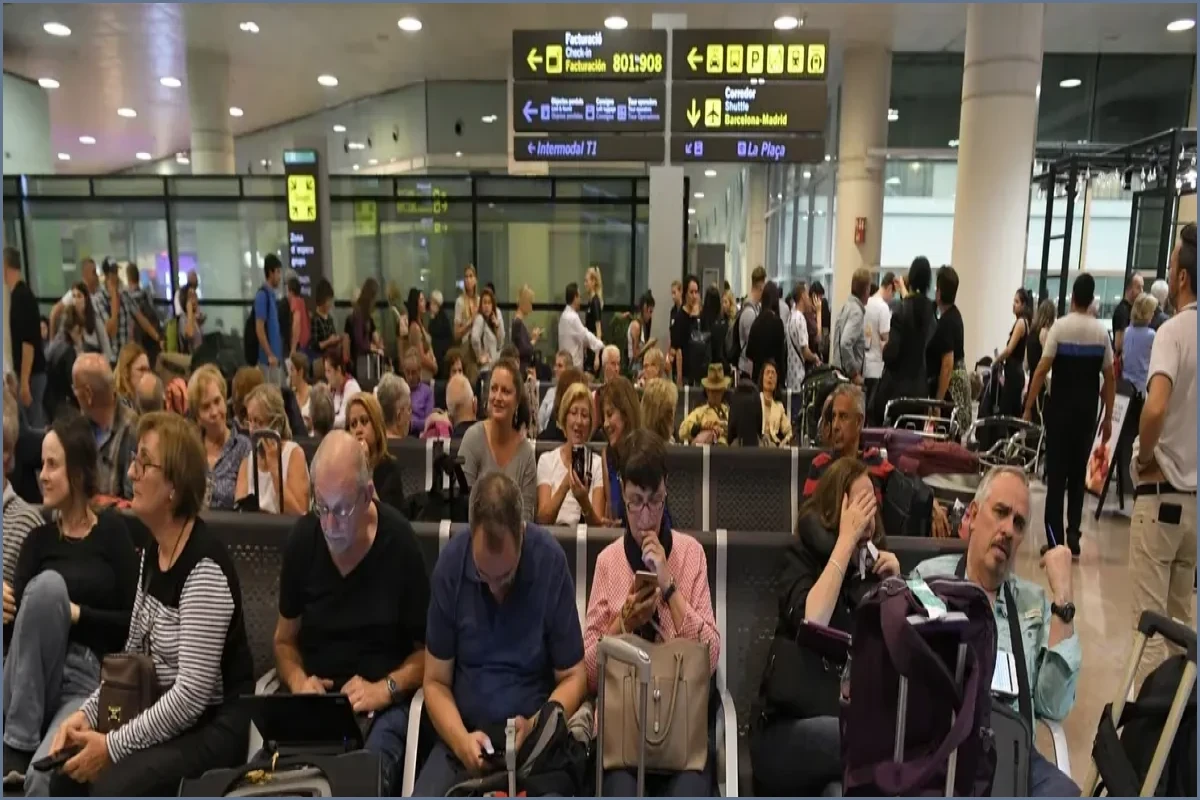
The indefinite industrial action by ground handling staff at El Prat Josep Tarradellas Airport has now entered its third week, creating significant travel disruptions for passengers at Spain's second-busiest airport. Since the walkout began on August 4th, the dispute between the CGT union and the ground handling firm Groundforce has seen no signs of resolution, with both parties remaining at a stalemate.
According to figures provided by the CGT union, the ongoing stoppage has resulted in the cancellation of 270 flights and the loss of more than 6,000 pieces of luggage. Data from the flight compensation company Airhelp further highlights the severity of the situation, noting that some passengers have faced waits of up to five hours to retrieve their bags. The impact is widespread, affecting various international and domestic routes. Flights linking Barcelona with German cities operated by Lufthansa, as well as connections to Madrid and Palma de Mallorca serviced by Air Europa, have been among the most heavily impacted. Additionally, routes between Barcelona and Rome operated by ITA Airways have faced disruptions. Because Groundforce provides services for numerous other carriers—including Air France, KLM, Qatar Airways, Turkish Airways, United Airways, and Finnair—flights associated with these airlines may also be subject to delays or cancellations.
More than 1,100 Groundforce employees, who manage check-in, boarding, ground handling, and flight coordination in Terminals T1 and T2, are participating in the strike. Esther García, a spokesperson for the union, has denounced the company's lack of willingness to engage in meaningful negotiations. She noted that the last meeting between the two sides took place on July 24th, roughly a week and a half before the strike commenced. García stated that during that session, representatives from the ground handling company simply "got up and left," effectively stalling any progress.
The workers are striking to protest poor working conditions, citing physical fatigue, high stress, unpaid overtime, and insufficient rest periods. Their demands include a comprehensive health review and risk prevention measures for staff working outdoors in extreme temperatures, as well as mental health and stress checks to address the pressures of check-in procedures. Furthermore, the staff are calling for more shifts and breaks to improve their overall work-life balance. Projections from the Ministry of Transport and Sustainable Mobility, which account for predicted occupancy rates, suggest that the strike could ultimately affect nearly two million passengers.
To manage the impact, the Ministry of Transport has established minimum service requirements. For connections between Barcelona Airport and non-peninsular territories such as the Balearics and the Canaries, minimum services are set at 80 percent for August and 77 percent for September. For international routes and domestic flights where alternative public transport takes more than five hours, the minimum service is 58 percent in August and 57 percent in September. Domestic routes with alternative transport options of less than five hours have a guaranteed service of 35 percent in August and 36 percent in September.
Airport management company Aena has advised travelers to fly with hand luggage only to avoid the risk of lost or delayed bags. Passengers are also encouraged to check with their airlines ahead of time to confirm their flight status and to arrive at the airport earlier than usual to account for long queues and potential operational issues.