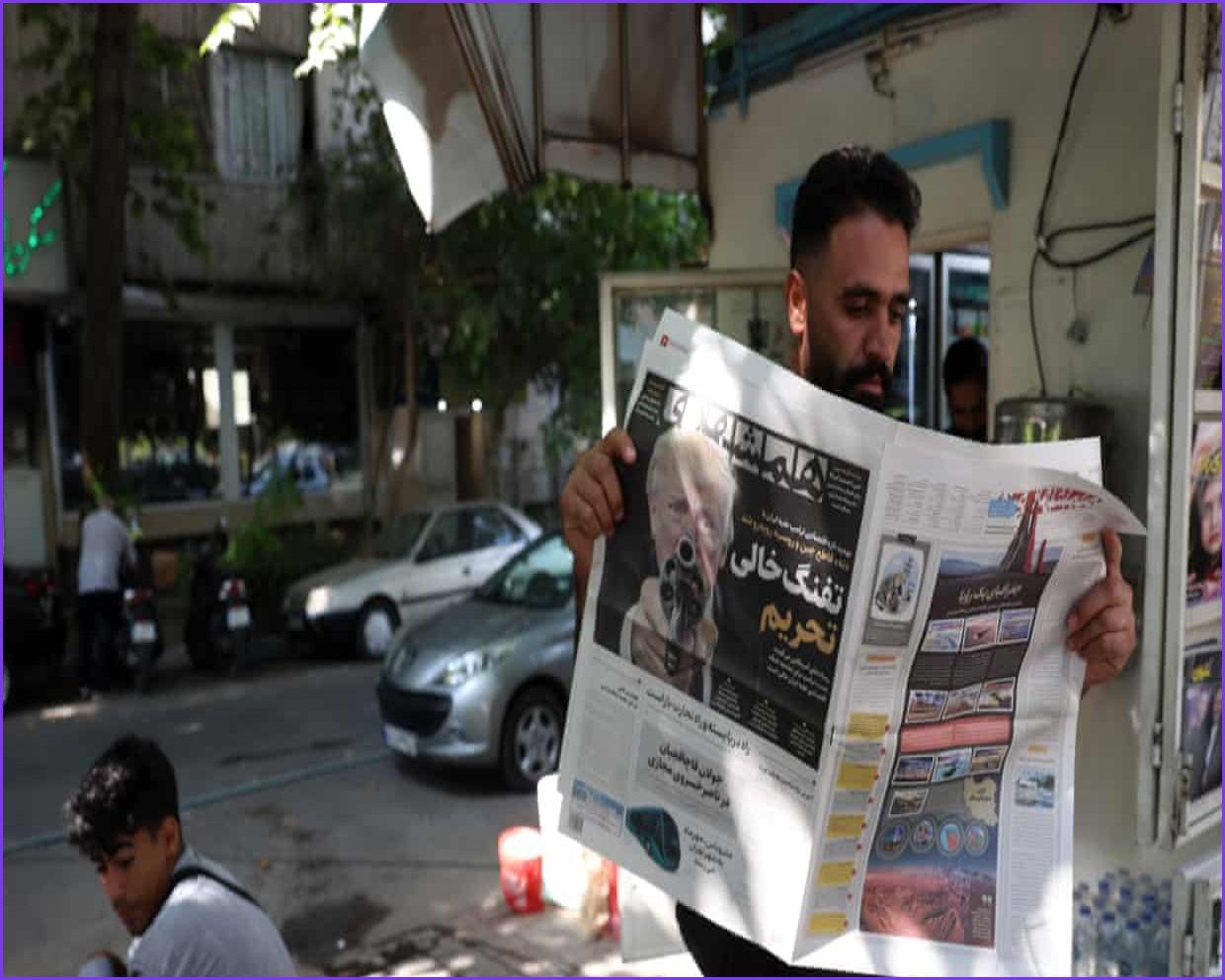
Authorities in Tehran have acknowledged that the Iranian people are facing severe domestic hardships as the United States intensifies its efforts to isolate the country's economy. Donald Trump has described the ongoing pressure campaign as the most crushing economic operation ever directed at any nation.
Speaking on Sunday in a address broadcast on state television, Iranian President Masoud Pezeshkian stated that Trump had forced Iran into a full-scale economic, military, and security war. Pezeshkian admitted that the country is grappling with numerous societal issues, emphasizing that his administration is working hard to combat inflation, unemployment, and livelihood problems to secure a dignified future for its citizens.
The Iranian government has faced significant domestic pressure in recent years, with multiple waves of mass protests sparked by economic instability, high inflation, and currency fluctuations that have eroded public purchasing power. At the end of December last year, demonstrations initially focused on the rising cost of living expanded into broader protests against the ruling establishment. Iranian authorities reported more than 3,000 deaths during the unrest, accusing the United States and Israel of orchestrating the violence. However, foreign-based non-governmental organizations reported that security forces carried out an indiscriminate crackdown that resulted in thousands of deaths.
Pezeshkian's televised admission of these difficulties comes just ahead of an expected announcement on Monday by US Treasury Secretary Scott Bessent, who is set to detail new economic measures described as the toughest sanctions in history against Iran. On Saturday, Iranian foreign ministry spokesperson Esmaeil Baghaei condemned the imminent measures, calling them an assertion of extraterritorial sovereignty over independent United Nations member states and arguing that such secondary sanctions have no basis in international law.
Amid these rising tensions, the newly appointed head of Iran's Supreme National Security Council, Mohsen Rezaei, issued a stern warning to neighboring countries against assisting the US pressure campaign. Rezaei, a hardline figure who commanded the Islamic Revolutionary Guard Corps during most of the 1980-88 war with Iraq, was appointed this month in a series of leadership changes widely interpreted as a hardening of Tehran's military and political posture.
In his most extensive public remarks since taking office, Rezaei told state broadcaster IRIB on Saturday that Iran would target alternative oil-shipping routes out of the Gulf if neighboring states cooperate with the US economic war. He warned that any cooperative neighbors would be viewed as enemies and have their interests targeted. Rezaei also claimed that Iran has not yet targeted American economic assets, having only struck military bases so far, but threatened that US oil and economic companies in the region would be struck if the economic blockade continues.
Geopolitical tensions have escalated since the collapse of a June ceasefire agreement, which disrupted Trump's efforts to end the conflict initiated alongside Israel on February 28. The collapse left Iran in control of the Strait of Hormuz, a critical maritime passage that handled one-fifth of the world's oil supply prior to the conflict. The US Treasury has been executing Operation Economic Fury to cut off Tehran's funding through targeted sanctions, supported by a naval blockade aimed at stopping vital Iranian oil exports.
In recent days, Trump has repeatedly suggested declaring the Strait of Hormuz a US territory. On Monday, he told reporters he favored the idea because the US controls the waterway via its blockade. He repeated the claim on Friday during an event in South Carolina, stating he views the strait as American territory, and shared a graphic on social media on Saturday night depicting the Gulf waterway as a new US territory. In response, Rezaei noted that Iran is continuing discussions with Oman regarding the management of the strait, adding that transit fees would be imposed.
While Washington has urged international partners to help isolate Iran, strategic allies like China have criticized the approach, stating that unilateral US sanctions will not resolve the Middle East conflict. However, the United Arab Emirates, a major trading partner of Iran, announced last Tuesday that it was suspending all trade and financial transactions with Tehran until further notice.
To mitigate the risk of disruptions in the Strait of Hormuz, French President Emmanuel Macron and Saudi Crown Prince Mohammed bin Salman are scheduled to discuss alternative transit routes during the Saudi leader's two-day visit to Paris starting Sunday. French presidential officials, speaking on the condition of anonymity, indicated that proposals include routing trade through Omani ports outside the Gulf, expanding or doubling pipelines in Saudi Arabia and other regional nations, and building new rail links. A joint French-Saudi taskforce on energy and logistics connections is scheduled to meet at the ministerial level on Monday to identify strategic projects, secure financing, and define roles for French corporations.