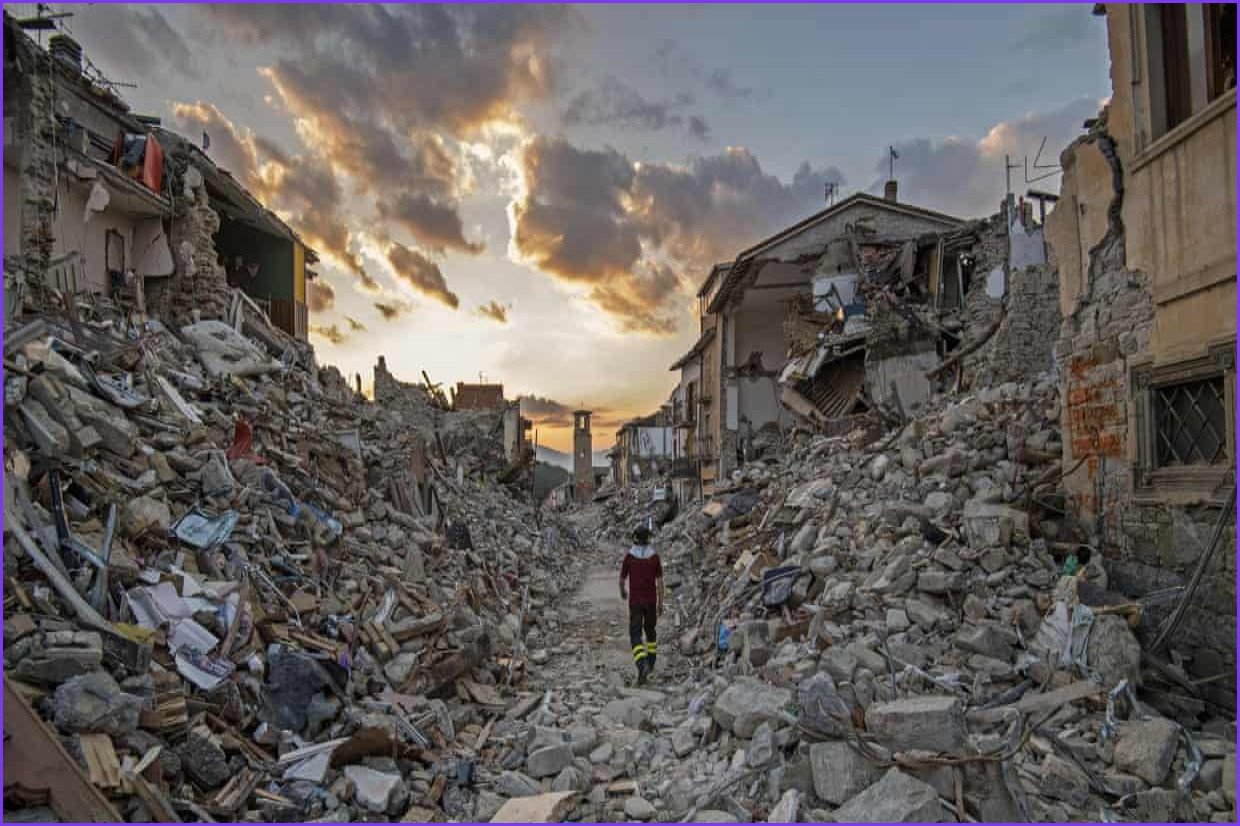
Ten years after a massive earthquake devastated the Italian hilltop town of Amatrice and surrounding communities, residents are gathering for a mass to honor the 303 victims of the 2016 disaster. While politicians and public figures are expected to pay tribute during the anniversary, the mood among locals remains one of deep frustration regarding the pace of rebuilding.
Sonia Santarelli, president of the grassroots organization Comitato Civico 3e36—named after the precise time the quake struck at 3.36am—expressed skepticism toward official narratives. She noted that while officials often claim progress, many residents remain in homes deemed uninhabitable. A report from ActionAid Italy recently validated these concerns, revealing that as of April 2026, construction had not yet begun on approximately two-thirds of planned public projects, with the figure rising to seven in ten in the most severely affected zones. Approximately €4.15bn has been earmarked for these efforts.
The earthquake, which occurred in the early hours of August 24, 2016, sent tremors as far as Rome. Santarelli, who operates a farm stay in the hamlet of Torrita, recalled the night as a scene of total destruction where buildings collapsed in an instant. While she was spared from losing her home, many others were not so fortunate. Thousands remain displaced, and some continue to pay mortgages on properties that no longer exist. Those living in temporary prefabricated housing villages—set up at 41 sites—face further indignities, describing the structures as cramped, poorly ventilated, and ill-suited for daily life or traditional mourning practices.
The reconstruction process has faced numerous hurdles over the past decade, including the resignation of former Prime Minister Matteo Renzi shortly after the disaster and the subsequent turnover of five different governments. Bureaucratic complexity, legal challenges, and the inherent difficulty of restoring historic, mountainous terrain have contributed to the delays. Current mayor Giorgio Cortellesi, elected in 2021, noted that the Covid-19 pandemic and national eco-renovation schemes further complicated matters by driving up material costs and diverting labor elsewhere.
Despite these challenges, some progress is visible, including a new school and restored historic buildings, with a new hospital expected to open in 2027. Cortellesi acknowledged the ongoing housing emergency, noting that construction firms have rented out available units, which has inflated local rents. He stated that the council is working to reclaim these properties and prepare for the eventual decommissioning of the prefabricated villages. Former mayor Sergio Pirozzi, who had been at a dinner marking the 50th anniversary of the local team a few hours before the quake, remains deeply attached to the area, describing it as “the most beautiful place in the world” despite the lingering trauma of losing 36 people from his local social circle that night.
Furthermore, they are undignified places in which to die, she claimed, owing to limited space restricting the easy movement of coffins. Residents have also complained that the rooms are too small for traditional wakes.
As with previous major earthquakes, such as the one that hit L’Aquila in 2009, reconstruction has been mired by bureaucracy, legal disputes and the general complexity of rebuilding historic centres in mountainous areas.