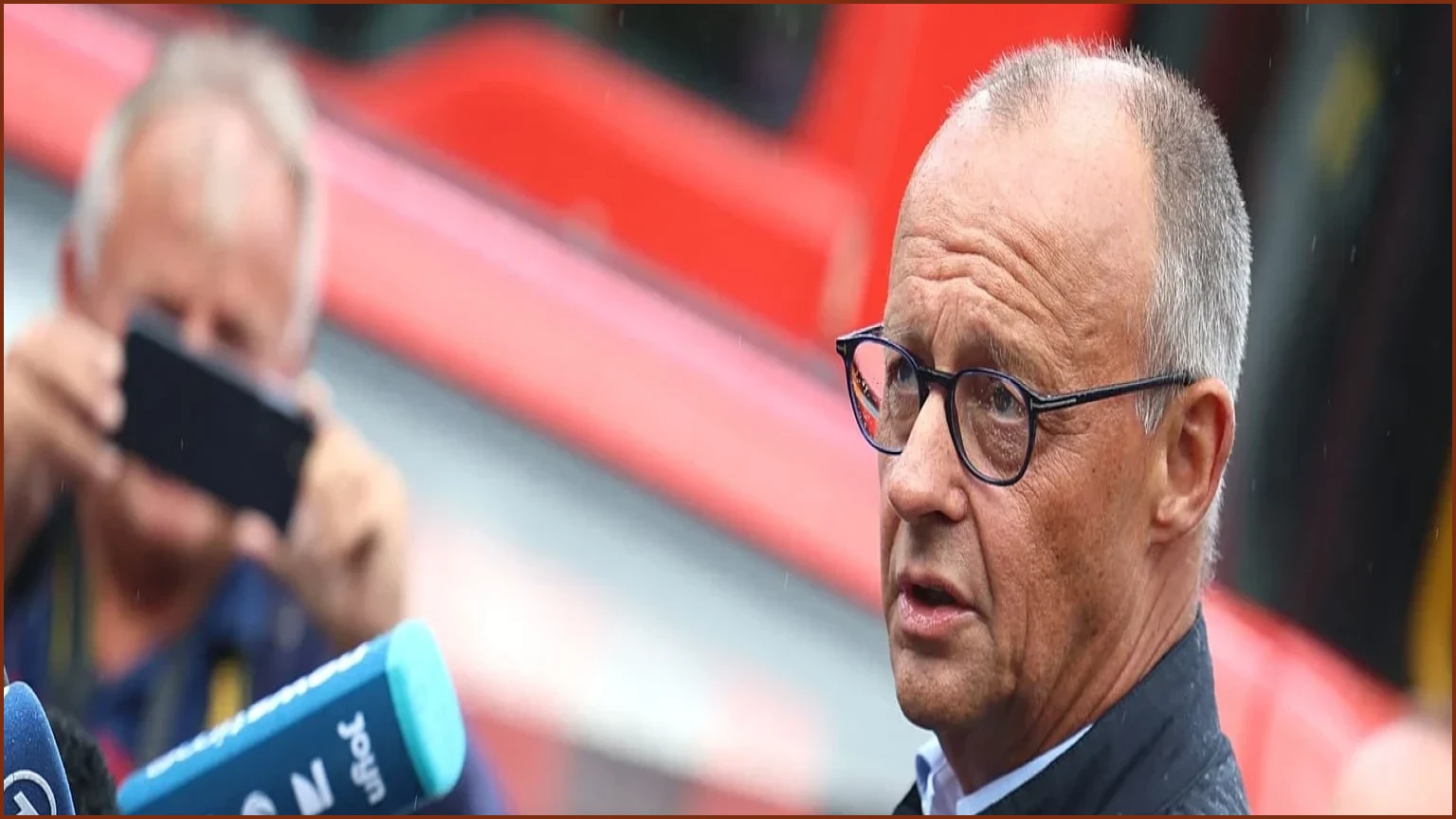
German Chancellor Friedrich Merz faced a hostile reception of boos and whistles on Saturday during his visit to the Hürtgen Forest fire site, marking his first public engagement since returning from the summer recess. Numerous onlookers gathered on the village square where Merz arrived. At times the chancellor was barely audible, as his words were drowned out by the loud protests.
The hostile reception drew a sharp rebuke from a local volunteer firefighter in Hürtgenwald, who expressed frustration at the disruptive crowd. The firefighter urged those shouting and whistling to redirect their negative energy into joining the fire brigade or the Federal Agency for Technical Relief (THW).
Merz defended his decision to visit the area only after the massive blaze had been fully extinguished on Thursday, two days prior. He explained that his delayed arrival was intentional, aimed at ensuring emergency crews could carry out their critical work without political distractions. Throughout the crisis, Merz said he remained in constant contact with local authorities to coordinate necessary support.
Addressing the hecklers directly, Merz stated that he was unimpressed by the shouting. He emphasized that his focus was on communicating with the individuals who were actively working and helping the community rather than those protesting. Earlier, during a visit to the forest, Merz had seen the scale of the damage for himself. During his tour, the Chancellor characterized the disaster as a direct consequence of climate change, though he did not outline specific policy measures to address the issue.
The fire, which erupted during a severe heatwave, spread rapidly across dry soils and timber. According to the agricultural ministry of North Rhine-Westphalia, the blaze consumed between 300 and 400 hectares of forest—an area equivalent to roughly 420 to 560 football pitches. Authorities have classified it as the largest forest fire in the history of the North Rhine-Westphalia state.
The scale of the emergency required a massive mobilization, peaking at approximately 1,400 emergency personnel, ten firefighting helicopters, and four armored vehicles used to clear firebreaks. The intensity of the fire also forced the temporary evacuation of about 1,800 residents from the nearby village of Gey. It took emergency responders about a week to completely bring the fire under control.
The timing of Merz's visit has ignited a political storm in Germany. While the fire was active, no federal government representative visited the region. Merz remained on his summer vacation, though the federal government maintained he was kept fully informed and prepared to act if necessary. In contrast, North Rhine-Westphalia's State Premier Hendrik Wüst, also of the CDU, cut his own holiday short to visit the disaster zone. Opposition politicians, particularly from the Green Party, heavily criticized the Chancellor for his perceived slow response. The political debate comes just ahead of the federal government's scheduled cabinet retreat at Neuhardenberg Castle on Tuesday, August 25.
The chancellor described the large-scale forest fire in Hürtgenwald and the High Fens as a consequence of climate change. However, he did not spell out which concrete measures should be derived from this. He said he had come to Gey above all to thank the emergency services for their efforts and commitment.
Politically, the visit has sparked debate. While the forest fire was still raging, no member of the federal government was on the ground. Merz was on his summer holiday at the time, but said he was being regularly briefed on the situation.