SEOUL — Hours after U.S. President Donald Trump announced plans to meet with North Korean leader Kim Jong Un later this year, Pyongyang responded with a barrage of about a dozen short-range ballistic missiles and sharp rhetoric. The display has underscored the high price North Korea is demanding for re-engagement, while fueling deep anxieties in South Korea over being sidelined by its primary ally.
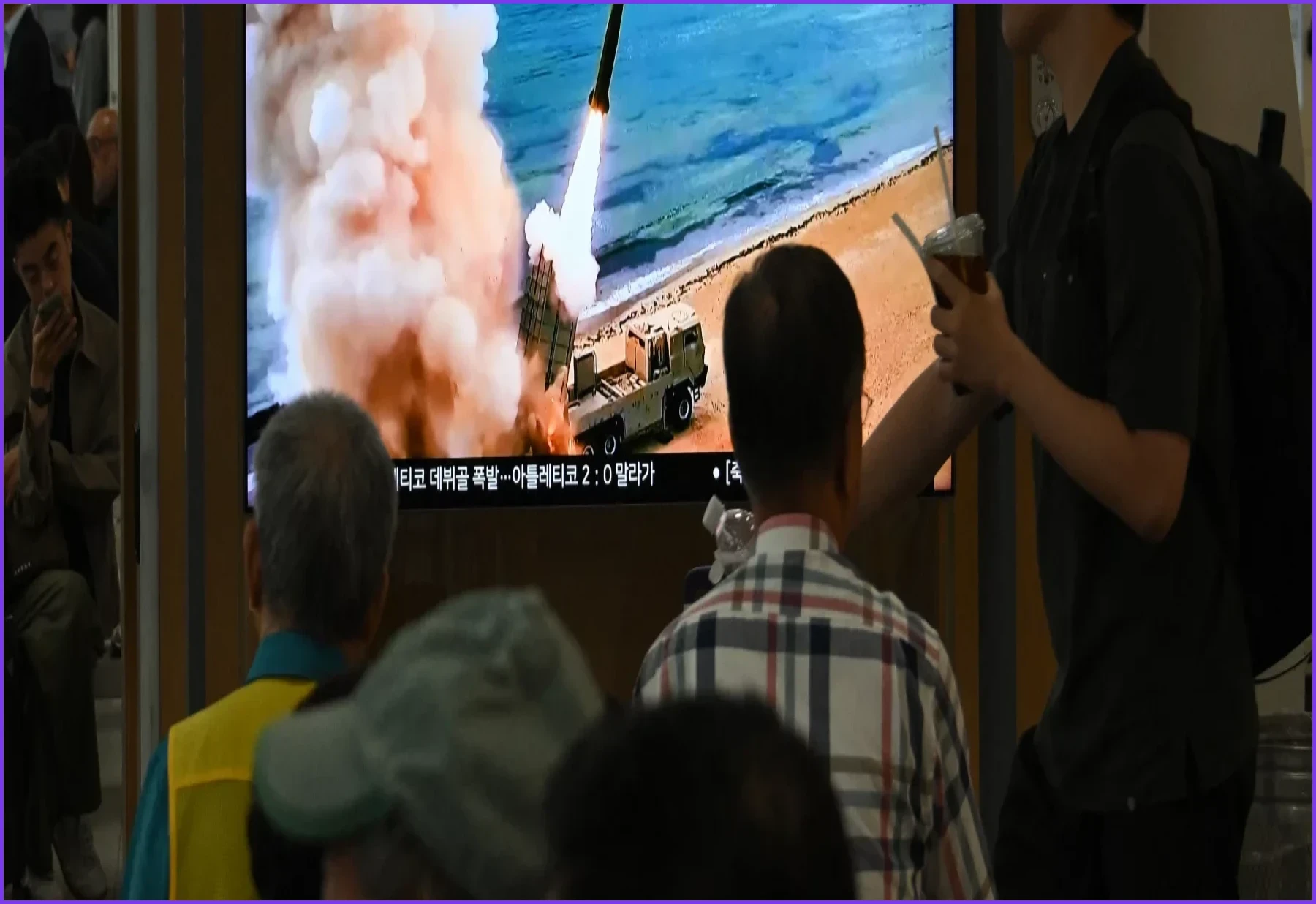
According to South Korea’s Joint Chiefs of Staff, North Korea fired around 10 short-range ballistic missiles from the capital region of Pyongyang eastward toward the sea on August 20, 2026. The military provocation served as a forceful exclamation point to Pyongyang’s rejection of recent U.S. diplomatic overtures, which included last-minute orders from President Trump to shorten joint U.S.-South Korea military exercises.
The annual war games, known as Ulchi Freedom Shield, were wrapped up by U.S. and South Korean forces on Friday, ending six days earlier than originally scheduled. Trump had posted on social media on Monday that he ordered the drills scaled back because he considers them too costly and believes they send a hostile message to the North. He later asserted that he had reached out to Kim Jong Un about a potential meeting and received a positive response.
However, Pyongyang quickly dampened expectations of an easy diplomatic breakthrough. In a statement released through state media, Kim Yo Jong, the powerful sister of the North Korean leader, dismissed the decision to shorten the joint exercises as "unworthy of comment." She insisted that the reduction did not alter the "provocative and offensive" nature of the drills. Nevertheless, she left a diplomatic window cracked, acknowledging that while Washington's policies remain hostile, "the relationship between the two leaders is still excellent."
Kuyoun Chung, a political scientist at Kangwon National University, observed that Kim Yo Jong’s message suggests Pyongyang is "raising the price of re-engagement, rather than closing the door to a summit." Since Trump returned to the White House last year, North Korea has consistently demanded that the U.S. recognize its status as a nuclear power before diplomacy can resume. Washington has resisted this demand, as doing so would contradict its long-held goal of complete denuclearization and violate United Nations Security Council resolutions.
Even so, international pressure on North Korea to denuclearize has weakened as its nuclear programs have advanced. South Korea's policy has gradually shifted from demanding full denuclearization to pursuing arms control, a realistic approach that is also gaining traction among some policymakers in Washington. Joseph Yun, who stepped down as the acting U.S. ambassador to South Korea last October, suggested that a highly staged meeting remains possible. "It is entirely possible, in my view, that there could be a pro forma meeting, in which the two sides shake hands, sit down, have a nice chat, agree to discuss again," and return home, Yun noted.
The geopolitical landscape has shifted significantly since Trump's first term. In 2023, North Korea formally abandoned its constitutional goal of reunifying with South Korea. Kim Jong Un has since signed a mutual defense pact with Russia and revived relations with China, effectively eliminating Seoul's traditional role as a diplomatic mediator between Washington and Pyongyang.
While South Korea’s official stance is that it hopes Trump's outreach will lead to renewed diplomatic engagement, experts warn of the risks. "The United States would simply reap the diplomatic benefits of the summit," Chung warned, "while South Korea bears all the security consequences of the concessions to North Korea."
Seeking to navigate these shifting dynamics, South Korea recently turned to China for diplomatic assistance. During a visit, Chinese Foreign Minister Wang Yi pledged that Beijing would continue to promote "peace and stability on the Korean Peninsula." However, when asked if China would help broker a U.S.-North Korea summit, Wang stated that the two nations must resolve the issue themselves, adding that the U.S. should first abandon its hostile policies toward Pyongyang.
Meanwhile, Trump’s unilateral decision to curtail the joint military exercises has deepened South Korea’s unease regarding the reliability of its alliance with the U.S. South Korean Foreign Minister Cho Hyun admitted to lawmakers on Wednesday that Seoul was caught off guard by Trump’s sudden order. Cho stated he would do his utmost "to make sure the South Korea-U.S. alliance does not weaken" as Washington pursues talks with the North.
For Trump, however, South Korea has not met his expectations. In his Monday social media post, Trump complained that Seoul had declined a U.S. request to participate in military operations against Iran. Cho explained to lawmakers that Trump’s decision to cut the military drills short was partly intended as leverage to pressure South Korea into accelerating a promised $350 billion investment in the U.S. in exchange for lower tariffs.
This highly transactional approach has begun to erode public trust in Seoul. Joseph Yun warned that if South Koreans believe Washington is using core security commitments or military exercises as leverage for unrelated issues like trade, investment, or foreign policy disagreements, "confidence in Washington's reliability could weaken." While Yun does not foresee an immediate collapse of the alliance, he cautioned that the "greater risk is the gradual erosion of political trust."
That erosion is already visible in public opinion. A recent poll conducted by the Joongang Daily newspaper and the East Asia Institute revealed that 46% of South Korean respondents now view the U.S. as an untrustworthy partner, compared to 45.4% who still see it as trustworthy. Among the 43.6% of respondents who held a negative view of the U.S., three-quarters blamed what they characterized as coercive American behavior toward its allies on matters of trade, defense, and investment.