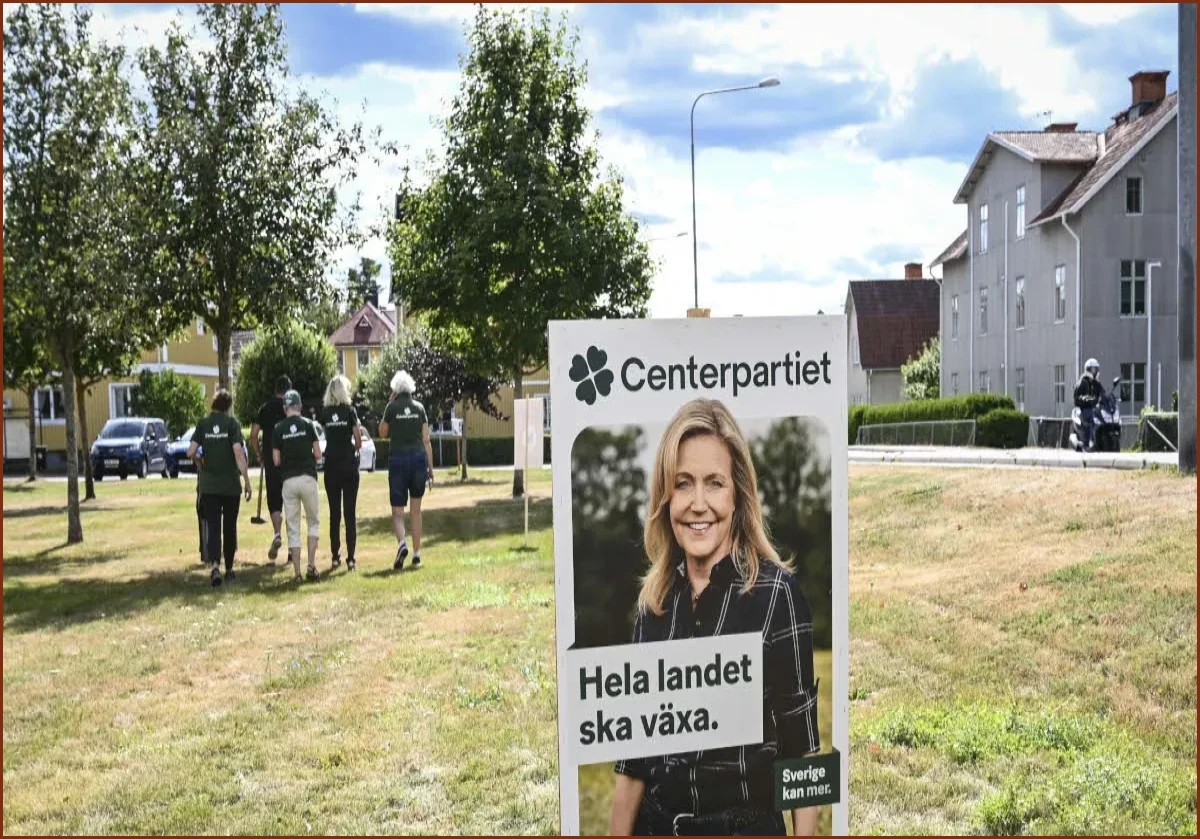
With less than a month remaining before Sweden's September 13th election, the Centre Party is intensifying its campaign to attract voters to its proposed "Middle Alternative." The party envisions a government coalition comprising the centre-left Social Democrats, the right-wing Christian Democrats, potentially the centre-left Green Party, and the Centre Party itself.
This strategic pivot follows several opinion polls that show the opposition parties holding a strong lead over the ruling Tidö coalition, which includes the Christian Democrats. Centre Party leader Elisabeth Thand Ringqvist told the news agency TT that the party is banking on the possibility that the current governing bloc could collapse. She noted that the Tidö parties have not explicitly ruled out considering other options following the election. Thand Ringqvist stated that the middle option is now perceived as much more sensible, whereas it was previously viewed as an outlandish idea when the party first began discussing it in January.
For both the Centre Party and the Left Party, securing a larger share of the vote is crucial to gaining leverage in potential coalition negotiations with Social Democrat leader Magdalena Andersson. The final results could determine whether a new Social Democrat-led government leans toward the right or the left. Tensions have surfaced between the two parties, however, as the Centre Party has rejected the Left Party's demand for seats in the government.
The Centre Party's middle alternative is built on the involved parties agreeing to a series of joint projects focused on boosting employment and reducing emissions. A key demand from the party is the introduction of a new target within the fiscal framework, specifically a growth target of at least 2.5 percent over an economic cycle. This proposed setup has drawn criticism from Green Party co-leader Amanda Lind, who told the Aftonbladet newspaper that she was surprised by the idea of a right-leaning government. Lind characterized the plan as "selling out the climate" and argued that it is unreasonable for the Centre Party to believe a government including the Christian Democrats would be beneficial for climate policy.
"Our alternative is perceived as much more sensible now. We have been talking about this middle option since January, but back then it sounded so outlandish that no one was interested," she said.