The conditional approval of a new cryptocurrency bank partly owned by the family of President Donald Trump has sparked intense criticism from financial experts and Democratic lawmakers, who argue the venture offers depositors an unprecedented avenue to curry favor with the White House.
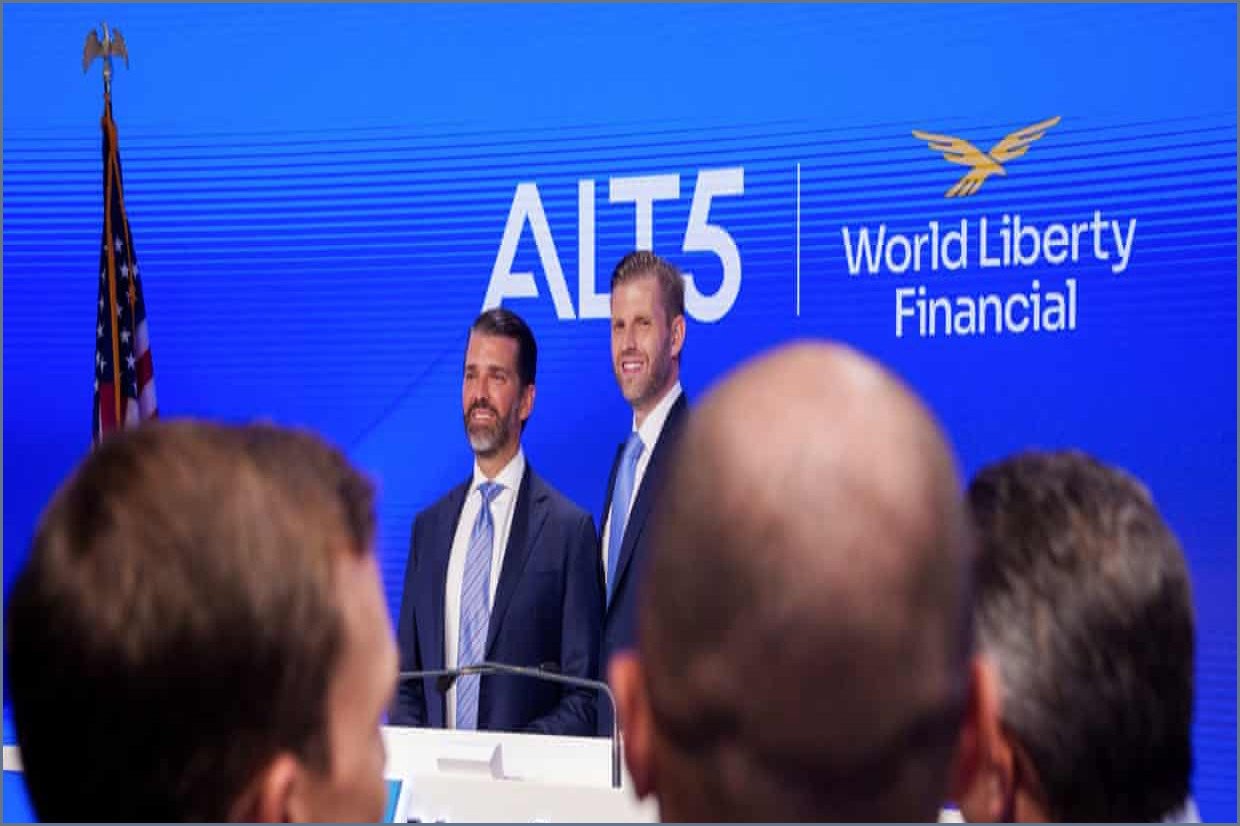
World Liberty Trust Company received conditional approval on August 14 from the US Office of the Comptroller of the Currency (OCC) to establish a bank. An entity affiliated with Trump and his family members owns approximately 38% of the company, while the OCC itself is headed by a political appointee of the president. Cryptocurrency and financial regulation experts point to two primary elements underpinning the bank's business model: a near-zero risk of losing money and a powerful financial connection to the first family that experts say could serve as a vehicle for buying political influence.
Unlike traditional financial institutions, World Liberty Trust Company will not operate as a conventional bank. It will not offer business or personal loans, issue mortgages or credit cards, or secure federal insurance for its deposits. Instead, its primary function is the direct issuance of USD1, a dollar-pegged stablecoin associated with the Trump family. Stablecoins are pegged to a fixed value, such as $1, and are primarily utilized to facilitate the trading of more volatile digital assets like bitcoin.
Under the "Genius Act," a federal stablecoin regulatory framework signed into law by Trump in July 2025, World Liberty is legally barred from paying interest to depositors who purchase its stablecoins. However, the bank itself is permitted to generate substantial interest by investing the cash collected from these depositors into high-quality liquid assets, specifically US government-backed treasury bonds.
This financial structure has led experts to question why any depositor would choose the Trump family's relatively obscure stablecoin over more established market alternatives. James Angel, an associate professor at Georgetown University’s McDonough School of Business, stated that the financial link is the only logical draw. "The only reason really to do it is because they want to appease Trump, because they want to gain favor with Trump or in some way help Trump for whatever reason," Angel said, describing the arrangement as "a very efficient way to buy influence with the Trump gang."
Democratic lawmakers have heavily criticized the arrangement, calling it a blatant example of corruption. They emphasized that there is no historical precedent for a sitting US president holding a direct financial interest in a banking entity approved and regulated by his own administration.
In response to the backlash, a spokesperson for World Liberty Financial defended the OCC charter, arguing that the approval subjects the company to rigorous oversight. "Critics are missing the point: World Liberty Financial is running towards regulation and continuous oversight, not away from it," the spokesperson said, adding that the national charter ensures "robust and permanent regulatory supervision" that will outlast the current administration.
The OCC has also denied any allegations of insider dealing or corruption. In its August 14 approval letter, the agency noted that the application was reviewed and approved under authority delegated to career staff rather than political appointees. An OCC official stated that the agency consulted with multiple experienced career government ethics officials to guarantee the process complied with all federal ethics standards and policies.
However, critics remain highly skeptical. Patrick Woodall, managing director of Americans for Financial Reforms, stated that the OCC exceeded its statutory authority and broke with judicial precedent by unlawfully granting the conditional charter to a trust bank controlled by the Trump family's firm. Woodall noted that the stablecoin venture is "uniquely suited to try to curry favor with the White House," explaining that buyers can purchase large amounts of USD1, inform the administration, and allow Trump to profit from the transaction.
Jeremy Kress, a law professor and bank regulation expert at the University of Michigan’s Ross School of Business, described the approval as an unprecedented coup. "President Trump controls the bank regulatory process," Kress said. "He wanted a bank and so the bank regulators approved his bank."
The timeline of the bank's development has also drawn scrutiny. Trump re-entered the White House in January 2025, and USD1 was launched by World Liberty Financial in March 2025. In July of that year, Trump signed the Genius Act, which established the regulatory framework for stablecoin banks. Trump openly touted the legislation during a White House event on Wednesday, claiming he named the act after himself and that it paved the way for the widespread adoption of dollar-backed stablecoins. At the same event, Trump complained that financial technologies had previously been targeted by "crippling regulations, brutal restrictions, weaponization" before his return to office.
Six months after the Genius Act became law, World Liberty filed its bank application with the OCC, explicitly stating its goal was to drive mainstream adoption of USD1. Currently, USD1 remains a minor player in the broader stablecoin market, with only about $4 billion in circulation. While a World Liberty spokesperson claimed USD1 is the second-largest stablecoin compliant with the Genius Act—noting that market leader Tether does not comply—experts point out that USD1 represents only a tiny fraction of the overall market. The currency did receive high-profile promotion in June, when it was announced that some fighters at a UFC event held on the White House south lawn would receive bonuses paid in USD1.
While some depositors may buy USD1 out of emotional loyalty to Trump or the Maga movement, experts like Angel see little commercial incentive. "I don’t see a good reason why anyone would want to use the Trump stablecoin when others are more commonly used," Angel remarked. The White House has declined to comment on the matter, deferring all inquiries to World Liberty Financial.
What it will be able to do is directly issue the Trumps’ dollar-pegged stablecoin, USD1. Stablecoins, unlike other cryptocurrencies, are pegged at fixed values such as $1, and used almost exclusively to buy and sell riskier crypto assets, like bitcoin.
“People can buy USD1 stable coins in large amounts and then tell the administration or tell Trump that they have done that,” he said. “And Trump gets to profit from that.”