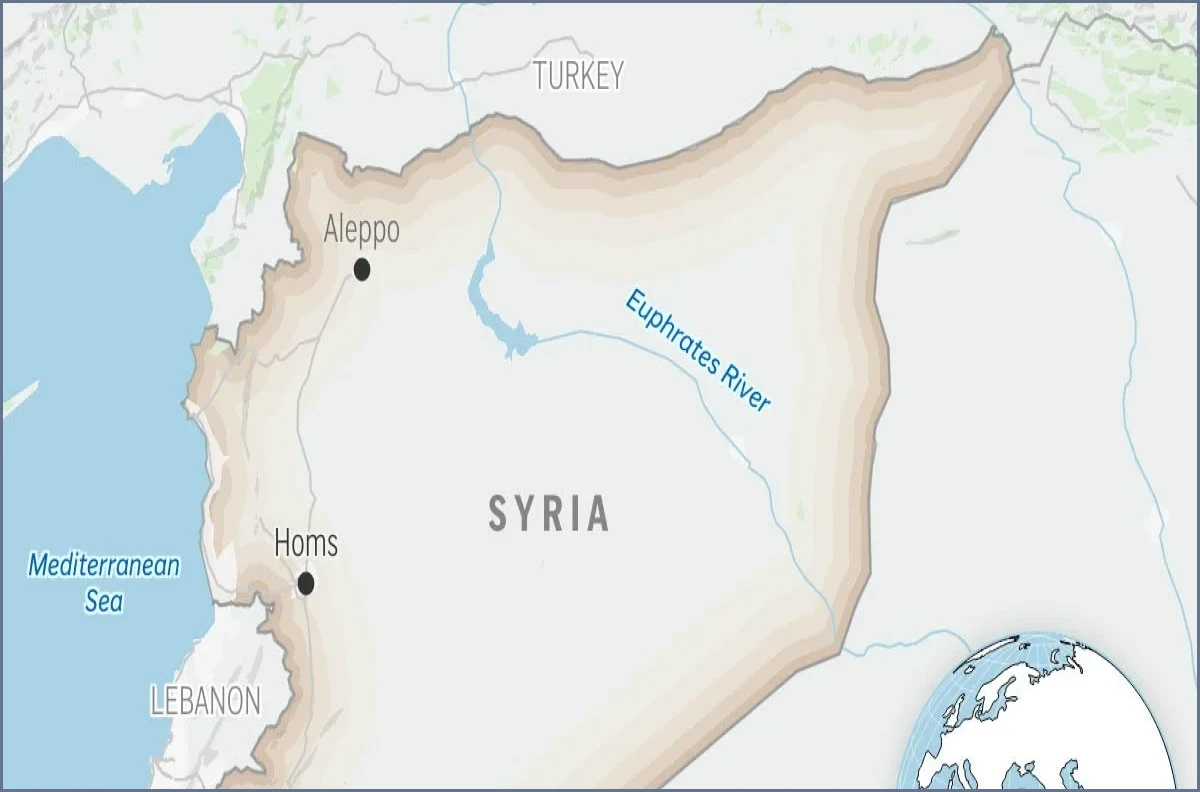
Israel launched a series of airstrikes against a military airfield in northwestern Syria early Tuesday, stating the operation was designed to block the deployment of Turkish forces to the facility. The bombardment targeted the Abu Duhur air base in Syria's northwestern province of Idlib. According to Syrian state television, eight distinct strikes hit the runway, resulting in physical damage but causing no casualties.
Explaining the military action, Israeli Prime Minister Benjamin Netanyahu's office released a statement asserting that Syria was "on the verge of breaching" an established "status quo in security matters" by permitting Turkish forces to establish a presence at the base. "Israel repeatedly warned Syria that such a deployment would pose a threat to Israel's security. Syria chose to ignore these warnings," the prime minister's office declared.
Damascus strongly denounced the bombardment. Syrian Foreign Minister Asaad al-Shibani described the incident as "Israeli aggression," calling it "an unjustified provocation, a violation of Syria's sovereignty, and a direct threat to regional and global stability."
Turkey's Foreign Ministry also issued a condemnation, demanding that "the international community to take a more decisive stance to end Israel's escalating aggression against Syria and to ensure accountability for these actions that disregard international law." Turkey maintains close ties with the Syrian government, providing military assistance, and has long-standing tense relations with Israel as both nations seek to limit each other's influence in Syria.
The Britain-based war monitor, the Syrian Observatory for Human Rights, reported that foreign fighters had previously occupied the base but were recently requested to leave. The Observatory noted that Turkey, a key supporter of the Syrian administration, had been actively rehabilitating the Abu Duhur facility, which had remained non-operational for several years during the country's civil war—a conflict that has claimed nearly half a million lives.
The United States expressed significant apprehension over the development. Tom Barrack, the U.S. ambassador to Turkey and special envoy to Syria, stated on social media platform X that Washington is "deeply concerned that the confirmed Israeli airstrikes" represent "an unnecessary escalation that does not advance regional stability."
Barrack defended the administration of Syria's Interim President Ahmad al-Sharaa, noting that it has neither "adopted a predatory posture nor maintained proxy forces" and has consistently signaled a desire to de-escalate tensions with Israel. He added that the U.S. has previously hosted, and plans to continue hosting, diplomatic talks to foster stability. Other regional powers, including Saudi Arabia, Egypt, and Qatar, also released official statements condemning the Israeli operation.
Relations between Israel and Turkey regarding Syria have grown increasingly volatile since December 2024, when the government of Bashar Assad collapsed as insurgents captured Damascus. Following Assad's ouster, Israel launched hundreds of airstrikes across Syria, primarily targeting and destroying Syrian military hardware to prevent it from being acquired by the new leadership. Additionally, the Israeli military seized and continues to occupy a United Nations-patrolled buffer zone in southern Syria.
Last year, Israeli drone strikes on a southern suburb of Damascus killed eight soldiers and wounded several others. Although the new administration in Damascus has repeatedly expressed a desire to avoid direct confrontation, Israel remains highly skeptical of the government, which is led by former Islamist insurgents.