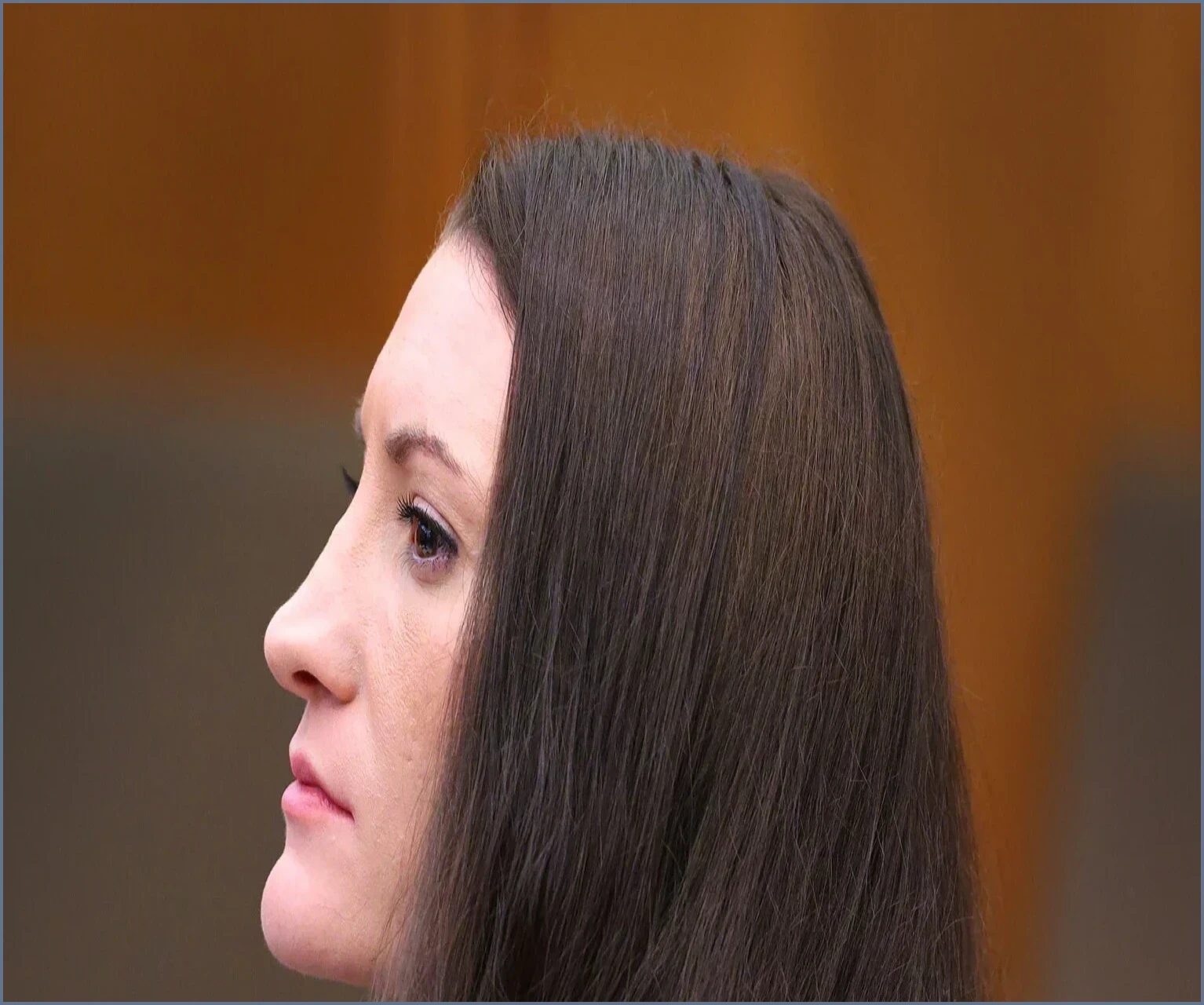
Lindsay Clancy’s former mother-in-law testified on Tuesday that the Massachusetts nurse was "begging for help" in the months preceding the January 2023 deaths of her three children and her own subsequent suicide attempt.
Testifying for the defense during the fourth week of Clancy's murder trial in Plymouth Superior Court, Susan Clancy described the intense struggles the family witnessed. "Lindsay was struggling — we were all concerned," she told the jury. Susan, who worked as a labor and delivery nurse like Lindsay, described her former daughter-in-law as a "wonderful mother" who was "very nurturing, very loving."
The central issue in the trial is not whether Lindsay Clancy killed her children on January 24, 2023—a fact her defense team does not contest—but rather her mental state at the time of the tragedy. Her attorney, Kevin Reddington, argues she should not be held criminally responsible due to postpartum psychosis, a rare condition linked to hormonal shifts, sleep deprivation, and stress after giving birth. Reddington also asserts that Clancy suffered from bipolar disorder and that antidepressants prescribed after her third child's birth worsened her condition.
During her testimony, Susan Clancy shared text messages showing that Lindsay had expressed deep anxiety about her medications. In a text sent on November 30, 2022, about two months before the killings, Lindsay wrote, "I'm not okay and I'm terrified of taking meds tonight," expressing fear that she had become dependent on benzodiazepines despite being unable to sleep without them.
This testimony followed emotional statements from Lindsay's mother, Paula Musgrove, and sister, Allison Ozga, on Monday. Musgrove testified that Lindsay was terrified of sleeping alone, grew paranoid, and felt her medications "were destroying her mind." In December 2022, Lindsay admitted to both her mother and her then-husband, Patrick Clancy, that she was having "thoughts of harming the children." Ozga testified that by late December, Lindsay confessed to experiencing daily suicidal thoughts for a month.
The jury also heard from Dr. Paul Zeisel, a clinical and forensic psychologist who evaluated Clancy in the hospital in early February 2023. Zeisel recalled seeing her handcuffed to her bed, paralyzed from the sternum down following her suicide attempt, and suffering from a "fuzzy and foggy" memory while on heavy pain medication. Zeisel testified that Clancy asked about Patrick and, during a phone call placed on the psychologist's cellphone two days later, told her husband she loved him but had "heard a male voice ordering her" to kill their children and herself.
Zeisel, who has met with Clancy dozens of times, noted that psychological tests administered by a government doctor showed no signs that she was faking or exaggerating her psychiatric symptoms. He explained that before the incident, Clancy felt her "horrible thoughts" were so loud that others could hear them. Zeisel also testified that psychotic symptoms can fluctuate, meaning an individual experiencing psychosis can still perform routine tasks.
Conversely, prosecutors contend that Clancy deliberately planned the killings, arguing she intentionally sent her husband out on errands to ensure she was alone. They have highlighted her normal activities on the day of the deaths, such as taking the children to the doctor and playing with them in the snow.
Patrick Clancy, who is now divorced from Lindsay, previously gave emotional testimony about finding his children strangled in the basement of their home. Prosecutors played a seven-minute 911 call in which he can be heard discovering the bodies and screaming, "She killed the kids!"
If convicted of murder, Lindsay Clancy faces life in prison without parole. If she is found not guilty by reason of a lack of criminal responsibility, she will be committed to a state mental health facility.