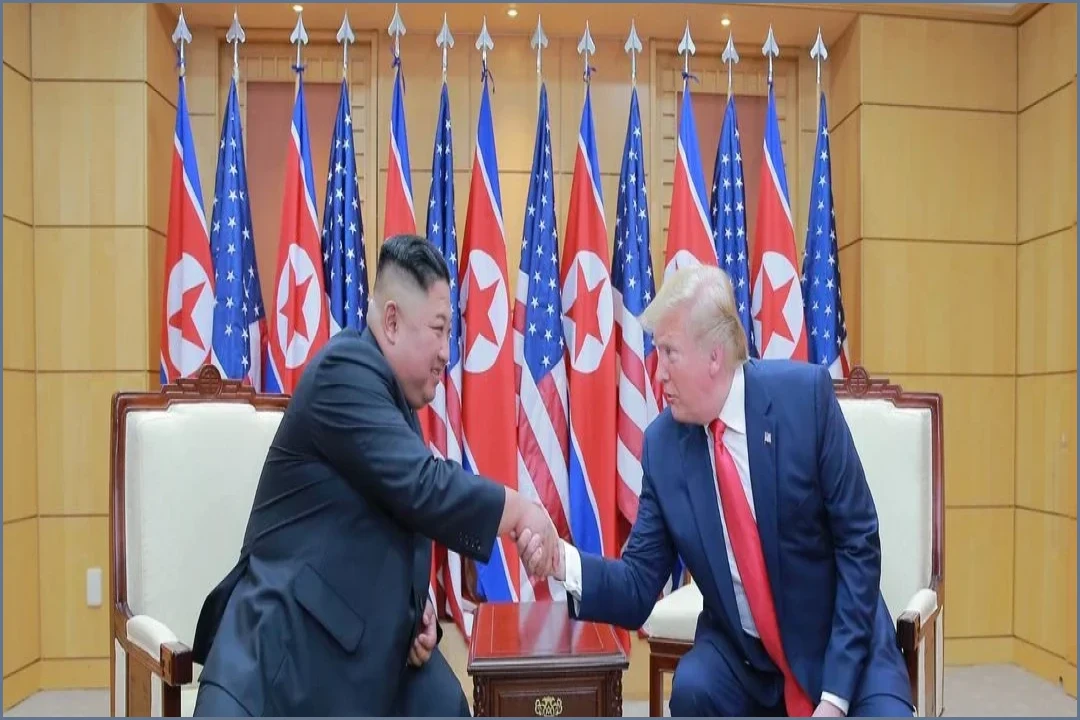
US President Donald Trump has been pressing his aides to arrange a meeting with North Korean leader Kim Jong-un as early as this autumn, according to reports from the Wall Street Journal citing US officials. The proposed dialogue is intended to revive the high-profile diplomatic efforts of Trump's first term, which aimed to persuade Pyongyang to dismantle its nuclear weapons programme.
Officials familiar with the discussions state that Trump has privately explored the possibility of meeting Kim during his upcoming travels to Asia. A potential venue for this encounter could be the Asia-Pacific Economic Cooperation (APEC) summit, scheduled for November in Shenzhen, China. While formal planning has yet to commence, the interest from the White House marks a significant push to reopen direct communication channels more than six years after the leaders last met. A previous attempt by Trump to hold a summit with Kim during an Asia tour last year was abandoned due to logistical challenges.
In a recent social media update, Trump announced that he had ordered the Pentagon to reduce the scale of joint US-South Korea military exercises. He further indicated that Kim had responded to his diplomatic overtures, though he did not provide specific details regarding the nature of that response. The South Korean embassy in Washington has expressed optimism that the relationship between the two leaders could promote meaningful dialogue and stability on the Korean Peninsula. Meanwhile, South Korean President Lee Jae Myung has reiterated his calls for the nation to pursue greater military independence, including the accelerated development of nuclear-powered submarines.
Diplomatic efforts between the US and North Korea previously stalled after summits in Singapore in 2018 and Hanoi in 2019 failed to produce a verifiable denuclearisation agreement. A third meeting later that year at the Demilitarised Zone also proved insufficient to restart substantive negotiations. Since that time, North Korea has significantly expanded its strategic capabilities under strict secrecy. Independent arms control analysts suggest the country's nuclear arsenal has grown well beyond earlier estimates of 60 warheads, and the US intelligence community has warned that Pyongyang remains committed to enhancing its strategic strike power.
The divide remains substantial, as Washington does not formally recognize North Korea as a nuclear-armed state, while Pyongyang continues to seek international acceptance of its status. Assistant Secretary of Defence Robert Kadlec testified before Congress that North Korea's missile forces represent an active threat to the US mainland and regional allies. Analysts further caution that Kim would likely enter any future summit from a position of increased diplomatic and military strength, bolstered by deepened ties with Iran and strengthened security partnerships with Beijing and Moscow. Kim met with Chinese President Xi Jinping in June and is expected to hold further discussions with Russian President Vladimir Putin later this year.