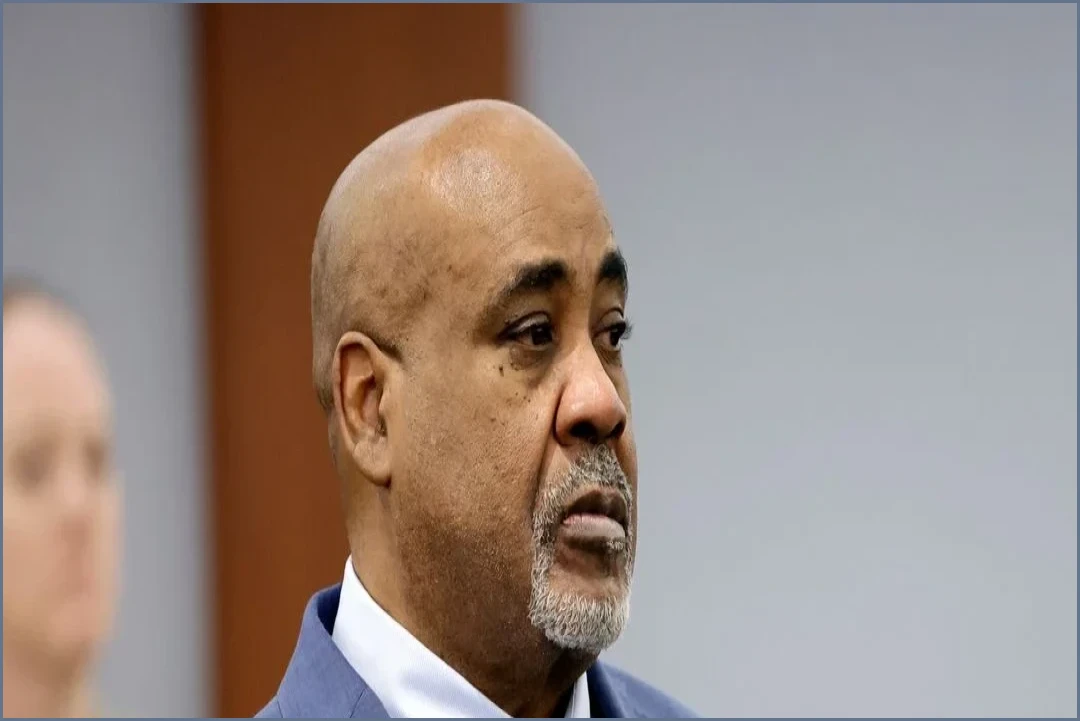
The highly anticipated trial of Duane "Keffe D" Davis began in a Las Vegas courtroom on Monday, nearly three decades after the drive-by shooting that claimed the life of rap legend Tupac Shakur. Prosecutors laid out their case, alleging that Davis, a former gang leader, orchestrated the murder as an act of gang retaliation and subsequently boasted about his involvement for years.
Prosecutor Binu Pilal told the jury that Davis, now 63, was a leader of the South Side Compton Crips, a prominent gang in 1990s Los Angeles. According to the prosecution, the deadly chain of events was set off on September 7, 1996, when Shakur publicly participated in a "humiliating beating" of Davis's nephew, Orlando "Baby Lane" Anderson. The assault, which was captured on camera, took place at a Las Vegas venue where Shakur and others had gathered to watch a Mike Tyson boxing match.
Just two and a half hours after that altercation, Shakur was fatally wounded in a drive-by shooting. Pilal asserted that while Davis did not pull the trigger himself, he was the mastermind behind the attack. The prosecutor alleged that Davis sat in the front seat of a white Cadillac, handed a firearm to a passenger in the back seat, and ordered them to shoot the 25-year-old rapper.
The prosecution's case heavily relies on Davis's own historical statements. Pilal told the jury that Davis had repeatedly confessed to his role in the killing during interviews with law enforcement, public media appearances, private phone calls, and in his 2019 autobiography. "Over the years, in private interviews, in public statements, and even in private calls, Duane Davis has repeatedly told us over and over again about the anger he felt, and his own role in the revenge drive-by shooting of Tupac Shakur," Pilal said, urging the jury to finally hold him accountable.
Davis has pleaded not guilty to murder and other charges. If convicted, he faces the possibility of life in prison without parole. His defense attorney, Michael Sanft, countered the prosecution's claims by arguing that there is no physical or definitive proof of Davis's culpability. Sanft characterized the decades-long police investigation as confused and inconsistent. He told the jury that the prosecution was presenting "fiction" as fact, asserting that Davis's previous admissions, particularly those in his memoir, were mere bluster and exaggeration fabricated by a ghostwriter to boost book sales.
The killing of Shakur, widely known by his stage name 2Pac, remains one of the most famous unsolved cases in American music history. Shakur was a central figure in the fierce 1990s hip-hop rivalry between the US East Coast and West Coast. Raised in Harlem and Baltimore as the son of a Black Panther activist, Shakur rose to fame as the face of West Coast hip-hop after signing with Los Angeles-based Death Row Records, which was run by Marion "Suge" Knight.
The trial is expected to delve deep into the violent feud between Death Row Records and its East Coast rival, Bad Boy Records, founded by Sean "Diddy" Combs. Prosecutors explained that Death Row Records was aligned with Mob Piru, a Los Angeles gang within the Bloods alliance, while Bad Boy Records employed members of the rival South Side Compton Crips, led by Davis, as bodyguards. The beating of Anderson on the night of the murder was reportedly in retaliation for an earlier assault on a Death Row employee.
Later that evening, the white Cadillac carrying Davis, Anderson, and other associates pulled alongside the vehicle carrying Shakur and Knight. Gunfire erupted from the Cadillac, leaving Shakur mortally wounded. The investigation stalled for decades until the 2019 publication of Davis's memoirs, in which he detailed his presence in the car and his action of handing over the gun. Although Christopher "The Notorious B.I.G." Wallace, a star signed to Bad Boy Records, was murdered in March 1997 in what investigators suspected was a retaliatory strike, that killing remains officially unsolved.