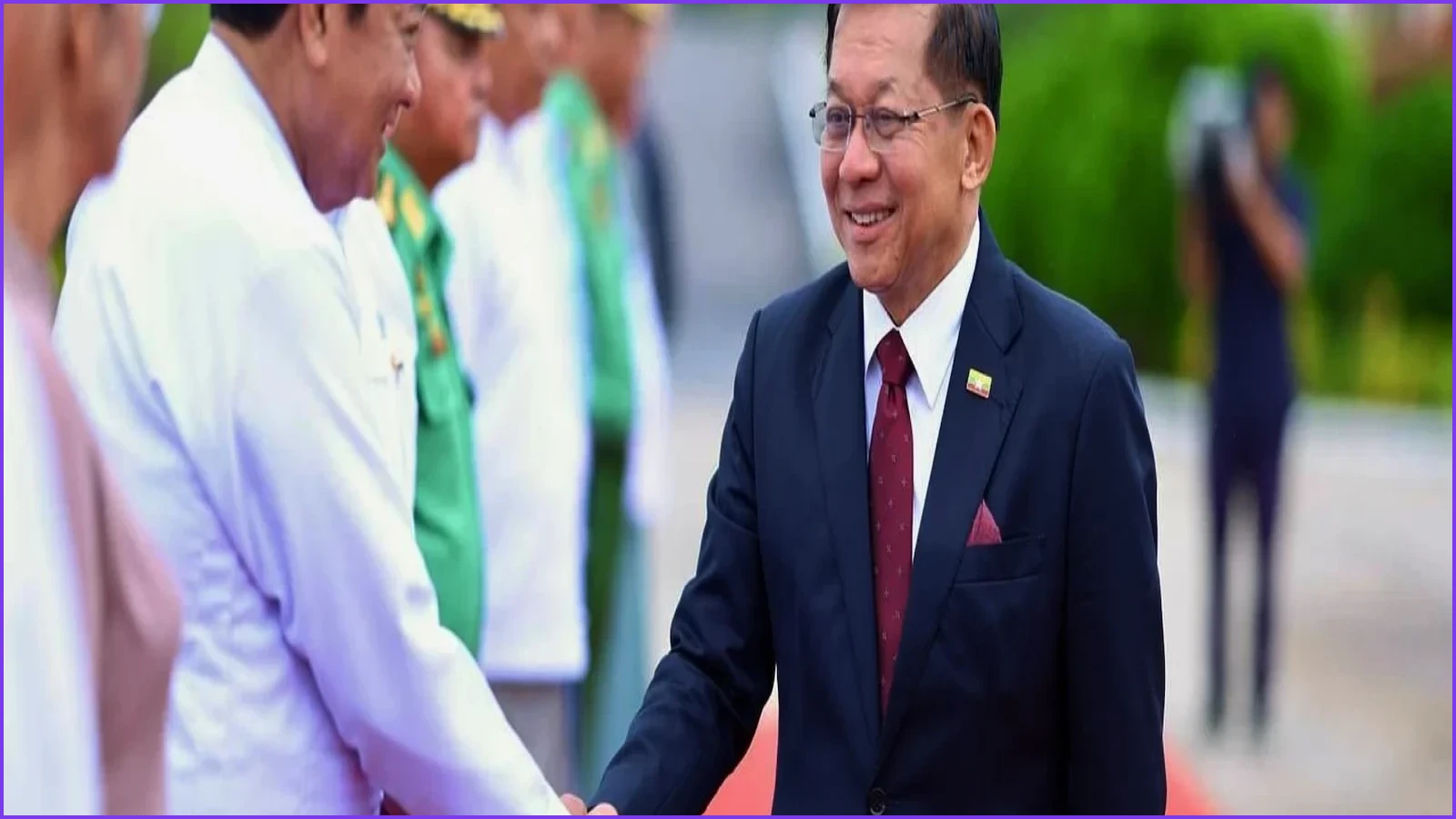
The leader of Myanmar’s military-backed government, Min Aung Hlaing, has departed from the capital, Naypyitaw, on an official visit to Russia. Accompanied by members of his cabinet, he intends to hold discussions with President Vladimir Putin and other high-ranking Russian officials to bolster bilateral relations, as well as economic, social, and security cooperation, according to state-run MRTV television.
This trip marks the seventh time Min Aung Hlaing has visited Russia since February 2021, when the military seized power from the elected government of Aung San Suu Kyi. The two leaders previously met on the sidelines of the World Atomic Week Forum in Moscow last September. Notably, President Putin has never traveled to Myanmar.
Russia, alongside China, serves as a primary arms supplier and supporter of the current Myanmar administration. Russian-manufactured fighter jets are frequently utilized in military operations against ethnic minority groups and their allies among pro-democracy resistance forces. While Western nations have responded to the military takeover and subsequent internal civil war—which has resulted in thousands of civilian deaths—with political and economic sanctions, Moscow has consistently defended the ruling generals in international forums.
In addition to diplomatic meetings, Min Aung Hlaing is scheduled to participate in a Myanmar-Russia Business Forum. The two nations have previously established several cooperative agreements, including joint military drills, a nuclear power development pact, and collaborative efforts regarding human space flight, which includes training for Myanmar’s first cosmonaut.
The visit follows the inauguration of Min Aung Hlaing as president this past April, an event tied to general elections held in December and January. These polls were widely dismissed by rights groups and United Nations experts as a sham, with critics arguing they were designed to cement military control rather than restore civilian governance.