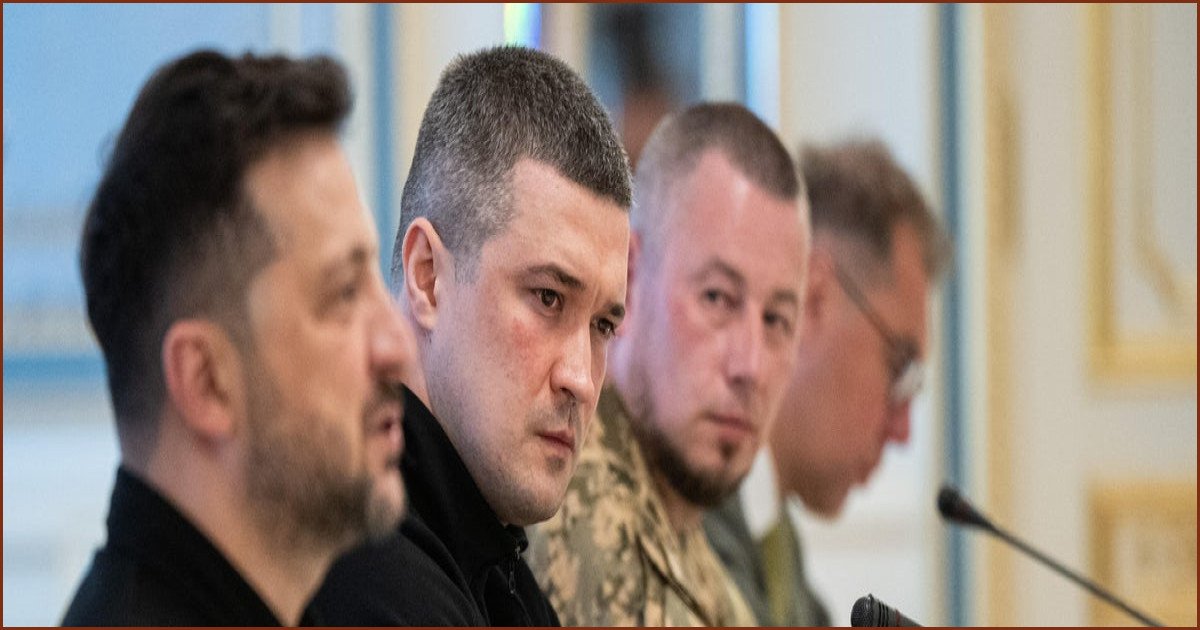
Hundreds of protesters gathered in Kyiv and other Ukrainian cities on Thursday to voice their opposition to President Volodymyr Zelenskyy’s decision to dismiss Defense Minister Mykhailo Fedorov. The ouster of the widely respected official has sparked a swift and significant backlash, occurring at a critical juncture as many analysts suggest Ukraine is beginning to turn the tide against Russia’s nearly 4½-year full-scale invasion. The cabinet shakeup has raised questions about the timing of such a move, as it serves as a major test of Zelenskyy’s political authority while the country remains under martial law, which prohibits wartime elections.
Public sentiment on the ground was stark, with one university student holding a sign that read, "Fedorov was not the problem." The student told reporters that the government itself, rather than the defense minister, was the source of the country's issues, noting that Fedorov was actively fighting corruption and was seen as a figure capable of changing Ukraine. The internal friction also reached the military ranks; the deputy commander of the Ukrainian Air Force, Pavlo Yelizarov, resigned in protest on Thursday. In a Facebook post accompanied by his resignation letter, Yelizarov stated, "I believe that the removal of M. Fedorov is a great evil for the country's defense capability." Additionally, the pro-government media organization United24 announced it would pause its publications to participate in the protests.
Political resistance is also mounting within the government. A member of Zelenskyy’s own party in the Ukrainian Parliament told reporters that they would "100%" not accept the replacement of Fedorov. Meanwhile, President Zelenskyy defended his decision during a news conference on Thursday, citing ongoing friction between Fedorov and the Ukrainian armed forces commander-in-chief, Gen. Oleksandr Syrskyi. The president stated he was "just showing that if the sides can't resolve an issue, I will have to resolve it." In response, Gen. Syrskyi posted on social media, calling for a "focus on war and on an effective strategy" against Russia.
Fedorov, a 35-year-old former tech entrepreneur with strong ties to Silicon Valley, appeared at a news conference wearing a dark T-shirt and jeans to address his dismissal. He accused Gen. Syrskyi of blocking necessary reforms, arguing that the war has changed completely due to the integration of new technology like drones. "We encountered a situation in which all the initiatives we proposed began to be blocked," Fedorov said. "Under this arrangement, I personally do not know how the war can be won."
Before his time as defense chief, Fedorov was highly regarded in Washington for improving ties with the Trump administration and for his strategic efforts to disrupt Russian logistics and fuel flows to the occupied peninsula of Crimea. In February, he negotiated a pivotal agreement with Elon Musk to restrict Russia's use of the Starlink satellite internet service. A source in the Ukrainian armed forces noted that this agreement was one of the most influential projects on the battlefield, enabling the campaign in Crimea and numerous strikes that would not have been possible otherwise. Furthermore, Fedorov established "Brave 1," a defense ecosystem that connected Ukrainian startups with international financing and partnerships, making Ukraine a leader in organizing procurement systems for low-cost drones that now dominate modern warfare.
Reports suggest that Fedorov’s rising popularity and his friction with top generals, including Syrskyi, contributed to his removal. The shakeup coincided with the Ukrainian Parliament’s approval of a new prime minister, Serhii Koretskyi, the former CEO of the state energy company Naftogaz, following the resignation of Yulia Svyrydenko. Zelenskyy stated that these changes are intended to prepare Ukraine for a difficult winter and to strengthen foreign partnerships. "Ukraine is changing its political strategy," the president wrote on X. "Preparing for winter is an extremely important priority, and Ukraine must be ready for every threat that may arise."
In Moscow, Kremlin spokesman Dmitry Peskov dismissed the significance of the personnel changes, telling reporters that shifts in the Kyiv regime are of no fundamental importance to Russia. He added that Moscow sees no prospects for a quick resumption of peace negotiations, stating that it does not matter who leads the Ukrainian Ministry of Defense as long as there is someone in Kyiv capable of making decisions that lead to a resolution of the conflict.