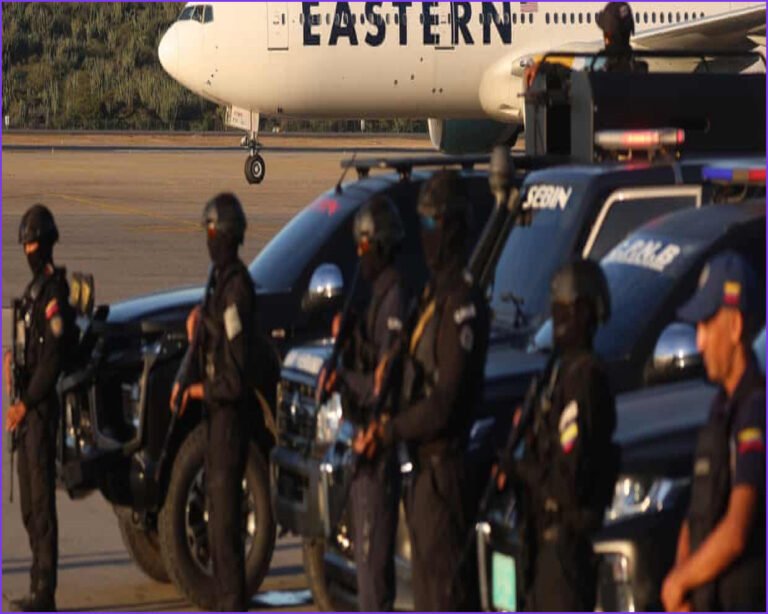
Yemen’s Iranian-backed Houthi rebels announced on Monday that they are imposing an immediate maritime embargo against Saudi Arabia. The group described the move as an "equation of an eye for an eye," framing it as direct retaliation for a long-standing blockade on Yemen and recent explosions at Sanaa International Airport. While Houthi rebels attributed the airport blasts to Saudi airstrikes, the internationally recognized Yemeni government stated the military action was intended to prevent an Iranian plane from landing at the facility.
Houthi military spokesperson Yahya Saree confirmed the embargo in a video statement, declaring that the group is prepared to confront any "foolish act" by the "reckless Saudi enemy" with a comprehensive and decisive escalation. Nasruddin Amer, the deputy head of the Houthi media office, further clarified on X that the Bab el-Mandeb strait would be closed to Saudi vessels in response to what he termed the kingdom’s "unjust blockade on Yemenis for over 10 years."
The Bab el-Mandeb strait, located at the southern tip of the Arabian Peninsula, serves as a critical gateway to the Red Sea. Approximately 12% of global trade and one-fourth of the world’s container traffic pass through the 32-kilometer (20-mile)-wide waterway to reach the Suez Canal. Disrupting this route forces shipping companies to navigate around the Cape of Good Hope off South Africa, which the U.S. government has previously noted would add about 2,700 miles (4,345 kilometers) to the journey from Saudi Arabia to the United States, significantly increasing operational costs.
Saudi Arabia’s military responded to the threat by vowing to keep the waterway open. Major General Turki al-Malki, a Saudi military spokesperson, stated that all Houthi threats against transiting vessels would be addressed swiftly and firmly, labeling such actions as "blatant violations of international law" and "acts of maritime piracy."
The potential for disruption has raised significant concerns regarding the security of energy supplies. Saudi Arabia currently utilizes its East-West Pipeline to transport millions of barrels of crude oil to the Red Sea as an alternative to the Strait of Hormuz, which remains under the grip of Iran following attacks on Feb. 28. According to Texas-based Rystad Energy, approximately 2.5 million barrels of oil per day could be at risk due to the Houthi announcement.
The recent tensions follow a period of heightened friction after the Houthis accused the Saudi-led coalition of striking Sanaa airport to intercept a flight carrying Houthi leaders returning from the funeral of Iran’s Supreme Leader, Ayatollah Ali Khamenei. Although that plane landed safely at another airport, the Houthis subsequently launched missiles and drones at Saudi Arabia’s Abha International Airport in what marked the most significant confrontation in years. Experts suggest that by allowing a direct international flight to land without coalition approval, the Houthis are attempting to establish a new reality in which they independently control Yemeni airspace.
Houthi-run Al Masirah TV broadcast footage of supporters gathering in the city of Ibb, south of Sanaa, to back the embargo. Similar rallies were held in the governorates of Saada, Marib, Hajjah, and Taiz. The Houthis, a key component of Iran’s "Axis of Resistance," previously demonstrated their ability to disrupt shipping by targeting over 100 vessels during the Israel-Hamas war in Gaza. However, some Houthi members have previously indicated to the media that their stockpile of drones is running low, and the ongoing war involving Iran has further impeded the flow of weapons.
The Saudi-led coalition has imposed an air and sea blockade on Yemen since 2015, following the start of the civil war in 2014 when the rebels seized Sanaa and much of northern Yemen, forcing the government into exile. While a truce was reached in 2022, the recent escalation has placed that fragile peace under renewed threat.