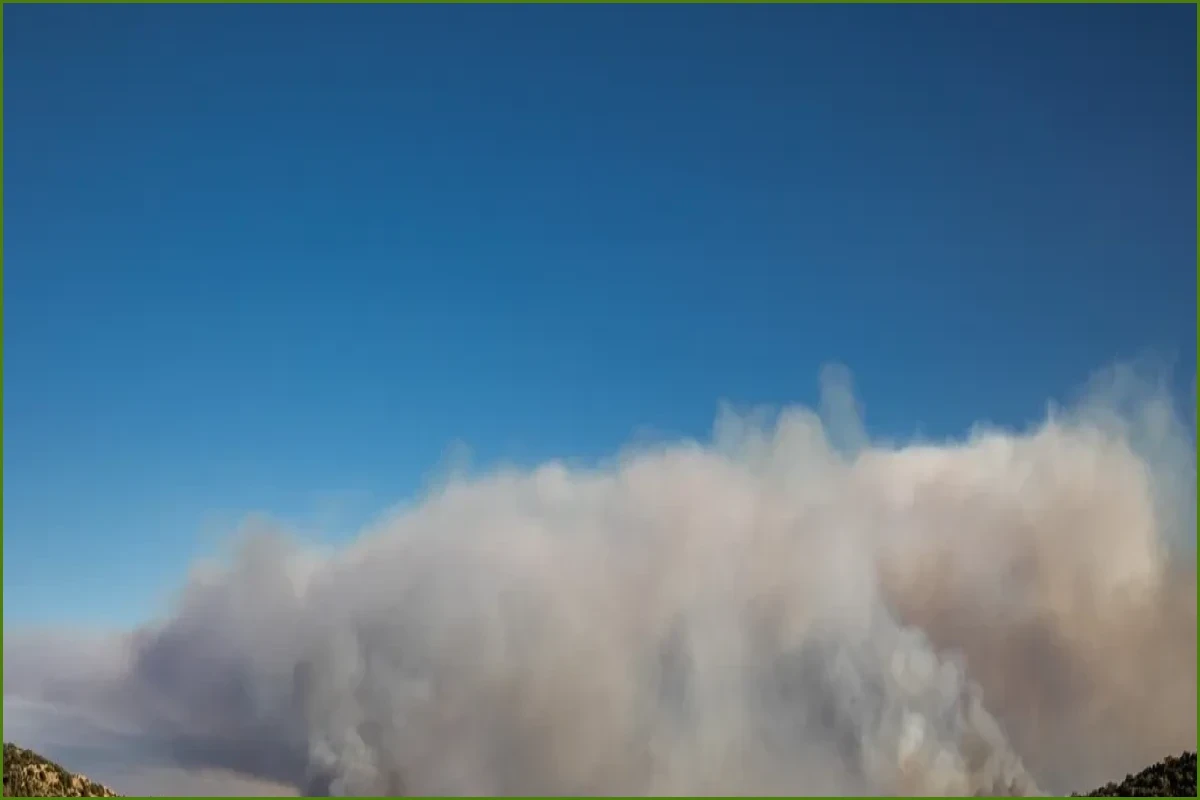
Recent wildfires in the Bordeaux region have scorched 42,000 hectares of land, raising significant concerns among producers about the quality of this year's wine. Although the flames did not reach the area's famous vineyards, thick smoke has blanketed a large portion of the country, with nearly a quarter of France reporting poor air quality at one point due to the blaze.
As vineyard owners prepare to harvest their grapes, there are growing fears that the crop will be tainted, though the industry is also grappling with the more immediate, severe problems of drought and successive heatwaves.
These climate-related issues have stunted many crops and forced an unusually early start to the harvest in various regions, with some areas reporting that up to 30 percent of the potential grape harvest has already been destroyed.
The impact of smoke on viticulture is most severe when exposure occurs close to harvest time. In the current situation, most vineyards were approximately two to three weeks away from picking when the smoke arrived. The most affected areas include the Médoc and Graves appellations on the left bank of the Garonne river, though smoke has drifted across much of the south-west in varying concentrations.
Régis Falxa, president of the Fédération des vignerons indépendants de Gironde, noted that smoke taint can impart undesirable characteristics to grapes, such as flavors of ash, rubber, or even bacon.
However, the perception of these flaws is not universal. Research from the Institut français de la vigne et du vin indicates that 20 to 25 percent of consumers may not detect these specific notes. Despite this, the Institute maintains that such characteristics are considered a major defect, as they are unpleasant and can persist in the mouth, negatively affecting the wine's after-taste.
The industry is not without experience in navigating these challenges. During the 2022 La Teste de Buche fire, which occurred about 30km south of the 2026 blaze site, the Bordeaux region successfully managed to save the majority of its wine harvest from the effects of the smoke.
Falxa emphasized the need for caution and warned against alarmism, stating that it is currently too early to determine the final flavor profiles, as they are not fully verifiable until after the harvest is complete.
He added that winemakers are drawing on the expertise of colleagues in the Occitanie region, which has faced its own significant fires, including the 2025 event at Corbières.
To assist producers, a new digital tool called the Viti-incendie portal has been launched. This platform provides winemakers with maps of fire-affected areas to locate vulnerable plots and details the risk of smoke taint, while a partnership with laboratories enables producers to access analyses at preferential rates.
According to Marie Corbel, technical director of Vignoble et vins du Languedoc-Roussillon, the tool is a first-of-its-kind initiative designed to address risks early and prevent contamination or the need for costly treatments.
Given the high demand, the fire impact map has been made available to all winemakers in France. If grapes are found to be contaminated with an unpleasant taste, winemakers still have options, ranging from the more basic, such as mixing grapes to dilute the taste, to more complicated methods, such as activated carbon treatments to absorb problematic chemical compounds or the addition of proteins to eliminate phenol.
READ ALSO: What can you do to protect yourself from smoke during France's wildfires?
Perhaps a bigger problem is the effects of the heat and the drought, which in some areas have destroyed up to 30 percent of the grape harvest.