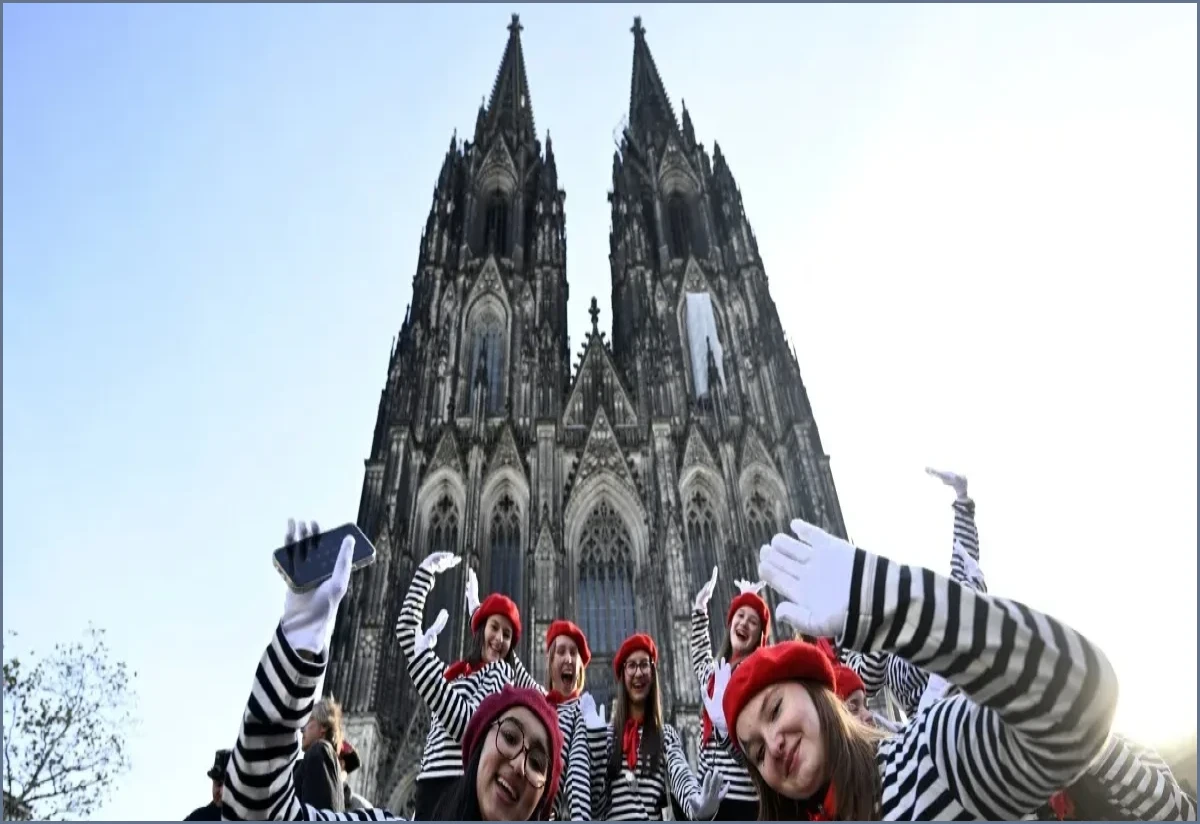
For many across the globe, November 11th is recognized as a day of solemn reflection. It is Remembrance Day, a time to commemorate the end of the First World War, with ceremonies often pausing at 11am to honor those lost in conflicts. In Germany and other parts of Europe, the date also coincides with St Martin's Day. However, in various regions of Germany, this date marks the beginning of a vibrant cultural period known as the carnival season, or the "fifth season." The festivities officially commence at a very specific moment: 11 minutes past the 11th hour, or 11:11am.
The contrast between the somber nature of Remembrance Day and the joyous, often outlandish celebrations of the German carnival can be jarring for international visitors. While there is no single definitive answer as to why this specific date and time were chosen, several traditions and theories provide context. The number 11 is frequently cited as a lucky or, conversely, a foolish number in local folklore. It occupies a position between the significant numbers of ten—representing the Ten Commandments—and 12, which symbolizes the disciples of Jesus and new beginnings.
The timing is also deeply rooted in historical Catholic traditions, specifically linked to St Martin’s Day. Historically, this date signaled the start of a fasting period leading up to Christmas. Before the abstinence of Lent, it was customary for people to consume their remaining supplies of meat and other delicacies through feasts. The word "carnival," or "Karneval" in German, is believed to derive from the Latin phrase "carne vale," meaning "farewell to meat." Another theory suggests the date served as the conclusion of the agricultural year, effectively making the start of carnival a second harvest festival.
The importance of the number 11 permeates the entire season. Beyond the start time, carnival sessions are typically led by the "Elferrat," or Council of Eleven. The name of the event itself varies by region; those in the Rhineland refer to it as "Karneval," while in Bavaria and Saxony, it is commonly called "Fasching." In Hesse, Saarland, and Swabian regions, it is known as "Fastnacht" or "Fasnet."
Local celebrations vary in intensity. In Cologne, tens of thousands participate in street festivities, often in elaborate costumes. In Mainz, the carnival constitution is read aloud during the main event. Some Franconian cities feature traditions where town halls are "stormed" and mayors relinquish the keys of the city to revelers, often accompanied by the presentation of a local "prince and princess."
Despite the November 11th launch, the most lavish and extensive carnival celebrations occur in the new year, reaching their peak in February and early March. The iconic Rosenmontag parades are scheduled for February 16th, 2026. Furthermore, the tradition is not universal across Germany. For instance, in parts of Baden-Württemberg, November 11th holds little significance. A spokesperson for the Association of Swabian-Alemannic Carnival Guilds noted to the DPA that the Swabian-Alemannic "Fasnet" traditionally begins on Epiphany, which falls on January 6th.
There's no definitive answer for why carnival starts on this date but there are a few possible reasons. According to tradition, the number 11 is considered a lucky or foolish number. It lies between the significant numbers of ten (symbolising the ten commandments) and 12 (the number of Jesus' disciples and a symbol of new beginnings).