An estimated 200,000 people from across the globe, including Buddhist masters representing various schools and denominations, assembled in Gelephu, Bhutan, on Sunday to watch roughly 40,000 volunteers construct 108 sacred stupas in a single day. Donning hard hats and construction vests, workers joined pre-fabricated components to build the monuments in approximately 12 hours. Beginning work at 2 a.m., the crew completed the massive project by 2 p.m., finishing about four hours ahead of schedule.
Known officially as Project 108, the initiative features a line of stupas positioned along the Mao Chhu river, situated where the plains of India rise into the Himalayas. Each monument stands approximately 50 feet (15 meters) tall, spaced roughly 354 feet (108 meters) apart in a single-file alignment designed to evoke a procession. In Buddhist tradition, the number 108 holds deep sacred significance. Known as Jangchub Chortens in Vajrayana Buddhism—a major branch originating in India between the 5th and 7th centuries B.C. that aims to help practitioners achieve enlightenment within a single lifetime—the structures symbolize Buddha's enlightenment.
The newly erected monuments serve as an anchor for Gelephu Mindfulness City, a planned economic hub conceived by Bhutan's King Jigme Khesar Namgyel Wangchuck and designed by Danish architects. Located in southern Bhutan along the Indian border, roughly 150 miles (240 kilometers) south of the capital city of Thimphu, Gelephu is currently a small town with a population of about 10,000. The project prioritizes ecological sustainability and citizen well-being over commercial gain. As Bhutan struggles with severe economic challenges—including rising unemployment, declining birth rates, and the emigration of skilled workers—citizens are counting on the new city to stimulate economic growth and create opportunities to retain young residents.
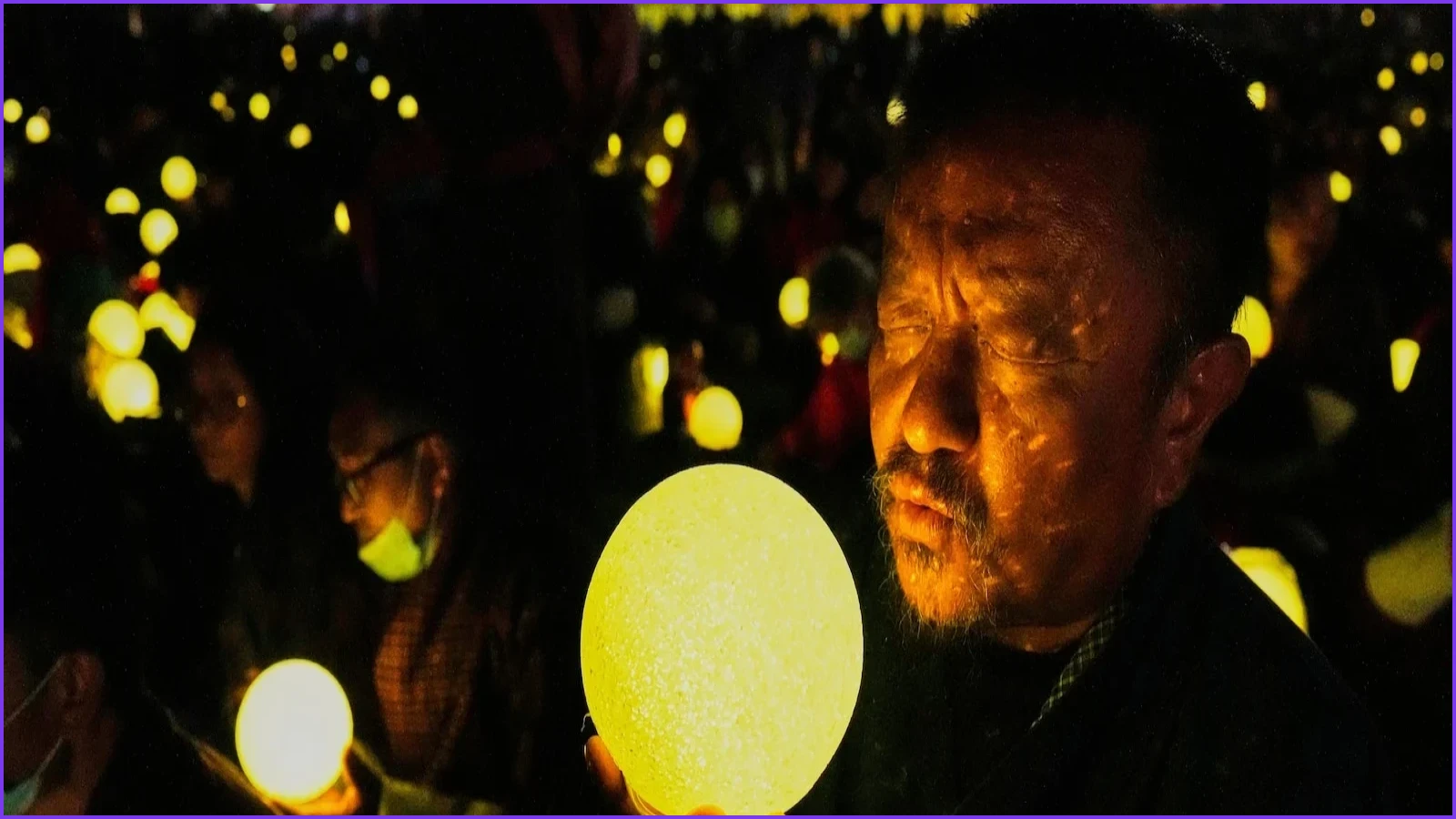
Sunday's rapid assembly marked the culmination of months of detailed structural preparation. Organizers noted that the external forms finished over the weekend will now be sealed and filled with prayers, blessings, spiritual texts, and sacred relics, creating "a physical form of prayer, made permanent in stone and earth." Project officials released a statement describing the effort: "This is not merely an engineering feat. In the Buddhist tradition, building a chorten is one of the most meritorious acts a person can undertake, a gift of spiritual benefit not just to those who build it, but to everyone who encounters it. Project 108 is a collective offering to the world." As night fell, massive crowds gathered around the monuments, holding glowing yellow light balls, chanting, and offering prayers at the base of the stupas.
Bhutan stands as the world's only sovereign nation where Vajrayana Buddhism is constitutionally established as the state religion and integrated directly into governance, legal frameworks, and national culture. The country's signature philosophy of Gross National Happiness, which places collective well-being and peace above economic metrics, stems directly from Vajrayana principles. Under this worldview, nature is revered as sacred, with spirits believed to inhabit mountains, forests, and rivers, transforming environmental conservation into a spiritual duty. The tradition of building chortens in the region dates back more than 2,500 years, beginning with structures raised to house relics of the Buddha following his death.
Kinley Dorji, a spokesperson for Gelephu Mindfulness City, characterized Sunday's gathering as "a big historic and spiritual" event for the country. "We were initially expecting thousands, but now we have 100,000 coming together," Dorji said, noting that international guests and Buddhist masters brought revered offerings and blessings for the stupas.
Among the prominent attendees was the Venerable Pannakara, a Theravada Buddhist monk who gained international attention earlier this year by completing a 108-day, 2,300-mile Walk for Peace from the Huong Dao Vipassana Bhavana Center in Fort Worth, Texas, to Washington, D.C. Traveling with a delegation that included his teacher, the Most Venerable Ratanaguna, Pannakara described the trip to Bhutan as a sacred journey. In a video posted to the Walk for Peace Facebook page during a tour of the site, Pannakara reflected on witnessing the 12-hour build. "We have come here to witness, to pray and see the results," Pannakara said. "It's great to see that 200,000 people from all over the world came here to witness this special moment."