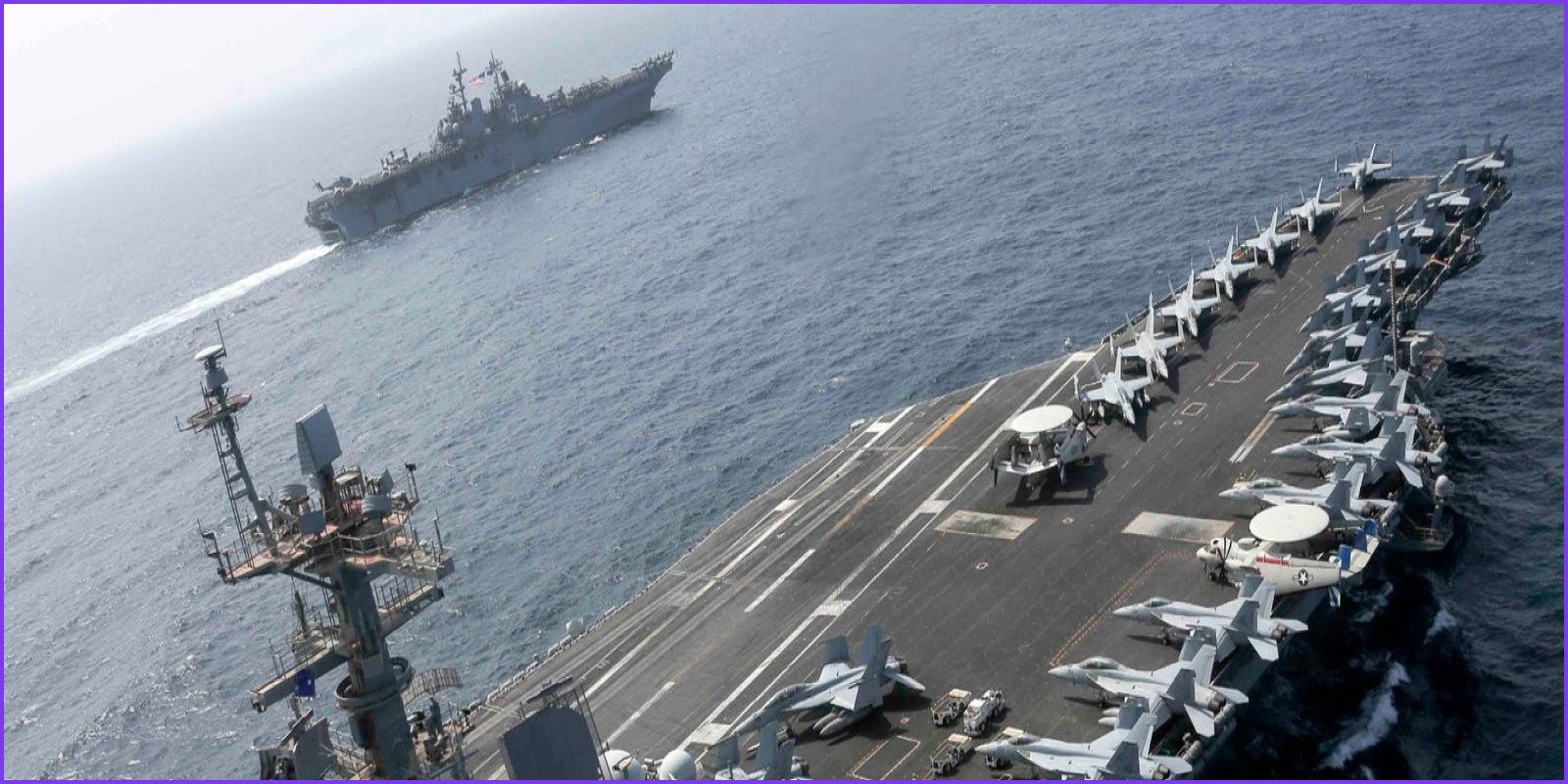
A significant shift in naval supply bases has left U.S. Navy combat ships operating 2,100 miles away from their nearest resupply hub, raising serious concerns regarding supply chains and the mental health of the crew aboard the aircraft carrier USS Abraham Lincoln (CVN-72). The carrier has been serving as a floating base for extensive aerial combat operations in the Arabian Sea as part of Operation Epic Fury, the U.S. war on Iran.
The logistical challenges began on February 28, at the onset of the war, when an Iranian attack heavily damaged much of Naval Support Activity Bahrain. The island base in the Persian Gulf had previously served as a critical logistics hub for the Navy, situated only about 870 miles from the central Gulf of Oman. Following the destruction of the Bahrain facility, the Navy designated Naval Support Facility Diego Garcia as its replacement. Diego Garcia, a U.S.-operated base on British-controlled territory south of the Maldives, lies approximately 2,100 miles from U.S. naval forces in the Gulf of Oman, dramatically increasing transit times and distances.
This massive distance has cost the crew of the USS Abraham Lincoln their "liberty port" privileges, which refer to scheduled stops where sailors can go ashore to rest, contact family members, and find recreation, while the vessel undergoes repairs and restocking. Consequently, the crew of the Abraham Lincoln has spent more than 260 consecutive days at sea without a single port call. The vessel has been away from port since December.
While U.S. Navy ships have occasionally endured long stretches at sea without shore leave—most notably during World War II and more recently in 2020, when the USS Dwight D. Eisenhower went 206 days without a port call during the COVID-19 pandemic—the current deployment has severely tested the crew. Family members of those aboard the Abraham Lincoln have publicly expressed deep concern over the deteriorating mental health of their loved ones. These worries follow prior reports of food quality and supply issues aboard the carrier earlier this year in April.
The situation has also sparked political debate in Washington. Democratic Senators Jon Ossoff and Mark Kelly have criticized the Trump administration's handling of the deployment, calling for a formal investigation into the living conditions aboard the vessel. Meanwhile, Republican lawmakers have largely remained silent, choosing neither to harshly criticize nor defend the administration's actions.
In response, the U.S. Navy, U.S. Central Command, and War Secretary Pete Hegseth have pushed back against allegations of severe personnel issues, asserting that reports have been "completely misrepresented." However, the Navy acknowledged in a statement that the stretched supply line has caused shortages and led to lost mail aboard the aircraft carrier. According to the Navy, leadership has prioritized the delivery of mission-critical supplies, focusing first on food, followed by hygiene items, and then mail. The Navy emphasized that the crew currently has access to clean water and "healthy meal options."
Relief is now on the way for the strained crew, as the USS George Washington (CVN-73) is deploying to relieve the Abraham Lincoln. Once relieved, the USS Abraham Lincoln is expected to begin its journey back to its homeport in San Diego.
Can't see our graphics? Click here to reload the page.
Contributing: Erin Mansfield, Greta Cross and Cybele Mayes-Osterman