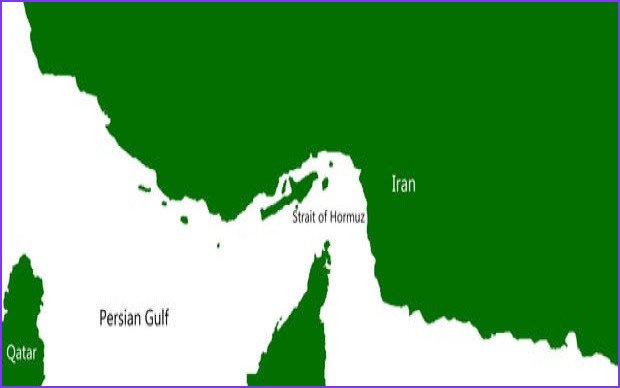
WASHINGTON — In an analysis updated on July 14, 2026, at 6:42 AM EDT, the steep hurdles facing U.S. efforts in the region are laid bare. For months, President Trump has deployed a range of strategies to compel Iran to fully reopen the Strait of Hormuz, employing tactics spanning from airstrikes and naval blockades to diplomatic negotiations and threats of total destruction. However, military and foreign policy experts warn that restoring the flow of oil tankers through this critical Middle East shipping corridor to prewar levels is an exceptionally difficult task. Achieving full control would likely demand a massive expansion of the U.S. naval presence or the deployment of tens of thousands of American ground troops on Iranian soil. Despite ongoing skirmishes, Iran retains the capability to target vessels in the narrow Persian Gulf passage using drones and missiles concealed across a nation that is one-third the size of the continental United States.
The strategic challenge is underscored by decades of preparation on the part of Tehran. Jason H. Campbell, a senior fellow at the Middle East Institute and a former Pentagon official, noted that Iran has spent decades preparing for this specific type of asymmetric conflict. According to Campbell, this preparedness explains why no other American president since Ronald Reagan has chosen to engage in this level of active conflict with Iran, given the Islamic Republic's formidable capacity to completely disrupt the Strait of Hormuz. Before his current role, Campbell worked as a researcher at RAND, where he collaborated with the U.S. military to run simulated war-game scenarios against Iran. He observed that the current tactics being deployed by Iran are precisely the types of actions that repeatedly emerged during those situational simulations.
On Monday, President Trump announced via Truth Social that the United States is reinstating its blockade on Iranian ports, specifically targeting ships entering or leaving Iran. "We are reinstating the THE IRANIAN BLOCKADE, so named because it is only stopping Iran's ships or customers from entering or leaving," the president wrote, adding that all other nations would have "fair and open use of the Strait." In the same social media post, Trump suggested that the U.S. would "probably run" the Strait of Hormuz and enforce a 20 percent fee on cargo shipments transiting through the waterway. By Monday evening, Trump maintained an optimistic tone, asserting that the strait is and will remain open, and claiming that the U.S. has successfully degraded Iranian military capabilities in just a few months. Iran, conversely, has vowed to resist any American intervention and continues to insist that it holds sovereign control over the narrow passage, which normally handles 20 percent of the world's oil supply.
This geopolitical standoff has placed the Trump administration in a difficult political and economic position. Commercial shipping remains severely disrupted, global oil prices are climbing, and Iran shows no signs of capitulating. The conflict has generated significant domestic unpopularity, which could influence the upcoming midterm elections as American consumers grapple with high gasoline prices. Eric Lob, a nonresident scholar at the Carnegie Endowment for International Peace’s Middle East program and a politics professor at Florida International University, described the situation as a test of wills. Lob pointed out that the administration initially believed the crisis was under control, but is now facing renewed escalations and a negative market reaction. The outcome, he noted, will depend on how much economic hardship Iran can withstand compared to the political liability and economic pain Trump and the Republican Party are willing to absorb heading into November.
Securing the Strait of Hormuz without putting boots on the ground is highly improbable, according to military analysts. Campbell explained that Iran manufactures its weapons components across decentralized facilities to minimize the risk of devastating airstrikes. Furthermore, Iranian military units are structured to operate autonomously without waiting for direct commands from Tehran, and they rarely gather in large groups, which severely limits the effectiveness of U.S. aerial bombardment. To truly secure the waterway, Campbell argued that tens of thousands of U.S. ground troops would be required to locate and neutralize hidden weapons caches, secure hundreds of miles of rugged coastline, and control expansive inland areas. Such an operation would take months to organize, incur extraordinarily high financial costs, and expose American soldiers to persistent insurgent attacks.
Another potential solution involves escalating U.S. Navy escort operations for commercial vessels, though this route also presents steep logistical hurdles. Michael Eisenstadt, the director of the Military and Security Studies Program at the Washington Institute for Near East Policy and a former U.S. military analyst, pointed out that the current U.S. Navy fleet is smaller than it was during the 1980s. During that era, the U.S. conducted escort operations for Kuwaiti oil tankers reflagged as American vessels during the Iran-Iraq War, while simultaneously supporting Iraqi dictator Saddam Hussein with intelligence and weaponry. Eisenstadt explained that a modern escort mission would require dedicating a substantial portion of the U.S. fleet on an open-ended basis. Furthermore, the modern threat environment is far more complex due to Iran's advanced drone and anti-ship cruise missile arsenals. Eisenstadt warned that any effort to eliminate these launch sites would likely require landing troops ashore, which would inevitably increase the risk of U.S. military casualties.
Currently, the U.S. military is actively engaged in keeping some transit routes open. Captain Tim Hawkins, a spokesperson for U.S. Central Command, confirmed that mine clearance operations are ongoing along traditional shipping lanes, though alternative pathways remain functional. However, utilizing these alternative southern routes has not entirely prevented Iranian attacks. In response, the U.S. military has conducted strikes against Iranian radar installations, air defense systems, small boats, and missile and drone equipment. Despite these actions, Iran's mere presence and rhetoric remain a powerful deterrent to commercial traffic. Noam Raydan, a senior fellow at the Washington Institute for Near East Policy specializing in maritime and energy risks, observed that Iran does not even need to launch physical strikes to disrupt trade; simply broadcasting threats over marine radio channels is often enough to deter commercial seafarers from entering the strait.
This gap between political rhetoric and maritime reality has drawn criticism from security experts. Clayton Seigle, a nonresident scholar in energy security at the Center for Strategic and International Studies, argued that the Trump administration has failed to deliver on its early promises to provide military protection for commercial shipments. Seigle suggested that the administration's aggressive rhetoric outpaced its actual tolerance for risk. When confronted with the operational reality, the United States proved unwilling to deploy the necessary naval assets or ground forces required to effectively neutralize the multifaceted Iranian threat in the region.