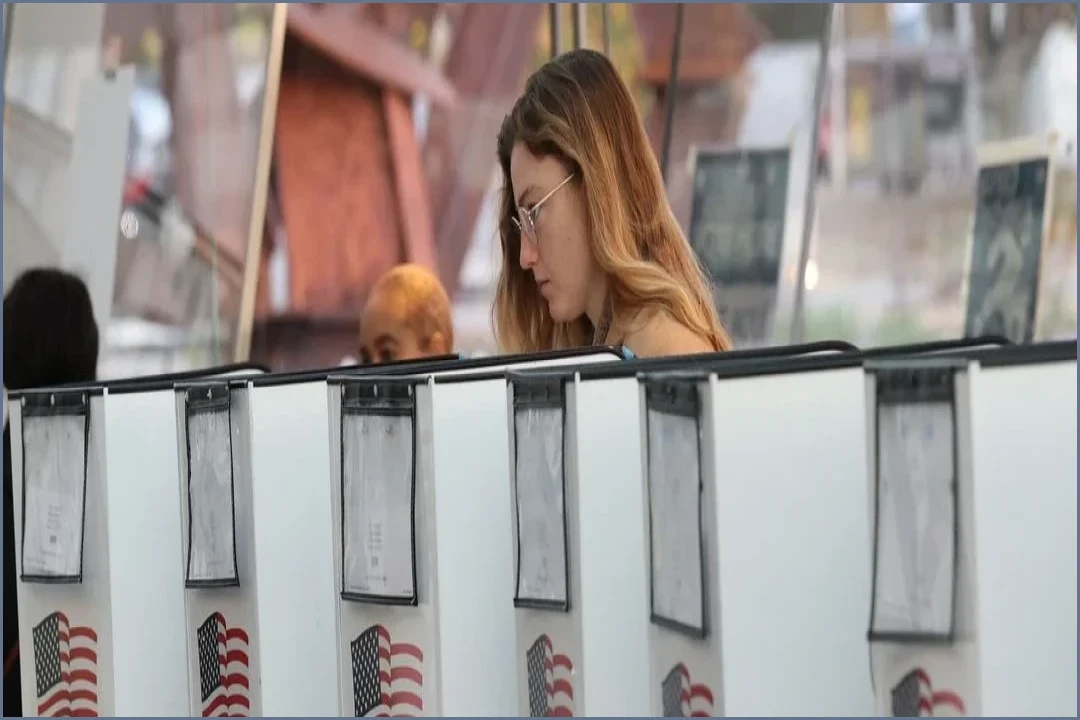
Millions of Americans are currently participating in pivotal midterm elections, a contest that sees Democrats aiming to secure control of both chambers of Congress. A victory would allow the party to challenge President Donald Trump’s legislative agenda and launch various inquiries. Conversely, Republicans are working to prevent a defeat that could threaten Trump’s senior and judicial appointments. The elections cover all 435 House seats, 35 of the 100 Senate seats, and governorships across 36 states.
This election cycle has been defined by a decrease in President Trump’s approval ratings, public frustration regarding the cost of living, and ongoing conflict involving Iran. While polls have shown Democrats leading in essential battleground states—including traditionally Republican-leaning areas like Texas and Kansas—the actual outcomes may be closer than current projections suggest. Grant Reeher, a political science professor at Syracuse University, noted that Democratic leads in critical races could narrow significantly as the polling day arrives.
Although recent surveys indicate Democratic candidates holding leads between 4 and 10 percent, Reeher explained that such projections often overestimate margins during the final stages of a campaign. He pointed to several factors, including late-stage campaign shifts, negative news coverage affecting specific Democratic contenders, and methodological challenges in polling algorithms that struggle to accurately identify likely voters. According to Reeher, there is a natural tightening at the end of the cycle, and some polls may not be utilizing the right algorithms to track a moving target of likely voters.
Historically, midterm elections tend to favor the opposition party, and the president’s party has lost House seats in most modern midterms. Flipping both chambers is less common, but has occurred, for example, in 1946, 1994, and 2006. To take control, Democrats need three additional House seats and a net gain of four in the Senate. They also face the challenge of defending competitive seats, including in Michigan, where Congresswoman Haley Stevens endorsed Republican Mike Rogers over Democrat Abdul El-Sayed in a move described as shocking. More than 57 million Americans have already cast their ballots, indicating strong voter engagement.
Should Democrats gain control of both chambers while Republicans hold the White House, the result would be a divided government for the final two years of President Trump’s term, through January 2029. This control would grant Democrats authority over the agenda, leadership, and committees with subpoena power. A Democratic-led House could initiate impeachment proceedings with a simple majority, while a Democratic Senate could block, delay, or force compromises on presidential nominees, including federal judges and any potential Supreme Court vacancy.
However, Reeher emphasized that even with a decisive victory, passing major legislative initiatives would remain an uphill task. He argued that it would still be tough for Democrats to push legislation through to the president’s desk because of the filibuster rule in the Senate, which he expects to remain in place since it was not removed during the first Trump presidency. He also cautioned that pursuing another impeachment effort against Trump could pose substantial political risks for the Democratic Party, especially in the 2028 presidential elections, as such an effort would have no chance of getting the required two-thirds majority in the Senate to remove Trump from office.
Reeher noted that if Democrats can avoid that misstep, they could potentially take their majority status into the presidential election with strength. He added that the party's prospects in 2028 would ultimately hinge on selecting a moderate presidential nominee capable of appealing to the broader electorate rather than aligning strictly with the party's left flank.